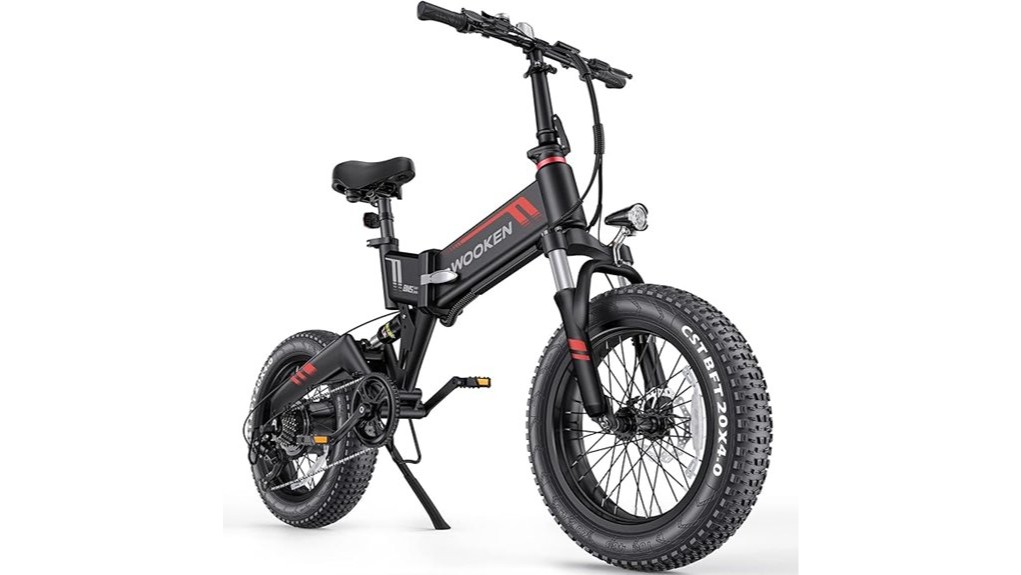
The TotGuard W-206-UL is a sturdy, 62 lb folding e-bike that’s best if you want mixed‑terrain commuting and light off‑road capability rather than featherweight portability. You’ll get a 500W motor, removable 48V/10Ah battery, fat 20″ tires, dual suspension, and about a 50–60 mile pedal‑assist range with a top assisted speed near 20 MPH. It handles hills and bumps confidently but is heavy to lift; keep going and you’ll find full specs, tradeoffs, and buying tips.
Some Key Takeaways
- Robust 500W motor and 48V/10Ah removable battery deliver about 50–60 miles assisted range and ~19.8 MPH top speed.
- Fat 20″ tires, dual shocks, and dual disc brakes provide stable mixed-terrain comfort and confident stopping.
- 62 lb curb weight and folding design reduce portability; heavy lifting and tight maneuvering are challenging.
- 7-speed drivetrain and 15° climbing capability suit moderate hills but limit low-speed finesse and extreme climbs.
- Removable, lockable battery, UL certification, and clear LCD ease ownership, though folding hardware may wear with frequent use.
Quick Verdict: Who the TotGuard W-206-UL Is Best For
If you need a sturdy, versatile folding e-bike for mixed-terrain commuting and light off-road use, the TotGuard W-206-UL is a solid pick. You’ll appreciate its 500W motor, fat 20″ tires, and removable 48V battery if you’re a commuter commuter who wants range and stability. It suits an urban explorer who wants folds for transit and durability for trails. You’ll carry heavier weight when folded and accept a 62 lb curb weight, but you’ll get multiple ride modes, dual suspension, and disc brakes. It’s best for riders prioritizing versatility over ultra-light portability. The bike pairs well with fat tire accessories designed for outdoor riders to enhance trail performance and protection.
Full Specs and What They Mean for Everyday Use
Dig into the W-206-UL’s specs and you’ll see how each choice affects everyday rides: the 500W brushless motor and 48V/10Ah (480 Wh) removable battery deliver solid hill-climbing and an estimated 50–60 mile assisted range. You’ll appreciate the removable, lockable pack for straightforward battery management and 5–6 hour charging. The 20″ fat tires, dual shocks, and dual disc brakes suit varied terrain while 7-speed gearing handles flats and moderate climbs. At 62 lbs with a 330 lb capacity, folding practicality is limited but useful for tight storage. UL certifications and an LCD display add safety and clarity. For outdoor riders, pairing the bike with a durable ebike battery case helps protect spare packs during rugged trips.
Real-World Performance: Speed, Range, Hill Climbing, and Handling
When you ride the TotGuard W-206-UL, its 500W motor and 48V/10Ah battery deliver brisk assisted speeds up to about 19.8 MPH and consistent power on moderate climbs. You’ll find top speed testing aligns with the stated 19.8 MPH under flat, assisted conditions. Real world range typically falls toward the 50–60 mile estimate in pedal-assist, depending on load and terrain. Climbing performance is competent on grades up to its 15° rating, though heavier loads slow acceleration. Handling dynamics feel stable: fat tires absorb bumps and dual suspension tames rough surfaces, but the 62 lb weight affects low-speed maneuvering. This model is well-suited for outdoor riders who prioritize ebike motors known for reliable performance in varied terrain.
Practical Pros, Cons, and Reliability Considerations
Although the W-206-UL packs robust components and user-friendly features, you’ll want to weigh a few practical trade-offs: the 500W motor, fat tires, and dual suspension give confident traction and comfort across varied terrain, the removable 48V/10Ah battery and LCD make range management straightforward, and UL certification plus solid brakes boost safety and reliability—but the bike’s 62 lb heft and 20″ wheel/fat tire setup reduce low-speed agility and make transport or lifting more effortful, while the 7-speed drivetrain can feel limited on steep, sustained climbs near its 15° rating.
You’ll appreciate dependable braking, clear controls, and straightforward maintenance. Battery longevity looks reasonable with the 480 Wh pack, though long-term cell degradation and charger care matter. Folding durability is decent for occasional transport, but frequent folds and heavy loads could stress hinges and quick-releases. Overall, it’s reliable for commuting and recreation if you accept weight and gear-range limits. For riders who enjoy outdoor activities, following best practices for battery care will help maximize pack lifespan and performance.
Buying Checklist: Accessories, Comparisons, and Final Buying Recommendation
Having weighed the W-206-UL’s strengths and trade-offs, you should now focus on what to add, compare, and expect before buying. Check essentials: a sturdy helmet, helmet locks if you’ll park in public, and quality lights beyond the stock headlight. Add cargo racks or a rear basket for errands; confirm rack compatibility with fat tires and frame mounts. Compare range, weight (62 lbs), and charge time to rivals; note UL certifications and 1-year warranty. Expect 50–60 miles per assist charge and 5–6 hour charging. If you need a robust, versatile fat-tire folder, it’s a sensible buy. Consider upgrading to brighter, purpose-built front lights for safer night rides with Bright Front Lights.
Some Questions Answered
Is the Battery Airline-Transportable or Subject to Shipping Restrictions?
No — you’ll face airline restrictions: the 48V 10Ah (480 Wh) battery exceeds many carriers’ spare-lithium limits, so it’s subject to shipping and carriage rules. You’ll need airline approval, usually carry-on with terminals protected or special packaging, and some airlines may refuse or require it checked as cargo under strict protocols. Check specific carrier policies and provide battery capacity details ahead of travel to avoid surprises.
Can the Bike Be Personalized With Different Color Options?
No, you can’t choose factory custom finishes or accent trims for this model; it’s offered in standard colors only. You can, however, personalize it aftermarket: add accent trims, custom finishes, wrap, decals, or replace components like grips and saddle. That’ll change looks but may affect warranty or resale. If you want dealer-installed customization, ask the seller for options and any service or warranty implications before committing.
Are Replacement Batteries or Parts Sold Directly by the Manufacturer?
Yes—you can get replacement parts and batteries, but availability varies. The manufacturer offers one-year warranty coverage and lifetime technical support, and they sell OEM batteries and components directly or via authorized channels. You’ll want to confirm battery serial matching for warranty. Third party batteries are usable but may void warranty or lack certifications; weigh cost versus safety and UL compliance before choosing non‑OEM replacements.
Does the Bike Support Child Seats or Cargo Rack Installation?
Yes — you can fit both child seat compatibility and cargo rack mounting, but with caveats. You’ll need a compatible rear rack or frame-mounted adapter for a child seat due to the folded frame and fat tires. Check weight limits (330 lbs) and recommended rider height; mounting points aren’t explicitly detailed, so expect aftermarket racks or professional installation. Verify brake clearance and saddle/post strength before carrying a child or heavy cargo.
Is There an App or Bluetooth Connectivity for Ride Data?
Yes — the bike offers Bluetooth app connectivity, letting you pair with the manufacturer’s app to view basic ride metrics. You’ll see speed, battery level, assist level and mileage; advanced analytics may be limited. Connectivity works for firmware updates and simple tracking, but don’t expect full-featured training or mapping. Overall, the Bluetooth app is useful for everyday monitoring but not for pro-grade ride metrics or deep data analysis.