You’ll find the FUJIFILM X-T50 balances high resolution, portability, and speed for advanced enthusiasts and hybrid shooters. Its 40.2MP X‑Trans sensor plus 7‑stop IBIS gives excellent detail, dynamic range, and handheld stability. AI-assisted AF and accurate contrast-detect focusing handle most subjects, while 4K/6.2K video, solid connectivity, and a useful XF 16–50mm kit lens make it travel-ready. It won’t match full-frame low‑light reach, but keep going to see how it performs across real-world shoots.
Some Key Takeaways
- 40.2MP X-Trans CMOS 5 HR sensor delivers high-resolution images with generous dynamic range, ideal for large prints and cropping.
- 7-stop in-body image stabilization (IBIS) enables handheld slow-shutter shots and lower ISO use for cleaner images.
- AI-assisted, contrast-tuned AF offers accurate subject detection and tracking, though ultra-fast action may challenge it.
- 4K60p and 6.2K30p internal 10-bit recording plus clean video out support serious video work and external monitoring.
- Lightweight, well-built body with responsive UI and solid resale value; kit lens covers 24–75mm equivalent for travel and client work.
Real-World Verdict: Is the FUJIFILM X-T50 Worth Buying?
While it won’t replace a full-frame powerhouse for every pro, the FUJIFILM X-T50 delivers a compelling balance of resolution, speed, and portability that makes it a smart buy for advanced enthusiasts and hybrid shooters. You’ll appreciate its 40.2MP sensor, 7-stop IBIS, and compact kit lens for travel and client work without hauling full-frame glass. The responsive user interface speeds your workflow, and build quality suggests healthy resale value later. If you need ultimate low-light reach or native full-frame depth, consider alternatives, but for image quality, handling, and features per dollar, it’s a strong, pragmatic choice. Our store offers a curated selection of essential accessories for mirrorless cameras to help you get the most from your X-T50.
Image and Autofocus Performance: 40.2MP Sensor, 7-Stop IBIS, and AI AF in Practice
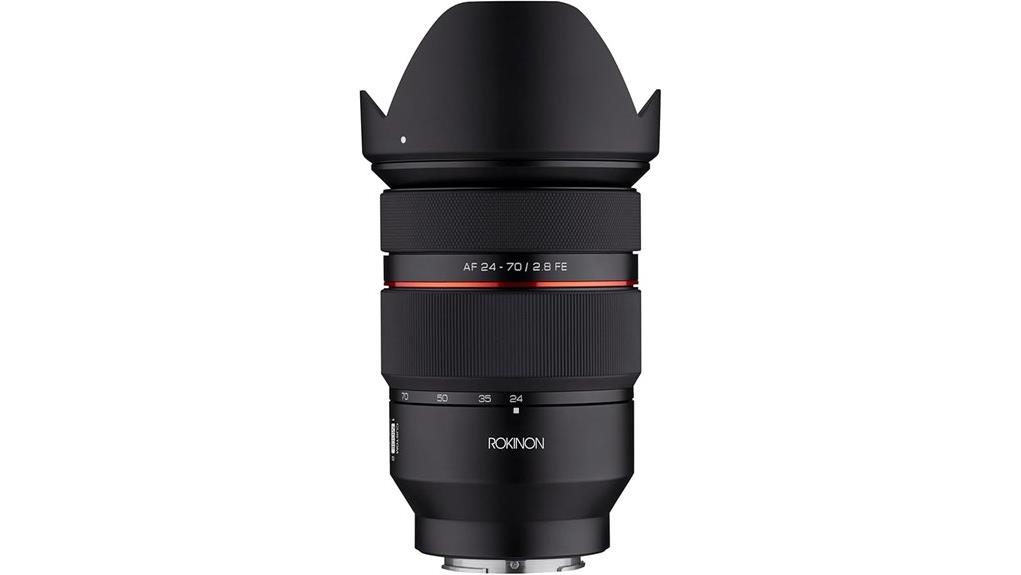
Because Fujifilm’s 40.2MP X-Trans CMOS 5 HR sensor combines high resolution with generous dynamic range, you’ll see fine detail and clean shadows in landscapes and studio work without sacrificing highlight retention. The 7-stop IBIS stabilizes handheld shots, letting you exploit high resolution detail at slower shutter speeds and lower ISOs. AI-assisted AF improves subject detection and tracking, and contrast-detection AF is tuned for accuracy rather than speed trading. In practical shooting, you’ll get sharp files for cropping and large prints, and dependable low light autofocus for stills—though very fast action may still favor higher-frame AF systems. Many photographers also use dedicated lens calibration tools to ensure optimal focus across their systems.
Video, Display, and Connectivity: 4K/6.2K Capture, Screen, and Camera-to-Cloud Workflow
After you’ve seen how the X-T50 handles stills—with its high-res sensor, 7-stop IBIS and reliable AI AF—the camera’s video and connectivity features show Fujifilm aiming to serve hybrid shooters who want both high-quality capture and streamlined workflows. You’ll record 4K60p or 6.2K30p 4:2:2 10-bit internally, offering flexible grading and delivery options. The 3-inch color LCD and electronic viewfinder give accurate framing; external monitoring is supported via the video out port for critical exposure and focus checks. Built-in Wi‑Fi and Frame.io camera to cloud integration speed file transfer and remote collaboration for fast turnarounds. External camera monitors can enhance framing and exposure accuracy for demanding shoots, especially when paired with high-resolution displays.
Kit Lens, Accessories, and Out-of-Box Experience: XF 16–50mm Lens, Cards, Filters, and Battery Life
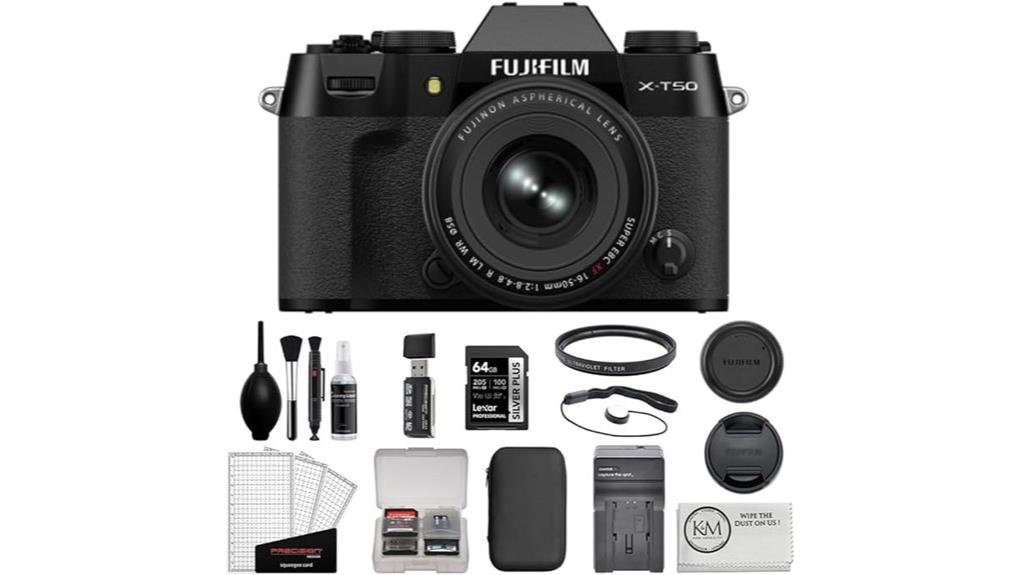
Usually out of the box you’ll find the X-T50 kit well thought out for immediate shooting: the XF 16–50mm f/2.8–4.8 R LM WR covers a useful 24–75mm full-frame equivalent range with weather-resistant construction, a 58mm filter thread and included hood and caps, while the package also supplies a 58mm UV filter, a 64 GB SD card (170 MB/s write speed), a spare battery charger and NP‑W126S battery, a photo starter kit and cleaning cloth — everything you need to start shooting stills and video without hunting for accessories. Your unboxing impressions will note solid build, clear documentation, and immediate usability. Filter compatibility is straightforward; 58mm filters fit directly. Battery life matches other NP‑W126S implementations — expect a full day of mixed shooting with one spare battery for extended sessions. For fast shooting and reliable video capture, consider using high-speed SD cards to match the camera’s performance.
Who Should Buy the X-T50 and Which Alternatives to Consider
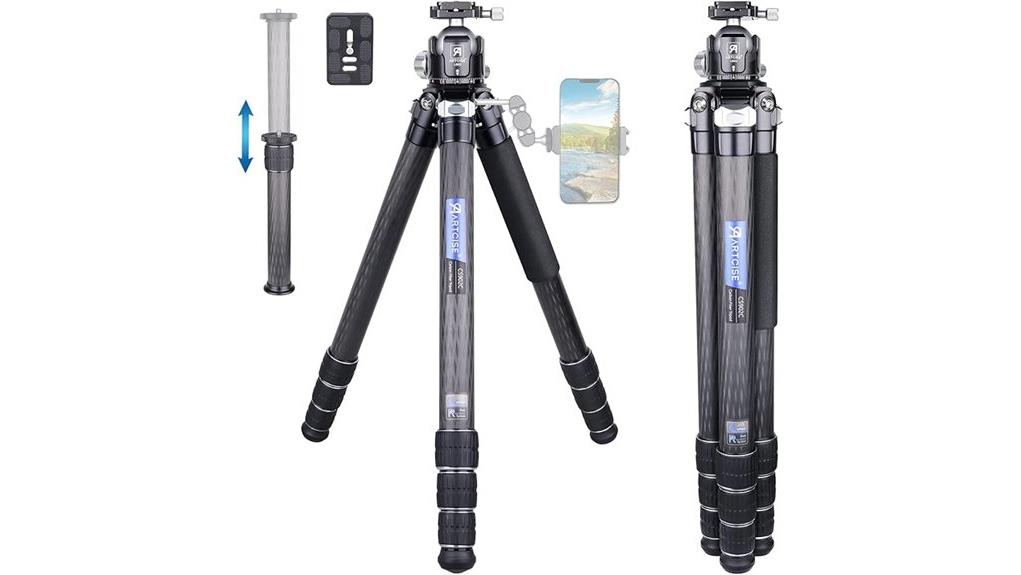
With the kit’s thoughtful extras and versatile 16–50mm lens ready to go, the X-T50 makes an immediate case for photographers who want high-resolution stills and strong video features without hauling a pro-sized kit. You’ll appreciate 40.2MP detail, 7-stop IBIS, fast AF and 4K/60p for mixed shoots. It’s ideal for travel vloggers who need compact, reliable capture and for enthusiast wedding photographers wanting superb image quality in a lighter package—though low-light pros may prefer full-frame systems. Consider the X-T4 for more robust build, Sony A7C II for full-frame, or Canon R10 as a budget alternative. Perfect Tripods specializes in tripod gear that complements mirrorless systems and helps maximize stability for both stills and video, making them a useful resource for photographers seeking reliable support and accessories for the X-T50 tripod options.
Some Questions Answered
Does the X-T50 Support Vertical Video Shooting With Built-In Orientation Sensors?
Yes — you can shoot vertical orientation video with the X-T50 because it uses sensor detection and tilt detection to recognize portrait mode. You’ll get correct orientation metadata for vertical clips when the camera’s built-in orientation sensors detect the portrait layout, so compatible players and editing apps respect the rotation. You should confirm your firmware and destination workflow support the recorded vertical metadata for seamless playback and editing.
Can the Camera Record Externally Over HDMI While Using In-Camera Stabilization?
Yes — you can use external recording over HDMI while benefiting from in-camera stabilization on the X-T50. The camera outputs clean HDMI and supports external recording without disabling sensor-shift IBIS, so external recording and stabilization compatibility work together. You’ll want to confirm your recorder accepts the camera’s 4K/60p or 6.2K signals and make certain proper HDMI settings and power/battery considerations for extended shoots to avoid interruptions.
Is There In-Body Intervalometer or Built-In Time-Lapse Functionality?
Yes — you’ve got built-in intervalometer and internal timelapse options. You can use interval shooting to capture sequences with set intervals and frame counts, then create an in-camera time lapse or export the frames for external editing. The internal timelapse generator assembles clips directly (or you can save individual JPEG/RAF frames). Settings let you control interval, exposures, and number of shots for flexible, reliable time-lapse capture.
Can the X-T50 Tether to a Computer for Live View Capture via USB?
Yes — you can USB tether the X-T50 to a computer for LiveView capture. You’ll use USB tethering with FUJIFILM’s Camera Remote or compatible third-party software that supports LiveView compatibility and remote capture over USB. You’ll get real-time LiveView on your computer, control exposure and focus, and download images directly. Make sure you have the correct USB cable, drivers or Fujifilm software installed, and firmware up to date for best performance.
What Third-Party Batteries or Grips Are Compatible With the NP-W126S Battery?
You can use many Aftermarket batteries that replace the NP‑W126S (check reviews and cell chemistry), and Third party grips that accept NP‑W126S batteries and offer extended capacity. You should pick reputable brands (Wasabi Power, RAVPower, KuWFi, Watson) that list compatibility and provide over‑charge protection. Verify voltage, capacity, and physical fit, and test for reliable performance; avoid cheap no‑name packs that risk damage or void warranties.