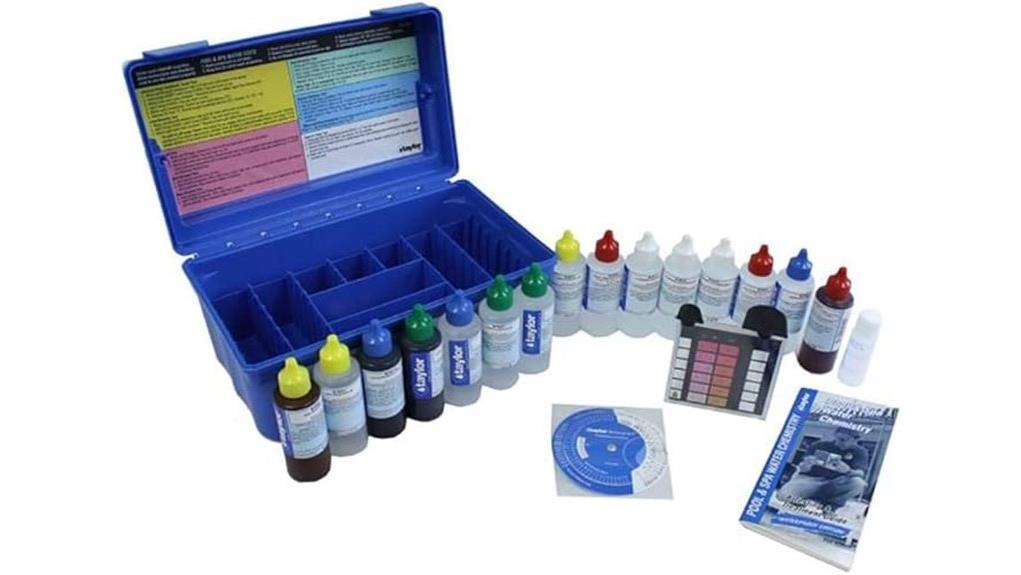
If you run multi-site pool service, the Taylor K-2005C gives you a compact, professional kit that delivers repeatable chlorine, bromine, pH, alkalinity, hardness and cyanuric acid readings with printed color standards and concentrated reagents for reliable field decisions. It’s built for tough use, keeps reagents organized, and speeds color matches, though you’ll replace reagents periodically and need titration training for some tests. Keep going and you’ll get specifics on ranges, durability, costs and when to choose it.
Some Key Takeaways
- Professional-grade kit offering nine essential pool tests for consistent, repeatable results in commercial and public pool service.
- Dual-range chlorine and bromine tests (low/high) plus pH, alkalinity, hardness, cyanuric acid, and acid/base demand.
- Concentrated reagents and crisp printed color standards produce sharp endpoints and reduce visual subjectivity.
- Durable hard-plastic case with foam-secured bottles, organized trays, but labels and color cards may wear with heavy field use.
- Mid-to-high price point; recommended for regulatory compliance and repeatability, though titration training and periodic reagent replacement required.
Is the Taylor K-2005C the Right Pro Kit for Your Pool Service Needs?
Wondering if the Taylor K-2005C fits your pool service toolkit? You’ll find it designed for professional routines—compact, durable, and tailored to public/commercial work. You can streamline service scheduling with predictable, repeatable tests and quick color matches that speed field decisions. The kit supports clear customer reporting: documented readings, consistent protocols, and components that match industry expectations. It’s aimed at technicians who need reliability rather than hobby features. If you manage multiple sites or need standardized results for regulatory records, this kit will serve you well; if you need ultra-rapid digital logging, consider supplemental tools.
What Tests and Measurement Ranges the K-2005C Includes
What does the K-2005C measure, and how precise are its ranges? You get nine essential tests: total and free chlorine (low 0.25–2.5 ppm, high 0.5–5 ppm) for practical chlorine calibration, bromine (0.5–5 ppm low, 1–10 ppm high), pH (7.0–8.0), acid and base demand, total alkalinity, calcium hardness, and cyanuric acid for straightforward cyanuric quantification. The kit’s dual-range chlorine and bromine options let you target both low and high disinfectant levels. Reagent volumes and printed color standards support repeatable readings, helping you deliver consistent, professional results for commercial and public pools.
How Accurate and Easy the Reagents, Color Standards, and Matching Are
Because Taylor supplies concentrated reagents and clear printed color standards, you’ll get repeatable, professional matches without guessing, provided you follow the dosing and sample-handling steps. You’ll find reagents dissolve cleanly and deliver sharp color endpoints, which reduces errors when you compare to the printed standards. The kit’s color blocks are crisp and calibrated for the included test ranges, helping mitigate visual subjectivity across different light conditions. Check expiration dates and store reagents per instructions to maintain reagent stability; degraded reagents skew results. Overall, if you handle samples consistently and replace reagents on schedule, matching is straightforward and reliable.
Durability, Kit Contents, and Real-World Usability for Technicians
While the K-2005C’s hard plastic case and snug reagent foam keep components secure, you’ll notice wear on bottle labels and color cards after frequent field use, so plan to inventory and re-label as needed. You’ll appreciate the solid build quality: latches stay tight, hinges resist cracking, and reagent bottles fit firmly. Kit contents cover your routine needs—chlorine (high/low), bromine, pH, alkalinity, hardness, cyanuric acid, and demand reagents—so you won’t scramble for extras on jobs. In real-world field workflow you’ll value organized trays, clear color standards, and durable packaging that streamlines testing and reduces downtime.
Pros, Cons, Price Guidance, and When to Choose This Kit vs Alternatives
Having covered durability and field usability, let’s look at how those practical strengths shape the kit’s advantages and trade-offs for service professionals. You’ll appreciate the K-2005C’s all-encompassing tests (chlorine, bromine, pH, alkalinity, hardness, cyanuric acid) and durable reagents—ideal for routine commercial pools. Pros: professional-grade accuracy, printed color standards, complete reagent set. Cons: upfront cost and periodic reagent replacement; some techs need user training for titrations. Price guidance: mid-to-high range for pro kits—perform a cost comparison against cheaper plastic kits and digital meters. Choose K-2005C when you need repeatable lab-quality results and regulatory compliance.
Some Questions Answered
Can This Kit Test Saltwater Pools Accurately?
Yes — you can use this kit for saltwater pools, but you should watch for electrode interference and avoid relying on any probes that aren’t saline calibrated. You’ll get accurate chemical titrations for chlorine, pH, alkalinity, calcium hardness and cyanuric acid. To guarantee precision, rinse glassware thoroughly, use fresh reagents, and compare to printed color standards. If you need probe-based readings, request saline calibration or use salt-tolerant meters.
Are Replacement Reagents Readily Available Locally?
Yes — replacement reagents are generally available. You can check local suppliers like pool service stores and chemical distributors for Taylor 2000 Series reagents, and many stock common K-2005C reagents. If local options are limited, online availability is strong through manufacturer sites and major retailers. You’ll want to verify reagent types and lot dates, and keep spares on hand to avoid service interruptions and ensure precise, professional testing.
How Long Do the Reagents Remain Stable After Opening?
You’ll typically get 1–2 years of reagent shelf life after opening if you follow proper storage conditions. Keep bottles tightly sealed, stored upright in a cool, dark place away from heat and direct sunlight, and avoid contamination by using clean droppers. Some reagents (cyanuric acid, hardness) are more stable; oxidizers degrade faster. Always check reagent color and expiration, and replace any bottles that show cloudiness, precipitate, or off-odors.
Is a Case or Carrying Bag Included for Technicians?
No, a carrying case or protective pouch isn’t included with the kit. You’ll get the Taylor K-2005C reagents, color standards, and accessories, but you’ll need to supply your own carrying case or protective pouch for transport and field work. For service technicians, choose a sturdy, compartmentalized case that protects reagent bottles, prevents spills, and keeps color standards flat. That guarantees reliable testing, easy access, and safer reagent storage on the job.
Does the Kit Meet State or Local Public Health Regulations?
You’ll likely meet many state or local public health regulations using this kit, but you shouldn’t assume full regulatory compliance automatically. The K-2005C provides required tests and color standards for routine monitoring, which helps minimize legal liability when you document results. Still, you should verify specific local limits, calibration protocols, and reporting rules, and retain manufacturer specs and records to demonstrate compliance if inspected or challenged.