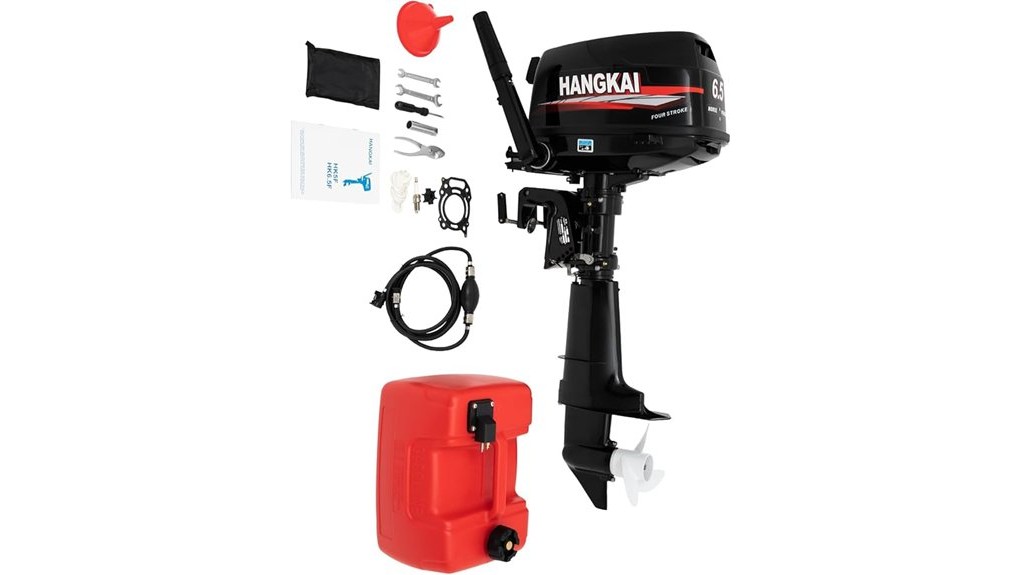
You’ll get a compact, fuel‑efficient 4‑stroke delivering about 6.5 HP with predictable throttle and three‑gear selection, suited for inflatables, kayaks and light small boats. Expect roughly 5–20 km/h depending on load and prop, about 2 L/h fuel burn with a 12 L tank, and a 24.95 kg mass that may shift kayak balance. Guarantee transom strength, 15 in shaft fit and proper mounting hardware. Keep controls, fuel lines and trim checked; more details follow below. vpabes outboard motor specifications reveal a precision-engineered device designed for reliable performance in various water conditions. The lightweight design enhances portability, making it an ideal choice for weekend excursions or fishing trips. Additionally, with its innovative features, users can expect ease of maintenance and superb fuel efficiency, ensuring a smooth experience on the water.
Some Key Takeaways
- Lightweight 24.95 kg 4-stroke delivers up to 6.5 HP (4.8 kW), suitable for inflatables, kayaks, and small fiberglass hulls.
- Fuel-efficient ~2 L/h with a standard 12 L tank, offering reasonable range; external tank extends trip distance.
- Good low-end torque and predictable throttle with three-gear selection; recommended prop size 3–7×9.
- Requires transom reinforcement for some boats: shaft 38.1 cm (15 in), adaptive plate height ≤44 cm, through-bolt mounting advised.
- Competitive value for budget buyers, but reliability and resale may lag OEMs like Yamaha or Honda.
Quick Performance Snapshot and Who This Engine Suits
Although compact, the 4-stroke HANGKAI 6.5HP delivers a clear, usable performance envelope: its 123 cc single-cylinder engine produces up to 6.5 HP (4.8 kW) at 5,000–6,000 rpm, pushes typical small boats at roughly 5–20 km/h, and consumes about 2 L/h. You’ll get predictable throttle response, three-gear selection, and manual trim for efficient cruising and manoeuvring. Silent operation is especially good for its class, reducing noise during low-load survey or fishing runs. It suits inflatable boats, small fiberglass or wooden hulls, and expedition kayaks where simple launch procedures, light weight, and reliability matter. Gear Up for Unforgettable kayak adventures by pairing this motor with the right kayak accessories and safety gear.
Key Specs That Affect Speed, Range, and Boat Compatibility
Having established its real-world performance envelope, let’s look at the specific specs that determine how fast you’ll go, how far you can run, and which hulls the HANGKAI 6.5HP will suit. You’ll base speed on power (6.5 HP), gear ratio (2.08), and recommended propeller selection (3–7 × 9). Range ties to fuel consumption (~2 L/h) and the 12 L standard tank plus optional external fuel. Transom compatibility requires adaptive plate height ≤44 cm and 38.1 cm shaft length; that fits inflatables, kayaks, small sailboats and most light fiberglass or wooden hulls. Gear and accessory choices (like fish finder batteries) often determine how well a motor setup integrates with other onboard electronics for longer trips.
Real-World Pros and Cons From Use Cases (Inflatable, Kayak, Small Sailboat)
When you mount the HANGKAI 6.5HP on inflatables, kayaks, or small sailboats, you’ll notice clear trade-offs between weight, thrust, and handling: the 24.95 kg engine with a 15-inch shaft and 6.5 HP delivers usable cruise speeds (roughly 5–20 km/h depending on load and prop) and reliable low‑end torque for planing inflatables and light displacement hulls, but its bulk and tiller control can limit maneuverability on narrow kayaks and require careful transom reinforcement on some small sailboats to prevent flex. You get strong thrust and good inflation durability on tubes; steering responsiveness improves with larger skegs and stiffer transoms, yet tight-quarters kayak handling suffers and cockpit balance shifts. Consider pairing it with an appropriate all-terrain cart to ease launching and transport for shore-based adventures with inflatables and kayaks, especially over rough or mixed terrain like sand and rocks, where a heavy-duty cart helps protect your gear.
Installation, Controls, Fuel & Maintenance Essentials to Know
Before you bolt the HANGKAI 6.5HP to your transom, verify fit, height, and controls: make certain your transom thickness and material can support a 24.95 kg engine with a 15‑inch (38.1 cm) shaft, confirm the adaptive transom plate height stays ≤44 cm (17.32 in), and check that the tiller throttle, 35 cm joystick, and 15 cm handle clear your cockpit layout and steering arc. Use reinforced backing plates and through-bolt mounting techniques, torquing bolts to spec. Route the external fuel hose and oil-pumping pipe to avoid chafe. Test throttle ergonomics, kill-rope function, manual trim/tilt, and leak-free fuel connections before first start. Be sure to carry properly certified fuel canisters and storage gear designed for water-based adventures to comply with safety and transport best practices.
Should You Buy It? Alternatives, Price/Value, and Final Recommendation
If you need a compact, fuel‑efficient 4‑stroke outboard for inflatables, kayaks, or small utility boats, the HANGKAI 6.5HP delivers a solid balance of power (6.5 HP/4.8 kW), low fuel draw (~2 L/h), and simple tiller control in a 24.95 kg package with a 15 in shaft and adaptable transom fit (≤44 cm). You should buy it if you prioritize low running costs, lightweight transport, and straightforward maintenance. Consider alternatives from Yamaha or Honda for proven long term reliability and higher resale value. Check seller warranty coverage and emissions data to assess environmental impact before purchasing. Gear up for epic motor-ready kayak fishing adventures with motor-ready fishing kayaks and compatible accessories.
Some Questions Answered
Is a Propeller Included With the Engine Purchase?
No, a propeller isn’t listed as included. You’ll need to select one that matches propeller compatibility (recommended range 3–7 x 9) and the 27:13 gear ratio. When you get a propeller, follow the propeller installation steps in the manual: make sure correct shaft size, align splines, use the cotter pin or nut torque spec, and check for proper rotation and clearance. Test at low throttle to confirm secure fit and absence of vibration.
Can the Engine Be Used in Saltwater Without Extra Corrosion Protection?
No — you shouldn’t run it in saltwater without extra corrosion protection. You’ll need regular saltwater maintenance, rinsing with fresh water after each use, flushing the cooling system, and applying corrosion inhibitors. Fit sacrificial anodes on the lower unit and transom to protect aluminum components, inspect fasteners and seals, and use marine-grade lubricants. Follow a scheduled inspection and replace anodes as they erode to prevent galvanic corrosion.
Does It Come With a Warranty and How Long Is It?
Yes — you get a warranty; Warranty length typically varies by seller (commonly 6–12 months). Coverage details usually include manufacturing defects for engine components, ignition and cooling systems, excluding normal wear, fuel/oil misuse, saltwater corrosion without added protection, and improper installation. You should confirm the exact Warranty length and Coverage details with the vendor before purchase, obtain written terms, and keep receipts for any claims or service requests.
What Is the Required Break-In Procedure for the New Engine?
You should run a controlled break-in: start at low initial rpm for 5–10 minutes, then vary engine speed without full-throttle bursts. Over first 10 hours, avoid continuous high load; apply gradual load increases and brief high-speed runs only intermittently. Use recommended four-stroke oil and #92 gasoline, monitor cooling water flow, check for leaks and tighten fasteners. Change oil after initial 10 hours, then follow regular service intervals.
Are Spare Parts and Service Centers Readily Available?
Yes — spare parts and service are generally available, but availability varies by region. You’ll find parts through local dealers and broader selections on online marketplaces. For routine wear items (prop, spark plug, seals) local dealers can supply faster; more obscure parts may require ordering online. You should confirm dealer inventory and warranty service beforehand, and keep part numbers handy to speed procurement and guarantee correct replacements.