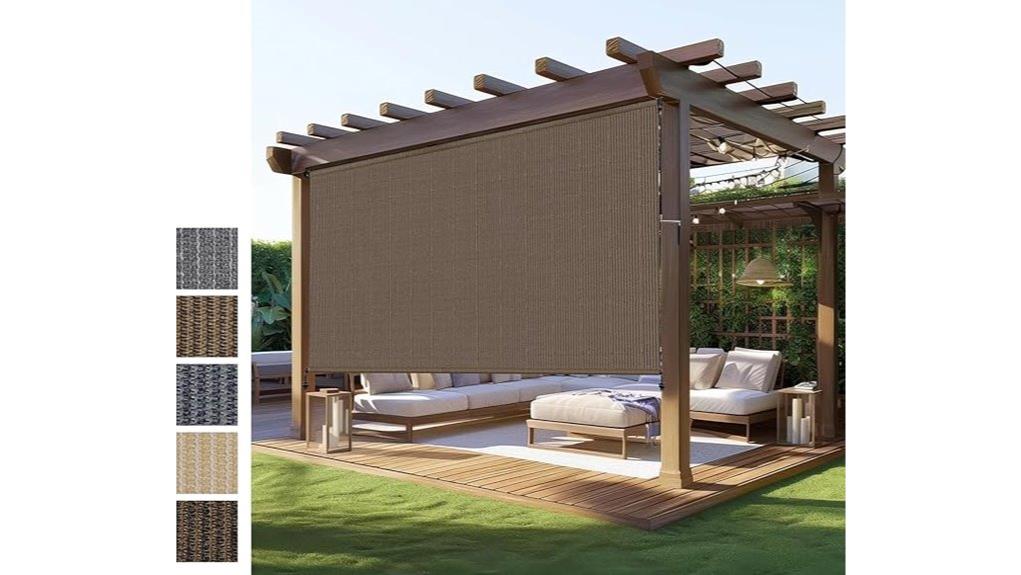
You’ll get a practical comparison that helps you pick patio roller shades by measured sun/UV blockage, fabric and frame specs, cordless operation, and installation trade-offs. Expect breathable 220 GSM HDPE knits that can block up to 95% solar glare while venting heat, plus aluminum hardware with corrosion resistance for wet or salty conditions. Installation options include ceiling, wall, or fascia mounts and simple cordless rolling with a wand; keep maintenance basic for long life, and more specifics follow.
Some Key Takeaways
- Prioritize measured sun/UV blockage (percent solar and UV ratings) and breathability to balance glare reduction with airflow.
- Look for 220 GSM HDPE knit fabrics and corrosion-resistant aluminum hardware for long-term durability in wet or salty environments.
- Choose cordless rolling systems with secure mounts (ceiling/wall/fascia) and wand operation for safer, easier daily use.
- Verify installation ease: stud or anchor compatibility, clearance for full drop, and straightforward bracket and fastener maintenance.
- Compare fabric color for heat reflection versus privacy, and weigh breathable privacy against cooling needs for outdoor living comfort.
What This Review Helps You Decide (Commercial Investigation + Quick Verdict)
When you’re comparing outdoor roller shades, this review helps you decide whether the model’s sun protection, durability, safety, and ease of use meet your needs—without marketing hype. You’ll get a compact buying checklist focused on measured sun/UV blockage, material specs, cordless operation, and real-world ease of installation. This comparison guide weighs breathable privacy against airflow and cooling, inspects HDPE fabric and aluminum components for corrosion resistance, and notes maintenance and energy benefits. You won’t find sales fluff — just clear criteria, quick verdicts on trade-offs, and actionable recommendations so you can choose the shade that fits your space and priorities. We focus on products designed for patio enjoyment and outdoor living areas to match the needs of homeowners who use their patios frequently.
How Outdoor Roller Shades and Patio Blinds Block Sun, Heat, and UV
Understand how these shades work by looking at three core mechanisms: optical rejection, thermal control, and material heat dissipation. You rely on optical rejection—the woven fabric’s density and color—to reflect and absorb sunlight, providing up to 95% solar blocking that cuts glare and UV exposure. Thermal control comes from reduced radiant heat entering the space; you’ll notice lower surface temperatures and less heat transfer through openings. Material heat dissipation matters too: breathable knit lets trapped heat vent while maintaining privacy and airflow. Together these mechanisms deliver measurable thermal reduction, protect occupants and furnishings, and improve outdoor comfort without active cooling. These solutions are ideal for creating a cozy patio with effective windbreak solutions to enhance comfort and usability.
Materials, Durability, and Weatherproof Performance to Expect
Having covered how fabric structure and airflow control sunlight and heat, let’s look at what the shades are made of and how they hold up outdoors. You’ll find high performance textiles—220 GSM HDPE with knitted lock-stitch construction—that resist fading, staining, moisture and block UV while remaining breathable. Frames use aluminum alloy rods and gear bearings paired with corrosion resistant hardware to prevent rust in wet or salty environments. Expect waterproof behavior, easy cleaning, and long-term dimensional stability; materials are recyclable and non-toxic. Overall durability depends on exposure and care, but quality components deliver reliable weatherproof performance for years. Many homeowners choose these for patio comfort and style.
Installation, Operation, and Safety: Cordless Rolling, Mounts, and Maintenance
Although the cordless rolling system keeps operation simple, you’ll want to plan your mount locations and hardware layout before you start so the shades run smoothly and stay secure. You’ll choose between ceiling, wall, or side mounts; check studs, use anchors for masonry, and confirm clearance for full travel. Operation ease comes from the hand-wand mechanism—test roll-up and down several times to guarantee balanced tension. For cordless safety, keep the wand accessible but stowed in high winds. Follow maintenance tips: clean fabric with mild soap, rinse, lubricate bearings annually, and inspect brackets and fasteners for rust or looseness. Consider matching your shades with complementary patio umbrella bases to create a cohesive and stylish outdoor space.
Which Roller Shade Fits Your Space: Best for Patios, Pergolas, Balconies, and Budgets
Now that you’ve planned mounts and checked operation, pick a roller shade model that matches your space, sun exposure, and budget. Assess Size options: measure width and drop for patios, pergolas, or balconies to guarantee full coverage without obstructing airflow. Review Color choices for heat reflection and aesthetic harmony; lighter hues cool more, darker ones increase privacy. Consider Mount types—ceiling, wall, or fascia—based on structure and wind exposure. Compare Budget ranges against material quality and features like 220 GSM HDPE fabric, aluminum hardware, and cordless operation. Choose the shade that balances performance, durability, and cost for your setting. For pergola owners, consider designs that complement existing pergola kits and enhance outdoor living continuity.
Some Questions Answered
Are Replacement Fabrics or Parts Available Separately?
Yes — you can get replacement fabrics and parts separately. You’ll find fabric swatches to match color, weave, and UV ratings before ordering a full panel, and replacement mounting brackets, rollers, and gear parts are sold individually. You’ll want to confirm fabric GSM and HDPE composition for compatibility, and check bracket dimensions and installation type. Keep original measurements and serial/model info handy to guarantee correct fit and durable performance.
Do These Shades Come With a Warranty?
Yes — they come with a limited warranty covering manufacturing defects, so you’re protected if materials or workmanship fail. The warranty complements the product’s weather resistance and corrosion-resistant components, but won’t cover damage from improper use. For claims, keep your receipt and photos. Installation tips: follow the included instructions, mount to solid surfaces, and avoid over-tightening brackets to prevent stress on fabric or hardware; that helps keep warranty valid.
Can Shades Be Motorized or Automated Later?
Yes — you can motorize them later. You’ll be able to fit a motorized retrofit kit to the existing roller if dimensions and tube diameter match, and a professional can confirm compatibility. Choose a low-voltage motor for cordless safety, and consider solar automation options for off-grid power and reduced wiring. Installation varies by model, so check gear bearing fit and mounting clearances, and keep warranty and material specs in mind.
Are Custom Sizes or Colors Supported?
Yes — you’ll find color options and sizing flexibility to suit most spaces. You can choose from multiple fabric colors and tones that resist fading, and request custom widths and lengths within manufacturing limits. Measurements should be precise; the cordless, hand-wand mechanism and aluminum components accommodate tailored sizes. Expect clear guidance during ordering to guarantee fit and performance, with options balancing privacy, airflow, and sun protection.
Do They Affect Wi-Fi or Signal Reception?
They generally won’t disrupt your Wi‑Fi noticeably; the breathable HDPE fabric and open weave minimize signal interference and network attenuation. You might see slight attenuation if a router sits directly behind a fully lowered, dense shade at close range, but airflow-permitting knit construction keeps losses small. For critical connectivity, place routers higher or offset them, and test signal strength after installation to confirm acceptable performance.