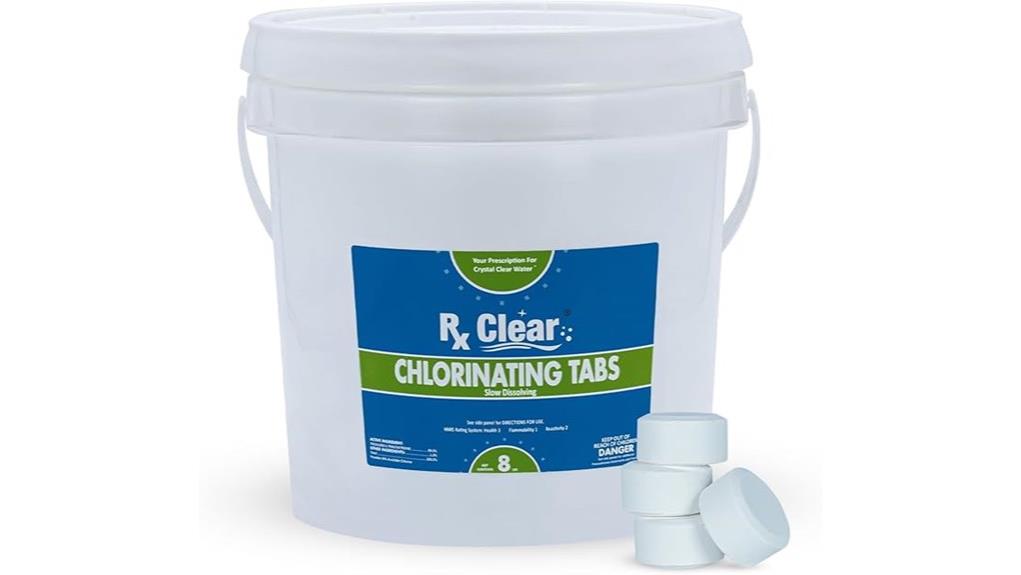
Rx Clear 1″ chlorine tabs give you a stabilized, slow‑dissolving sanitizer ideal for small pools, spas and plunge tubs where low‑maintenance, metered dosing matters. You’ll get high available chlorine with UV protection to resist photodegradation, predictable residuals from feeders or floaters, and broad surface compatibility when used per label. They cut dosing frequency and limit spikes, but aren’t ideal for large volumes or high‑flow automated systems. Continue for practical tips and setup guidance.
Some Key Takeaways
- Stabilized 1″ slow‑dissolving tablets provide predictable, low‑maintenance chlorination for small pools, spas, and above‑ground plunge pools.
- High available‑chlorine formulation with UV stabilizer resists sunlight degradation and maintains residuals in low‑volume systems.
- Best used in small feeders, compact dispensers, or floaters with restricted flow to prevent local chlorine spikes and extend tablet life.
- Compatible with vinyl, fiberglass, tile, and gunite when tablets don’t contact surfaces directly; monitor for sensitive finishes.
- Not ideal for large pools or high‑flow automated feeders; regular testing and correct dispenser settings are required to avoid under‑ or over‑chlorination.
What Rx Clear 1 Chlorine Tabs Are and Who They’re For
Rx Clear 1″ chlorine tabs are compact, slow-dissolving sanitizer tablets formulated with a high percentage of available chlorine and stabilizer for UV protection, designed specifically for routine chlorination of small pools, spas, hot tubs, and above‑ground or plunge pools. You’ll use this compact sanitizer when managing low-volume water systems that need steady, predictable chlorine delivery. The formulation targets bacteria, algae, and common contaminants while resisting sunlight degradation. Target users include homeowners with small pools, spa owners, and property managers of plunge pools who require measurable, low-maintenance chlorination compatible with common surfaces and small dispensers.
How These 1 Slow‑Dissolving Tabs Work in Small Feeders and Floaters
When you drop a 1″ slow‑dissolving tablet into a small floater or feeder, it sits in a controlled chamber where water flow gradually dissolves the tablet, releasing a steady dose of stabilized chlorine. You’ll rely on feeder circulation to meter sanitizer output; restricted, consistent flow prevents spikes and extends tablet longevity. Floater placement determines surface contact and dispersion patterns, so position it to maximize exposure to ambient currents without impeding skimmers. The stabilized formulation resists UV loss, so measured dissolution maintains residuals in low-volume systems. You’ll monitor levels and adjust feeder circulation or floater placement to fine-tune dosing.
Compatibility and Safe Use: Surfaces, Pool Types, and Dispenser Tips
Because these 1″ stabilized chlorine tablets dissolve slowly and release measured sanitizer, you can safely use them in small feeders, floaters, and compact automatic dispensers for vinyl, fiberglass, tile, and gunite surfaces—provided you follow label directions and avoid direct tablet contact with pool finishes. You should confirm surface compatibility before routine use and test in a discrete area for sensitive finishes. Select dispenser placement to guarantee uniform circulation and avoid shallow pockets where high local chlorine can etch or discolor. For spas and small pools, use the smallest feeder setting, monitor free chlorine regularly, and adjust placement to prevent prolonged tablet-to-surface proximity.
Benefits and Drawbacks Based on Formulation, Stability, and Dosing
Although designed for slow, stabilized release, these 1″ chlorine tablets deliver predictable residuals that simplify dosing and reduce frequency of manual additions. You’ll benefit from a high available-chlorine formulation with built-in UV protection that enhances stabilizer longevity and limits photodegradation outdoors. The slow-dissolving matrix minimizes chlorine spikes, supporting safer oxidant profiles for sensitive equipment and liners. Drawbacks include limited suitability for larger-volume pools—overreliance can under-chlorinate—and potential incompatibility with automated high-flow feeders. Achieve consistent results only if you maintain dosing precision via regular testing and calibrated floaters; otherwise you’ll risk ineffective sanitization or localized overexposure.
Buying and Maintenance Checklist: Dosing, Storage, and When to Choose a Different Sanitizer
If you plan to buy Rx Clear 1″ chlorine tabs, prioritize matching dispenser type, dosing rate, and pool volume to avoid under- or over-chlorination. Measure pool gallons, select a compatible floater or feeder, and set tablet feed to meet proper dosing based on label ppm targets. Store tablets sealed, dry, and upright; note storage duration limits and rotate stock first-in, first-out. Monitor free chlorine, cyanuric acid, pH, and filter performance weekly. Know when to switch: persistent combined chlorine, chronic low pH, or tablet incompatibility with spa chemistry are replacement indicators. Replace sanitizer when control fails despite corrected dosing.
Some Questions Answered
Are These Tablets Safe for Saltwater Pools With Chlorine Generators?
No — you shouldn’t use these tablets in saltwater pools with chlorine generators. Saltwater compatibility is poor because stabilized, slow-dissolving tablets add cyanuric acid and concentrated chlorine that can disrupt generator chemistry and increase maintenance. Generator impact includes potential sensor fouling, elevated CYA, and accelerated electrode corrosion. Use unstabilized chlorine alternatives or follow manufacturer guidance for generator systems to avoid damage and maintain proper sanitizer balance.
Can Rx Clear Tabs Be Used in Indoor Spa Environments?
Yes — you can use these tablets for indoor spa environments when dosed correctly. You’ll maintain indoor sanitation and spa compatibility by using compact feeders or floaters rated for small-volume spas, following label dosing, and monitoring free chlorine, pH, and cyanuric acid. Their slow-dissolving, stabilized formula helps avoid chlorine spikes, but you should guarantee proper ventilation and avoid over-treatment to protect indoor air quality and spa surfaces.
Do the Tablets Have a Noticeable Smell During Dissolution?
You’ll notice a mild chlorine odor as the tablets dissolve, typical of stabilized slow-dissolving chlorinated products. The scent isn’t usually overpowering in properly ventilated indoor spas or small pools, provided you use feeders/floaters as intended. Dissolving residue is minimal when tablets disperse evenly; occasional granule remnants can collect in floaters or on surfaces if overfilled. Test and maintain proper sanitizer levels to limit odor and residue buildup.
Are They Pet- and Wildlife-Safe if Accidentally Dispersed Outdoors?
No, they aren’t pet safety– or wildlife impact–neutral if dispersed outdoors. You should prevent pets and wildlife from accessing treated water or loose tablets. Chlorine is toxic at elevated concentrations and can irritate skin, eyes, and respiratory tracts; ingestion risks burns and systemic toxicity. If accidental dispersal occurs, dilute with plenty of fresh water, keep animals away, and contact a veterinarian or wildlife rehabper for exposure guidance. Test and neutralize before allowing access.
Do These Tablets Affect Pool Test Kit Accuracy or Readings?
Yes — you should expect potential test interference if tablets contact samples directly. High stabilized chlorine can cause reagent degradation and artificially elevated free chlorine readings, and oxidizers may affect combined chlorine or total chlorine tests. Always remove tablets from floaters/dispensers before sampling, rinse test cells, and follow reagent kit timing precisely. Regular calibration and using test strips or digital monitors as cross-checks will help detect discrepancies from reagent degradation.