You’ll get a compact, professional 60MP tool with a fixed Summilux 28mm f/1.7 that’s built for high-resolution stills, large prints and heavy cropping. It records 8K with ProRes options, uses Maestro IV for sustained performance, and offers hybrid IBIS plus reliable PDAF tracking for mixed photo/video work. Expect premium media and power needs, plus deliberate handling. Keep going and you’ll find detailed notes on codecs, thermal limits and real-world workflow benefits.
Some Key Takeaways
- Leica Q3 (19080) is a premium compact with a 60MP full-frame BSI sensor for exceptional detail and large-print capability.
- Built-in Summilux 28mm f/1.7 lens delivers sharp centers, pleasing bokeh, and strong low-light performance with f/1.7 optics.
- Maestro IV processor and tiltable 5.67MP-equivalent touchscreen enable fast handling, responsive menus, and sustained shooting performance.
- 8K video (ProRes support) and 10-bit capture offer pro-level grading, but prolonged 8K needs high-speed media and thermal management.
- Hybrid IBIS, reliable PDAF tracking, solid ergonomics, and premium price make it ideal for pros prioritizing image quality and workflow efficiency.
Quick Verdict : Who Should Buy the Leica Q3 and Why
Who needs the Leica Q3? You do if you’re a professional seeking a compact, high-resolution tool that streamlines creative workflows without compromising image fidelity. You’ll appreciate the 60MP sensor’s flexibility for large prints and cropping, and the Maestro IV handling for sustained performance. Videographers benefit from advanced codecs while photographers gain precise autofocus and hybrid stabilization for varied conditions. Expect premium build and brand cachet that help protect resale value. You’ll pay a premium, so prioritize this camera if you rely on image quality, workflow efficiency, and long-term asset retention in your practice. This site specializes in essential gear for mirrorless camera enthusiasts, including lenses, bags, and accessories to complement your Leica Q3 mirrorless setup.
What’s New in the Q3: Standout Specs (60MP, 8K, Tiltable High-Res Screen)
Leica ups the technical ante with the Q3 by combining a 60MP full‑frame BSI CMOS sensor, 8K video capability, and a tiltable high‑resolution rear screen—features that materially expand both capture quality and operational flexibility. You’ll notice the higher pixel count supports extensive cropping and large prints while Maestro IV processing and optional sensor cooling help sustain long captures and reduce thermal noise during 8K recording. The tiltable 5.67MP-equivalent touchscreen improves framing from low or high angles. Professional color workflows benefit from 10-bit capture and selectable color profiles for consistent grading. Overall, the Q3 focuses on practical, high-resolution versatility. The camera is an excellent choice for enthusiasts and fans shopping on Gear Guide who want a compact package with premium image quality.
Image Quality in Practice : 60MP Stills, Triple Resolution Options, and Low-Light Performance
Although the Q3’s 60MP sensor demands careful technique, you’ll get exceptional resolution and tonal gradation that materially change how you compose and process images. You’ll exploit Triple Resolution to choose full 60MP for large prints, a medium option for faster workflows, or a downsampled file with cleaner high-ISO performance. Leica’s color science renders hues naturally with restrained saturation, aiding accurate skin tones and landscapes. The sensor’s dynamic range preserves highlight and shadow detail, giving latitude in RAW recovery. In low light the combination of f/1.7 optics and hybrid stabilization yields usable shots at higher ISOs, with manageable noise. For photographers aiming for accurate rendering across devices, consider calibrating your workflow with color calibration tools to ensure consistent hues from capture to print.
Video and Performance : 8K/ProRes, Frame Rates, Continuous Shooting, and Recording Limits
When you push the Q3 into video mode, its 8K capture and ProRes support give you a high-resolution, post-friendly workflow that’s built for demanding projects. You’ll get 8K at up to 60 FPS depending on codec and container; Codec comparisons favor ProRes for editing latitude and MP4/MOV for smaller files. Continuous shooting hits 15 fps for stills, useful between clips. Recording limits depend on media speed and thermals: Heat management becomes critical during prolonged 8K/ProRes takes, and you’ll need CFexpress Type A or high-end SD cards to avoid dropped frames. Monitor temps and plan media accordingly. For long 8K ProRes sessions, consider using CFexpress Type A cards for sustained write performance.
Lens, Stabilization, and Autofocus : Summilux 28MM F/1.7, Hybrid Ibis/Digital, and Tracking Reliability
Reach for the Q3’s fixed Summilux 28mm f/1.7 and you’ll immediately notice how its bright aperture and optical design—7 elements in 5 groups with 9 diaphragm blades—deliver sharp central resolution and controlled bokeh for low‑light and landscape work. You’ll find minimal edge softness stopped down, good flare resistance in high-contrast scenes, and modest focus breathing that’s well managed for run-and-gun video. Hybrid stabilization combines sensor-shift IBIS with digital correction to yield steady handheld footage and sharp stills to several stops slower. Autofocus is hybrid PDAF/contrast with 399 points; tracking is reliable in AF-C, though occasional re-locks occur on erratic subjects. The Q3’s compact design and intuitive controls make it an excellent choice for photographers who value high-quality wide-angle performance and portability, especially when paired with wide-angle lenses.
Ergonomics, Screen, Viewfinder, and Connectivity : Handling, Tiltable 5.67MP Display, EVF, USB‑C/HDMI, and Wireless Features
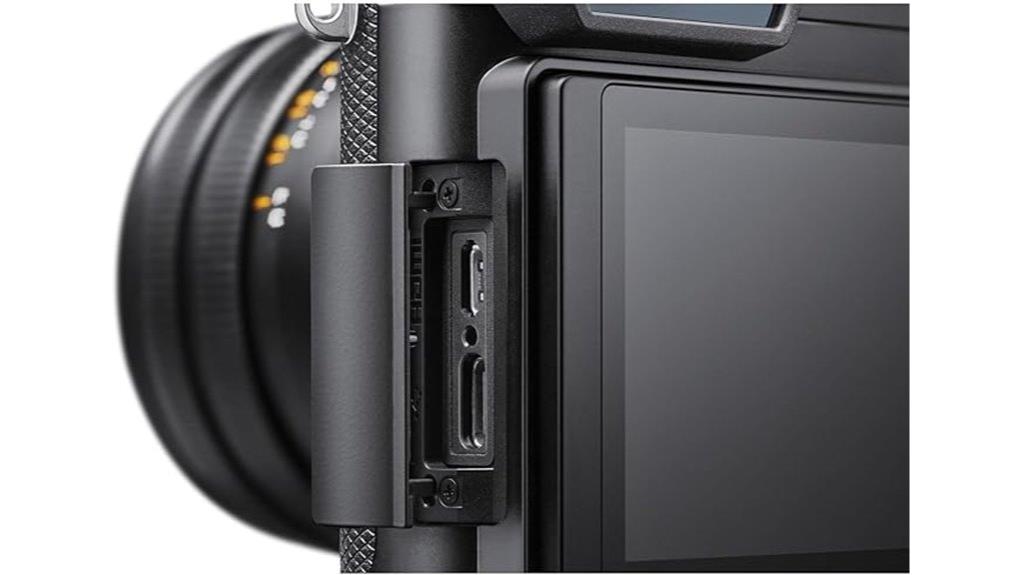
After testing handling and controls alongside the lens and autofocus, you’ll notice the Q3’s ergonomics balance compactness with professional intent: the body feels solid in hand, with textured surfaces and a well-shaped grip that keep the camera stable during longer shoots and one-handed operation. You’ll find grip comfort excellent for extended use; button placement and menu layout are logical, minimizing menu dives. The 5.67MP tiltable touchscreen shows excellent screen responsiveness for touch AF and playback. The EVF provides clear framing with usable eye relief. USB‑C and HDMI ports plus Wi‑Fi deliver robust tethering and fast media offload. The Q3 pairs well with compact support gear like tripods for improved stability and framing.
Value Checklist : Media, Battery, Warranty, Size/Weight, and Who This Camera Isn’t For
Although the Q3 packs pro-grade features into a compact body, you’ll need to plan for higher-cost media and power management to get the most from it. You’ll favor CFexpress Type A or high-speed UHS-II cards to sustain 60MP stills and 8K/ProRes video; accessory compatibility with SD and microSD helps flexibility. Wireless charging and an 18% improved battery life reduce downtime, but expect extra batteries for extended shoots. The 90-day limited warranty is short for a professional tool. At listed weight and compact size you’ll travel light, but resale value may hold if you maintain condition. Who it isn’t for: casual shooters. Consider investing in large-capacity memory cards to handle extended high-resolution shooting and video sessions.
Some Questions Answered
Does the Q3 Support External Microphones or Headphone Monitoring During Video Recording?
Yes — you can use an external mic with the Q3, and you can monitor audio via headphone monitoring when recording video. You’ll connect an external mic through the camera’s audio input options (using compatible adapters if needed), and the camera provides real-time headphone monitoring through its audio output/HDMI workflow. You’ll want to verify cable/adapter compatibility and in-menu audio levels to guarantee proper gain, monitoring latency, and recording format settings.
Can the Built-In Lens Be Replaced or Adapted for Other Focal Lengths?
No — the built-in lens is a fixed lens, so you can’t remove it to swap focal lengths. You can use adapter compatibility only via digital framing or external optical adapters (screw‑on converters) designed for the fixed Summilux 28mm to alter angle of view; they don’t replace the lens. That means you’ll rely on digital zoom/framing and converters for other focal lengths, preserving sensor performance and autofocus functionality.
Is In-Camera RAW Processing or Editing Available for Jpeg/Raw Conversion?
Yes — you can perform in camera editing and raw conversion. You’ll access built‑in RAW processing tools in the camera’s menu to adjust exposure, white balance, contrast, and apply lens corrections, then export JPEGs or 10‑bit files. The workflow is detail‑oriented and non‑destructive to originals; exported files are separate. You’ll still prefer desktop RAW converters for extensive edits, but in camera editing handles quick deliveries and on‑site adjustments reliably.
What Kind of Weather Sealing or Durability Tests Has It Undergone?
There’s no official weather sealing rating; you shouldn’t expect full ingress protection. Manufacturer notes don’t list formal durability testing or IP/ MIL‑STD certifications, so assume basic splash resistance only. If you need rugged reliability, you’ll want third‑party durability testing or protective housing. For field use, plan for careful handling, avoid heavy rain and sand, and consider protective covers or cases since documented weather sealing and standardized durability testing aren’t provided.
Are Firmware Updates User-Installable and How Frequently Are They Released?
Yes — firmware updates are user-installable; you download packages from the manufacturer, copy them to compatible media, and apply via the camera menu. Firmware accessibility is straightforward but requires careful following of instructions and supported card formats. Update cadence isn’t fixed; Leica issues occasional updates focused on stability, AF and video enhancements, typically every few months to annually depending on discovered issues and feature rollouts, so monitor official channels.