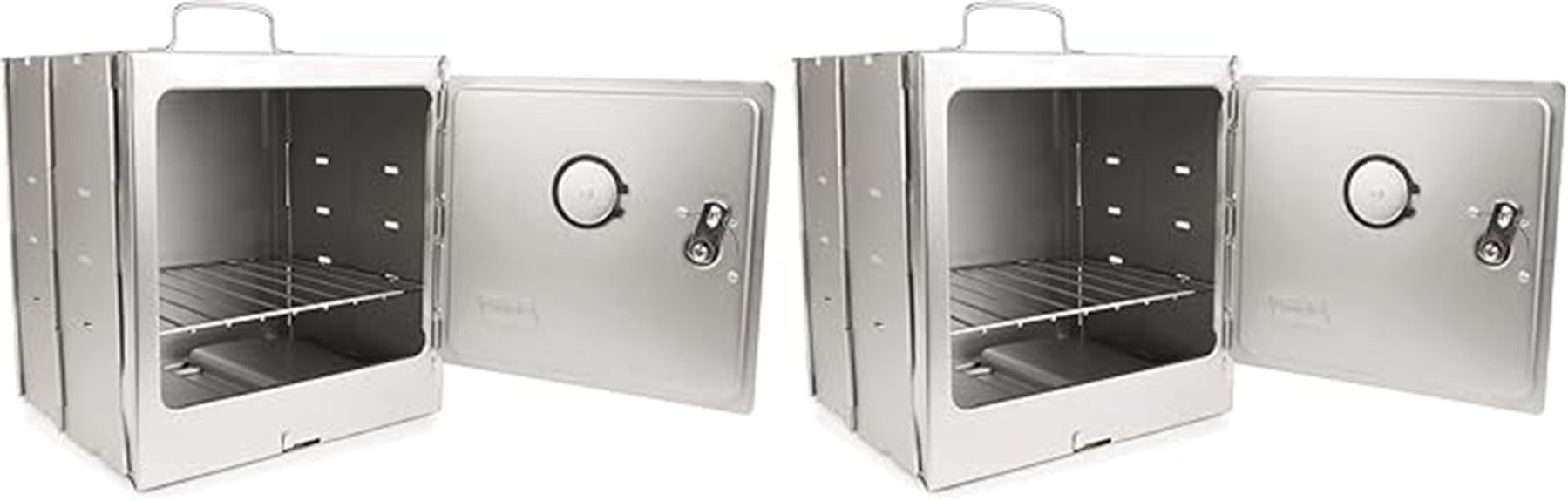
You’ll convert a single-propane Coleman stove into a compact baking chamber that fits pastries, bread, and small pizzas; set the vented base over the burner, pick one of three rack heights, and preheat for even results. The polished aluminum shell conducts heat well, folds flat to 3.3 inches for transport, and cleans easily. Expect ±10–15°F variance and modest propane use; it’s ideal for campers who bake, and the next section covers setup and technique in detail.
Some Key Takeaways
- Compact aluminum oven folds flat, weighs ~14 lb, and fits over compatible Coleman propane or liquid-fuel camp stoves.
- Three rack heights and stone deflector let you control crust and browning for pastries, bread, and pizza.
- Preheat longer than home ovens; expect ±10–15°F variance—use an oven thermometer and appropriate adapter.
- Performs like a small oven with even heat for short bakes, modest propane use, and limited hotspots near the door.
- Easy to clean, durable, latch-secured for storage, and best for campers wanting lightweight, no-frills outdoor baking.
How the Coleman Portable Camping Oven Works With Camp Stoves
When you set the Coleman Portable Camping Oven over a compatible Coleman propane or liquid-fuel camp stove, it channels the stove’s heat into a compact baking chamber so you can bake pastries and other goods at your campsite. You position the oven’s vented base over the burner, align the forward door for access, and choose one of three rack heights for even cooking. Check propane compatibility and use the correct stove adapters if your burner differs. The polished aluminum shell conducts heat efficiently, folds flat for transport, and stays simple to clean, letting you focus on consistent, controlled baking. For easy transport and use with field stoves, pair it with butane camp stove models that match the oven’s base design.
Real‑World Setup and Baking Test: Pastries, Bread, and Pizza
Before you light the stove, gather your tools and ingredients so setup and timing stay tight: a compatible Coleman propane or liquid-fuel stove, the oven folded flat, a heat-resistant surface, oven mitts, a timer on your phone, and pre-measured doughs or pastry pans sized to the 10 sq. in. rack. Set the stone deflector and choose rack height for intended crust. For pastries, chill dough and watch sugar caramelization. For bread, note dough hydration—higher hydration needs lower temp and longer hold. For pizza, preheat longer, slide pie on rack, rotate once. Cool on a rack before slicing. Mastering fuel options for consistent heat is crucial when baking outdoors; learn the basics of multi-fuel stoves to choose the right setup.
Performance Breakdown: Heat Distribution, Rack Positions, and Cooking Times
Although the Coleman oven is compact, it delivers surprisingly even heat across its small chamber, so you’ll rarely chase hot spots if you preheat properly and position the rack right. You’ll use three rack positions to adjust crust color and rise; top for browning, middle for balanced bake, lower for thicker items. Check temps with an oven thermometer because temperature control is basic—expect ±10–15°F variance. Insulation effectiveness is good for short bakes, limiting thermal hotspots near the door. Cooking times mirror small home ovens but plan slightly longer preheat; efficient fuel efficiency means modest propane use per session. For longer outings, consider packing a small assortment of backcountry stove gear to optimize cooking options and fuel management.
Portability, Build Quality, Cleaning, and Storage (Folds Flat)
Because it folds flat and only weighs about 14 pounds, you can stash this Coleman oven in a trunk or carry it to camp without fuss. You’ll appreciate the lightweight carry for short hikes and quick transfers between vehicles. Aluminum construction gives clear corrosion resistance and a polished surface that resists scratches. Build feels solid: hinges and latch align, rack slides into three positions without wobble. Cleaning is straightforward—wipe or rinse aluminum panels, dry fully to avoid spotting. For storage, fold flat to 3.3 inches depth, secure the latch, and stack or tuck it into gear boxes for compact organization. For enthusiasts of wood-burning gear, pairing this oven with compact wood stoves enhances off-grid cooking options.
Who Should Buy This Coleman Oven and Alternatives to Consider
If you camp frequently and want to bake pastries or heat casseroles without hauling a full kitchen, this Coleman Portable Camping Oven is a smart, no-frills choice—its fold-flat design, 14 lb weight, and compatibility with Coleman propane or liquid-fuel stoves make it easy to pack, set up, and use at most campsites. You should buy it if you value lightweight, durable aluminum construction, a three-position adjustable rack, and simple freestanding setup. Budget buyers will appreciate the practical function and 1-year warranty. If you want more features, consider Luxury alternatives like larger propane ovens or dual-burner combo units. Many campers who prioritize portability also look for hard-sided coolers to protect perishables and gear.
Some Questions Answered
Does It Void a Stove’s Warranty to Use This Oven With It?
Generally, no — using the oven on your stove shouldn’t automatically void the stove’s warranty, but you need to check warranty implications and manufacturer disclaimers. You’ll want to confirm stove manufacturer guidance about attachments, heat exposure, and fuel types; improper use or damage could be excluded. Keep receipts, follow installation and usage instructions, and avoid modifications. If in doubt, contact the stove maker for explicit permission to prevent disputes over coverage.
Can It Be Used With Non-Coleman Fuel Types or Adapters?
Yes — you can use alternate fuels or adapters, but you’ll need to confirm adapter compatibility and stove ratings first. You’ll attach the oven to any compatible camp stove that accepts Coleman-style fittings; don’t jury-rig mismatched connectors. Check pressure, fuel type (propane vs. liquid), and manufacturer guidance. If you’re unsure, use a certified adapter and test outdoors with a flame guard. Always monitor for leaks and proper heat distribution.
Is There an Included Temperature Gauge or Thermometer Port?
No, there’s no included temperature gauge or built‑in port. You’ll need to use an external temperature probe inserted through the door gap or a small improvised thermometer placement at a rack level. Position the thermometer placement near the center rack for best accuracy, avoid touching the oven walls, and monitor temps manually while baking. That hands‑on approach helps you track oven conditions and adapt cooking times on the campsite.
Can the Oven Fit Full-Size Baking Sheets or Only Small Trays?
No, it won’t fit a full sheet; it’s designed for compact trays. You’ll be working with smaller pans or half/quarter sheets that fit the 13.5 x 12.9 x 3.3 in cavity and the 10 sq. in. adjustable rack with three heights. You’ll measure your bakeware beforehand, fold the oven flat for transport, and use compatible camp stoves. Expect to bake smaller items—pastries, rolls, or compact casseroles—rather than full-size sheet batches.
Are Replacement Parts (Racks, Hinges) Available Separately?
Yes — you can get replacement parts like racks and hinges, but availability timeline varies. Check Coleman first for OEM parts under the model numbers; they often cover common items within the 1-year warranty window. If OEM’s unavailable, aftermarket compatibility exists for generic camp-oven racks and hinges; measure dimensions before buying. For quick DIY repairs you’ll want basic tools, spare screws, and heat-safe metal epoxy or brackets to fabricate or adapt parts.