You’ll find the Canon EOS Rebel T7 bundle gives you a solid, budget‑friendly DSLR starter kit: a 24.1MP APS‑C body with the EF‑S 18–55mm IS II lens, extra battery, multiple memory cards, filters, tripods and a bag so you can shoot right away. Image quality is good for daylight and beginners; ISO and AF are limited for low light or fast action. Video is basic; accessories boost usability — keep going to learn the tradeoffs and alternatives.
Some Key Takeaways
- Excellent value for beginners: includes Canon T7 with EF‑S 18–55mm IS II lens plus essential accessories for immediate shooting.
- 24.1MP APS‑C sensor delivers detailed RAW files but limited low‑light performance and noticeable noise above ISO 1600.
- 9‑point AF and 3 FPS continuous shooting suit casual photography, not fast action or advanced tracking needs.
- Full‑HD 1080p video with basic audio; use an external mic and tripod/mini HDMI recorder for better results.
- Included filters, extra batteries, memory cards, and tripods make it a practical starter bundle for travel, vlogging, and student projects.
What’s Included in the Canon EOS Rebel T7 Bundle and Why It Matters
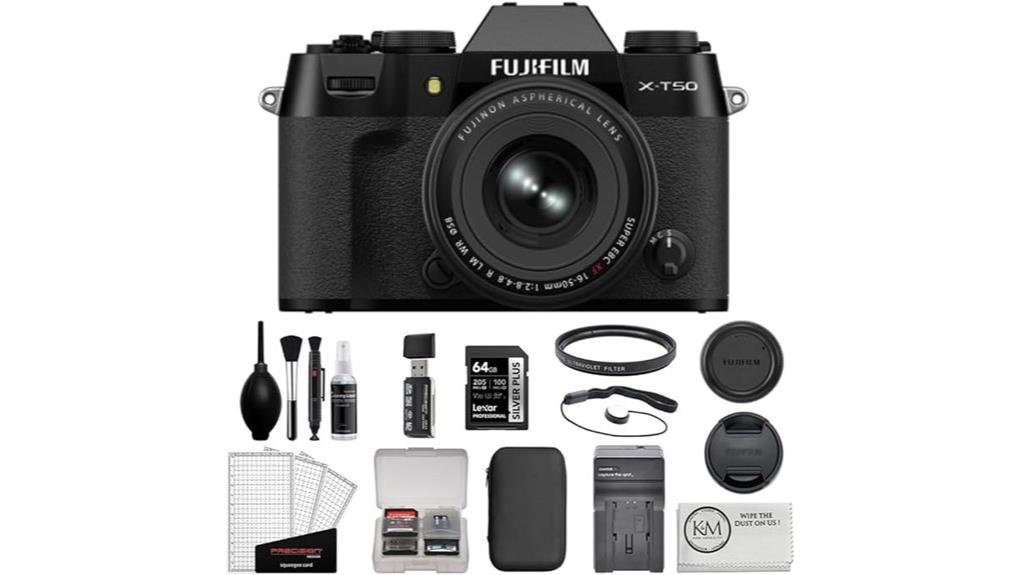
Plunge into the Canon EOS Rebel T7 bundle and you’ll find a complete starter kit built to get you shooting right away: the T7 body with an EF‑S 18–55mm f/3.5–5.6 IS II lens, Deco Gear medium camera bag, replacement LP‑E10 battery plus a double‑battery setup, Lexar 64GB SDXC UHS‑I memory card (with two additional 16GB cards referenced), a memory card reader and storage case, 58mm wide‑angle and telephoto auxiliary lenses, UV/CPL/ND8 filters, 58mm tulip lens hood, microfiber cloth, sensor/lens brush and professional blower, a Deco Essentials photography ebook, a 12‑position tabletop vlogging tripod/handheld grip, mini tripod and full‑size tripod—items that cover power, storage, protection, basic optics and support so you can shoot photos and 1080p video immediately and adapt to common scenarios like vlogging, product shots and outdoor work. Your unboxing impressions will note practical organization, immediate usability and balanced accessory selection. Include care tips: charge and rotate batteries, format cards in camera, store lenses with filters and hood, clean sensors and optics gently, and keep spares accessible. Choosing a dedicated camera bag matched to your gear can make transporting and protecting your kit much easier.
Who This Kit Is Best For and Real-World Use Cases
Because it pairs an easy-to-use APS-C DSLR with a versatile 18–55mm stabilized lens and a thorough set of accessories, this bundle suits beginners and budget-conscious hobbyists who want to learn photography without buying add-ons piecemeal. You’ll find it ideal if you’re establishing beginners’ workflows—shooting RAW, swapping batteries, and managing cards—thanks to extras like the spare LP-E10, multiple tripods, and card reader. For travel vlogging the stabilized kit lens, compact bag, handheld grip, and 1080p video make capture straightforward. It also fits student projects, family events, and starter product photography where affordability and practical tools matter. This kit covers many essentials recommended for mirrorless camera enthusiasts getting into photography.
Image Quality and Performance: Sensor, ISO, Autofocus, and Shooting Tests
When you push the Rebel T7 into real shooting conditions, its 24.1MP APS-C CMOS sensor and 14-bit processing deliver detailed RAW files with good color gradation and usable dynamic range for most everyday scenes. You’ll find ISO 100–6400 (expandable) handles daylight and moderate indoor work; noise climbs noticeably above ISO 1600, so low light performance is limited compared with newer sensors. The 9-point AF is reliable for static subjects and casual tracking, but you’ll miss dense AF coverage for fast action. Dynamic range testing shows recoverable midtones but constrained highlights; 3 FPS shooting suits snapshots, not sports. For enthusiasts, pairing the camera with essential accessories like a quality camera bag and extra batteries enhances day-to-day usability.
Lens, Stabilization, and Accessory Performance (18–55mm, Filters, Tripod, Audio)
Kick things off by noting that the bundled EF‑S 18–55mm f/3.5‑5.6 IS II is a competent all‑rounder for everyday shooting, delivering usable sharpness across most of its focal range and helping you frame anything from wide casual landscapes to short telephoto portraits. You’ll find lens sharpness strongest around 35mm stopped to f/8; corners soften at extremes. Stabilization testing shows the IS system rescues several stops of shake for handheld stills, though it won’t match body-based systems for heavy telephoto work. Included filters, hoods, and both mini and full tripods add practical value; onboard audio relies on camera mic, so expect basic capture. These accessories make the bundle especially useful for product photography with light box tents and tabletop setups.
Video, Viewfinder, Display, and Connectivity: Limitations and Workarounds
Although the T7 records full‑HD 1080p video and gives you basic Wi‑Fi/NFC connectivity, you’ll quickly hit practical limits for serious videography and remote control. You get an optical viewfinder with 0.8x magnification and a fixed 3-inch low res LCD (960×640), which limits live‑view framing and focus verification. Video options lack advanced frame rates and limited codecs, so color grading and editing flexibility suffer. Use the mini‑HDMI out for external recorders or monitors, tether via USB or Wi‑Fi for remote shooting, and rely on external mics and the bundle tripod to mitigate monitoring and codec shortcomings. For photographers who want reliable external monitoring and clean feeds, consider using mini HDMI cables to connect to dedicated monitors or recorders.
Pros, Cons, and Value: Battery Life, Storage, and Bundle Extras Evaluated
While the T7’s modest power draw and included LP‑E10 replacement battery let you shoot longer than a single cell would, you’ll still want to plan for limited endurance during extended sessions or video work. You’ll appreciate the double‑battery setup for on‑the‑go battery management; swap quickly and keep a charger handy for multi‑day shoots. Storage workflow is sensible: Lexar 64GB plus extra cards and a reader let you offload and archive fast, though camera supports UHS‑I only and some specs cite 32GB limits. Bundle extras—bag, tripods, filters, cleaning tools—add tangible value for beginners. Consider investing in dual battery chargers to manage power efficiently during long shoots.
Should You Buy It? Alternatives and Final Buying Recommendation
Having weighed battery limits, storage behavior, and the bundle extras, you can now contemplate whether the Rebel T7 kit matches your needs and where it sits among alternatives. If you’re starting photography or need a reliable travel kit, the T7 bundle delivers solid image quality, useful accessories, and Wi‑Fi connectivity at a low barrier to entry. If you require faster AF, 4K video, or longer battery life you’ll want to contemplate used Canon EOS M50 Mark II or refurbished EOS 80D alternatives, or add a battery grip to extend shooting. Resale value is modest but stable for entry-level Canon DSLRs. Our store also offers a range of compatible spare batteries and chargers to keep you shooting longer with camera batteries.
Some Questions Answered
Can I Use Third-Party Lenses and Flashes With This Camera?
Yes — you can use third party lenses and third party flashes with this camera. You’ll need Canon EF or EF‑S mount compatibility for lenses; autofocus and metering generally work but might vary by maker. For flashes, choose units supporting Canon’s optical or wireless protocols or use manual mode for full control. Expect occasional limitations with TTL or advanced features; check manufacturer compatibility lists and test firmware updates for best performance.
Is the Camera Compatible With Newer LP-E17 Batteries?
No — the camera isn’t compatible with newer LP‑E17 batteries; it uses the LP‑E10 form factor, so battery compatibility is limited to LP‑E10 or approved replacements. You can’t make an LP‑E17 work reliably just by plugging it in, and firmware updates won’t change the physical or electrical differences. For extended runtime, you’ll want replacement LP‑E10 cells, a double‑battery grip/charger from the bundle, or a compatible external power solution.
How User-Friendly Is Wi‑Fi and NFC Pairing With Smartphones?
You’ll find Wi‑Fi and NFC easy pairing for basic transfers and remote control, but you’ll hit connection limits: the T7 supports one device at a time and lacks seamless multi‑device management. Setup’s straightforward using Canon’s Camera Connect app and NFC tap to initiate, then Wi‑Fi for full features. Expect occasional reauthorization after firmware or app updates; for reliable tethering, plan on manual reconnection and checking compatibility with your smartphone’s OS.
Does the Bundle Include Any Software for RAW File Editing?
No — the bundle doesn’t include dedicated raw editing software; it supplies a Deco Essentials photography ebook and hardware accessories, but no Canon RAW converter. You can edit RAW files using third party codecs or popular editors (Lightroom, Capture One, Canon’s DPP downloadable) on your computer. Make sure you install appropriate third party codecs or camera RAW updates so your OS and apps recognize the T7’s CR2/CR3 files for full raw editing capability.
Can the Camera Charge via USB While in Use?
No, you can’t charge the battery via USB while using the camera. The T7 lacks in-camera battery charging over USB, so you’ll need to swap batteries or use the included replacement LP-E10 and double-battery setup. You can connect the camera’s usb ports for data transfer or HDMI output, but not for active battery charging. For continuous operation, use an external battery pack with a compatible LP-E10 adapter or an AC power adapter.