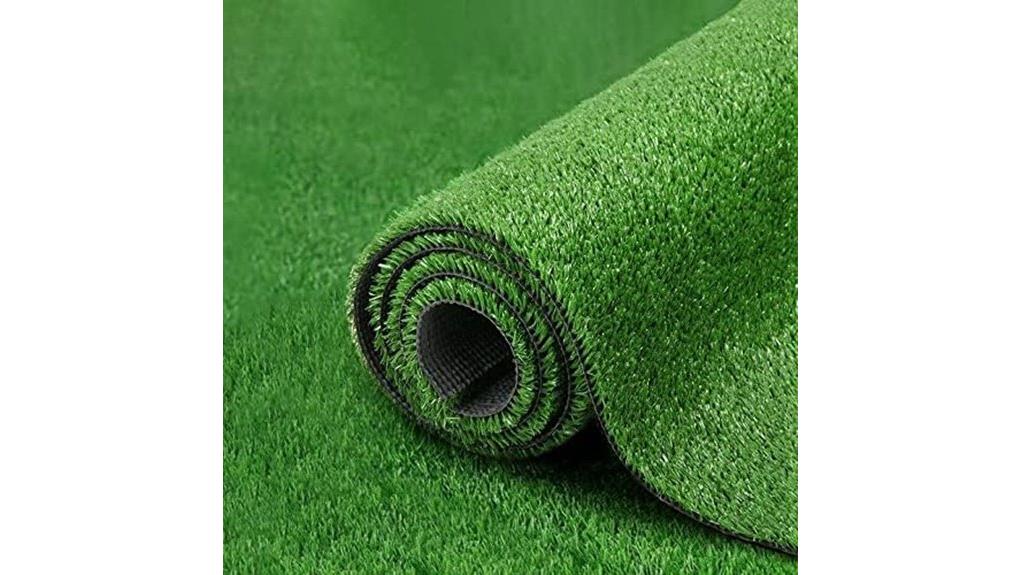
This heat‑resistant, rubber‑backed astroturf rug uses polypropylene blades and drainage holes, so it stands up to sun, spills, pets, and foot traffic better than standard synthetics. At 0.4‑inch pile it feels cushioned but won’t mat easily, making it great for patios, rooftops, poolside spots, playrooms, and pet zones. You’ll cut and secure it with a utility knife, tape, or adhesive and hose it off for cleanup. Keep going to see installation, maintenance, and buying tips.
Some Key Takeaways
- Heat-resistant polypropylene fibers and rubber backing with drainage make this turf suitable for outdoor patios, rooftops, and poolside areas.
- 0.4-inch pile offers a realistic four-tone look with moderate softness while resisting matting from regular foot and pet traffic.
- Rubber-backed design with drainage holes handles spills, quick drying, and prevents mud transfer when used outdoors.
- Indoor uses include playrooms, showrooms, and pet zones where cushioning, noise reduction, and aesthetics matter.
- Maintenance is simple: rinse spills, use enzyme cleaners for pet odors, and restore pile with vertical brushing.
What This Astroturf Rug Is Made Of and How It Performs
Built from heat-resistant polypropylene yarns with a rubber backing and drainage holes, this astroturf delivers a realistic, four-tone blade look while staying durable and easy to care for. You’ll notice polypropylene durability in everyday use: it resists wear from pets, kids, and foot traffic better than standard synthetics. The 0.4-inch pile balances softness and resilience, feeling natural without matting. Drainage efficiency is strong thanks to the backing holes, so spills and rain clear quickly and cleaning stays simple. Compared to natural grass, maintenance is minimal—no mowing or watering—while appearance and function remain consistently high. For patios, choosing the right surface materials like gravel for patios can enhance drainage and overall outdoor comfort.
Where It Works Best: Indoor vs Outdoor Use Cases
While it thrives outdoors for patios, rooftops, and poolside areas, this astroturf also works well indoors for playrooms, showrooms, and pet zones—so you can choose based on function rather than location. You’ll prefer outdoor spots when drainage, UV resistance, and heat tolerance matter; rubber backing with holes handles spills and quick drying, and balcony cooling reduces surface heat. Indoors, the lush pile boosts indoor aesthetics, cushions falls, and keeps mud out of carpets. Compare wear needs: high-traffic outdoor uses suit its durable polypropylene; quieter indoor settings highlight comfort and visual appeal. Many home and garden retailers also offer complementary outdoor planters and décor to complete your patio look.
How to Install, Cut, and Secure the Rug for Different Spaces
If you want a snug, long-lasting install, plan the layout, cut precisely with a utility knife, and secure edges for the surface you'll use—patio, balcony, indoor playroom, or pet run. Measure twice, roll the turf with the pile pointing the same way, and trim excess with straight cuts. For uneven terraces choose overlap and trim; for indoor areas use double-sided tape. Join panels with seam sealing tape and adhesive, aligning blades for a natural look. Anchor perimeter with adhesive, landscape staples, or weighted edging depending on substrate. Finish with clean edge trimming and a final brush to set fibers. Consider pairing artificial turf with complementary surfaces like interlocking deck tiles to create defined zones and enhance durability.
Cleaning, Maintenance, and Pet-Safe Durability Tips
Because artificial grass needs simple, regular care to stay looking fresh, you’ll want straightforward cleaning routines and smart maintenance habits that keep it pet-safe and durable. Rinse spills quickly for easy stain removal; mild detergent and water handle most marks without harming polypropylene fibers. For odor control, hose frequently and use enzyme cleaners for pet areas; guarantee rubber-backed drainage stays clear. Encourage pet training to use one spot or a litter pad to limit concentrated wear. Restore pile with recommended brushing techniques—vertical strokes with a stiff broom—to prevent matting and extend life. Inspect seams and drainage periodically. Also consider using an appropriate outdoor rug pad to improve drainage and prevent slipping.
Should You Buy It? Cost, Pros/Cons, and Who It’s Best For
When weighing whether to buy this artificial grass, consider cost versus long-term savings: you’ll pay more up front than for seed or sod, but you’ll save on mowing, watering, and ongoing upkeep while gaining a year-round green surface that stands up to pets and kids. For budget considerations, factor installation, rubber-backed durability, and replacement cycle; it’s pricier initially but lowers recurring costs. Pros: low maintenance, pet- and child-friendly, realistic look. Cons: upfront expense, heat retention, limited pile height. Best for busy homeowners, pet owners, renters seeking low-maintenance patios, and buyers mindful of resale impact. Many homeowners also pair turf with patio pavers to create durable, attractive outdoor living spaces.
Some Questions Answered
Does It Fade Under Prolonged Direct Sunlight?
No, it won’t fade quickly under prolonged direct sunlight. You’ll get good UV resistance and strong color longevity because the polypropylene fibers and four-tone blade pattern resist sun damage. Compared to cheaper turf, this one keeps its green look longer and needs less replacement. You’ll still expect gradual fading over many years, especially in extreme sun, but overall it’s a durable, low-maintenance choice for long-lasting color.
Is It Safe for Small Children to Play on Barefoot?
Yes — you can let small children play barefoot on it. The child safety profile is strong: non-toxic, lead-free polypropylene minimizes skin irritation risk compared with rougher synthetics. The soft, lush play surface reduces scrapes and falls. Drainage and rubber backing cut germ buildup versus damp natural grass, but you should clean spills and pet waste regularly. Overall it’s a practical, low-risk option for kids’ play areas.
Can It Be Used on Balconies With Weight Limits?
Yes — you can use it on balconies with weight limits if you consider balcony drainage and weight distribution. Unlike heavy pavers, this rubber-backed turf adds minimal load and promotes drainage through built-in holes, reducing water pooling. You'll want to spread padding or lightweight decking panels to evenly distribute any extra furniture or planters. Compare total imposed loads to your balcony’s rating and avoid concentrating heavy items in one spot.
How Recyclable or Eco-Friendly Is the Material?
It’s moderately eco-friendly: you’ll find little recycled content and the polypropylene fibers aren’t biodegradable fibers, so end of life typically means landfill or specialized recycling. You’ll reduce water and mowing emissions compared with live turf, but production emissions for synthetic yarns remain significant. Compared to natural grass, it cuts ongoing resource use, yet it’s less circular than products designed for easy recycling or composting. Consider take-back programs.
Does the Rubber Backing Emit Odors Indoors?
You likely won't notice strong odors indoors; the rubber backing can cause minimal chemical offgassing initially, but it's generally low. Compared to cheap rubber mats, this product's heat-resistant, non-toxic, lead-free construction reduces persistent smells and air quality impact. To be safe, ventilate new installations for 24–72 hours, especially in confined spaces. If you detect lasting odors, contact the seller for inspection or replacement under their service policy.