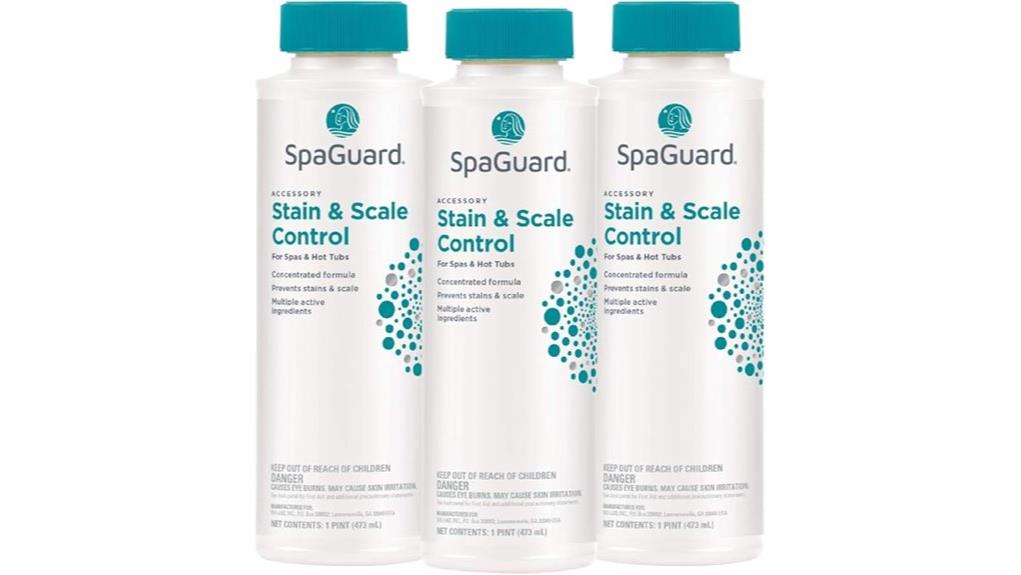
You’ll find SpaGuard Stain & Scale Control is a concentrated chelant that sequesters calcium and metal ions to prevent scale and light metal staining while improving clarity. You’ll dose about 1 fl oz per 300 gallons to clean-filtered water and run the pump for 30–120 minutes; repeat treatments help with fresh stains or hard-water areas. It’s economical for routine use but won’t remove entrenched deposits; continue for specifics on limits, handling, and alternatives.
Some Key Takeaways
- Concentrated sequestrant binds calcium and metals to prevent scale and metal staining when used per label.
- Typical dose is 1 fl oz per 300 gallons with 30–120 minutes circulation for best results.
- Effective for routine weekly maintenance and light, recent stains; heavy or entrenched deposits may need stronger treatments.
- Acidic formula requires careful handling; economical per dose and sold in 3×1 pint packs.
- Works variably by water chemistry; repeat treatments and monitoring improve clarity and filter removal of chelated metals.
Quick Verdict: Does SpaGuard Stain & Scale Control Work?
Although results vary with water chemistry and existing buildup, SpaGuard Stain & Scale Control will generally work as advertised: it sequesters calcium and metal ions to inhibit scale and reduce metal staining, clarifies water by preventing particulate buildup, and can remove relatively fresh stains when used as directed. You’ll notice measurable reductions in visible staining and less filter clogging when you follow dosing and circulation guidelines. Reviewed customer testimonials align with lab claims, reporting effective maintenance dosing and occasional need for repeat treatment on heavy deposits. Include a brief cost analysis: per-dose expense is low, making it economical for routine preventative use.
How It Works and What It Treats (Scale, Metal Stains, Water Clarity)
When you add SpaGuard Stain & Scale Control, its concentrated sequestrant actively binds free calcium and transitional metal ions (iron, copper, manganese), keeping them dissolved and preventing precipitation as calcium carbonate or metal oxides that form scale and stains. You’ll rely on mineral sequestration to stabilize hardness and chelate metals so particles stay in solution for filter removal. That process limits new scale, reduces metal staining risk, and improves water clarity. For existing light deposits the formula assists surface restoration by loosening recent scale and fresh metal stains so mechanical cleaning and filtration can remove residues. Follow label for safe use.
Real-World Performance: Dosage, Application, and Results to Expect
In practical use, you’ll dose SpaGuard Stain & Scale Control at 1 fl oz per 300 gallons and run the pump to circulate treated water—follow the bottle label for whether to operate 30 minutes or the full 2 hours—so the sequestering agents disperse and bind calcium and metal ions. You apply directly to clean-filtered spa water, noting application timing for initial versus maintenance treatments. Expect clearer water within a filtration cycle; fresh metal stains will lighten after repeated applications. Make dosage adjustments for high metal or hard-water conditions, increasing frequency rather than single large doses, and monitor filter trapping and water chemistry.
Pros, Cons, and Who Should Buy This Product
If you want a focused, low‑maintenance solution for preventing scale and removing fresh metal stains, SpaGuard Stain & Scale Control delivers a concentrated, easy‑to‑dose liquid that sequesters calcium and metal ions, clarifies water, and reduces filter clogging when used at the recommended 1 fl oz per 300 gallons and with proper circulation. You’ll appreciate low maintenance weekly dosing and measurable scale control. Pros: concentrated formula, clear dosing, improved filter life, cost effectiveness per pint in a 3‑bottle pack. Cons: acidic pH requires handling care; limited efficacy on heavy, entrenched stains. Buyers: routine spa owners prioritizing preventive chemistry. Eco considerations include judicious dosing; packaging durability is solid.
How SpaGuard Compares to Alternatives and Where to Buy
Having established SpaGuard‘s strengths for routine scale prevention and light stain removal, compare it directly against other sequestering and specialty stain removers to pick the best fit for your spa. You’ll find SpaGuard efficient for weekly maintenance and modest stains, with a concentrated formula and clear dosing. For heavy scale or embedded iron stains, consider enzyme or acid-based specialty products; they act faster but need careful handling. Do a price comparison per fluid ounce and factor pack size (3×1 pint). Check retailer availability — online marketplaces, spa dealers, and big-box stores — and verify ASIN B01M6CUQAH or UPC 017541619271.
Some Questions Answered
Is This Product Safe for All Spa Surface Materials?
Yes — it’s generally safe for common spa surface materials when used per label, but you should confirm compatibility first. You’ll protect finish protection by following dilution and circulation instructions, testing a small hidden area if unsure. Avoid prolonged contact with sensitive finishes and rinse spills. For acrylic, fiberglass, and most painted or coated surfaces it’s compatible; check manufacturer guidance for exotic or vintage finishes and follow the product label.
Can I Use It With Saltwater or Bromine Systems?
Yes — you can use it with salt chlorination and bromine compatibility systems. You’ll add the product directly to spa water per label dosing, then run the pump to circulate so the sequestering agents bind metals and calcium. Monitor sanitizer levels after treatment, as salt systems and bromine may require adjustment. Follow the product label for exact circulation time and dosing to avoid interference with your sanitizer balance and equipment.
Does It Affect pH or Require pH Adjustment After Use?
It generally won’t cause significant pH drift, but you should monitor pH stability after application. Because the product is acidic (pH 3.0), small transient drops can occur, especially with large doses. Check pH and total alkalinity after the initial treatment and after the pump run; adjust if pH falls outside the recommended range. Maintain the recommended dosing frequency (1 oz/300 gal weekly) to minimize repeated pH shocks.
Is It Safe for People With Sensitive Skin or Allergies?
You shouldn’t assume it’s fully safe; SpaGuard’s formula is acidic and can trigger sensitive reactions. If users have a history of skin allergies or sensitivity, perform allergy testing: apply diluted treated water to a small skin patch and wait 24 hours. Rinse immediately if irritation occurs. Maintain proper pH and follow label dosing to minimize residue. Instruct bathers to shower after use and consult a physician for chronic dermatologic conditions.
How Should I Store and Dispose of Unused Product?
Store unopened and opened bottles in a cool, dry, well-ventilated area away from heat, ignition sources, children and pets; keep caps tightly closed and original labels intact — that’s proper storage. For disposal methods, follow label and local regulations: don’t pour large quantities down drains. Empty rinsed containers may be recycled if permitted; leftover product should be taken to a household hazardous waste facility or hazardous waste pickup per local guidelines.