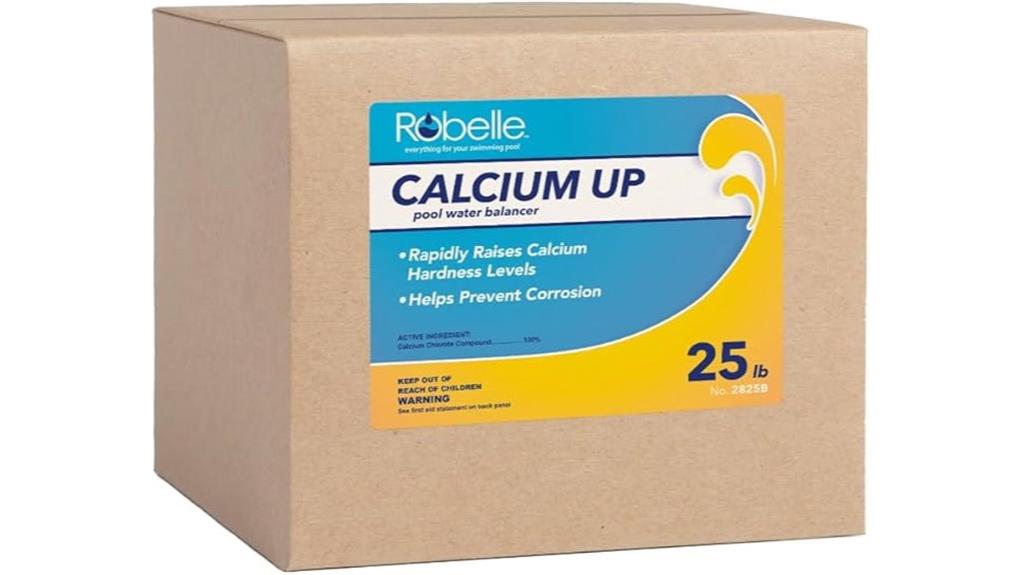
You’ll find Robelle’s 25-pound Premium Calcium Up is a straightforward, concentrated calcium chloride you can use to boost hardness and protect plaster, tile, and metal. It dissolves quickly, disperses via normal circulation, and follows the reliable rule: 8 ounces per 5,000 gallons raises calcium 10 ppm. A 25-lb bag gives multiple doses, so calculate cost per 8-oz treatment, store dry off concrete, and follow label directions — keep going and you’ll see dosage examples, performance notes, and safety tips.
Some Key Takeaways
- Robelle 25-pound bag contains concentrated calcium chloride to quickly raise pool calcium hardness to the recommended 200–400 ppm range.
- Dosage rule: 8 ounces raises hardness 10 ppm per 5,000 gallons; scale by pool volume and retest after dosing.
- Granules dissolve rapidly and disperse via normal circulation, typically showing measurable hardness changes within hours.
- Packaged for multiple treatments; calculate cost per treatment by dividing bag cost by total 8-ounce doses.
- Store sealed and dry off concrete; follow label, check compatibility with metals and salt systems, and prioritize safety.
What Robelle 25-Pounds Calcium Up Is and Who It’s For
Robelle 25-Pounds Premium Pool Calcium Up is a concentrated calcium chloride treatment designed to raise your pool’s calcium hardness quickly and predictably, so you can prevent corrosion, etching, and staining of plaster, tile, and metal fixtures. You’ll find it suits pool owners managing low hardness who need rapid, measurable correction. The 25-pound packaging delivers multiple treatments; dosages depend on volume and current ppm. You’ll add per label, then retest to confirm targets. Assess equipment compatibility with metal fixtures, salt systems, and automation before use to avoid unintended interactions; follow manufacturer guidance for sensitive components.
How It Works and Why Calcium Hardness (200–400 Ppm) Matters
Why does calcium hardness matter in your pool, and how does calcium chloride fix low levels? You rely on a 200–400 ppm range to maintain calcium buffering that stabilizes water chemistry, preventing aggressive water from leaching plaster, tile grout, and metal. Robelle’s calcium chloride quickly raises total hardness, restoring that buffer so pH and alkalinity shifts won’t damage surfaces. Proper hardness delivers surface protection by reducing etching, staining, and corrosion risks. You should test, add product to circulation, and retest to confirm the 200–400 ppm target. Consistent monitoring keeps treatment efficient and protects your pool finishes over time.
Real-World Dosage: How to Calculate 8 Oz per 5,000 Gal and Treatment Examples
To calculate dosing quickly, use the rule that 8 ounces of calcium chloride raises calcium hardness by 10 ppm per 5,000 gallons of pool water—so you just scale that ratio to your pool’s volume and desired ppm increase. Measure your pool volume, then divide by 5,000 and multiply by the required 8-ounce increments; for example, a 20,000-gallon pool needs four times 8 ounces to raise 10 ppm. Use precise measurement tools and test kits before and after. Plan seasonal dosing increases after winter refill or heavy dilution, adding in staged doses and retesting until the 200–400 ppm target is reached.
Performance Review : Speed, Effectiveness, and Pool-Surface Results
When you add the calcium chloride, you’ll see measurable changes in hardness within hours as the granules dissolve quickly and disperse through normal circulation; this rapid uptake prevents prolonged exposure of plaster or tile to soft water that can cause etching. You’ll notice rapid dissolution and steady hardness rises that reach target ppm predictably when you dose per volume. Effectiveness is consistent: treated pools resist staining and etching, and water chemistry stabilizes without extended agitation. For surface protection, maintain 200–400 ppm and retest after treatment. Overall, it’s efficient, controllable, and delivers reliable pool-surface results when used as directed.
Buying Considerations: Cost per Treatment, Storage, Safety, and When to Choose It
Although the upfront cost of a 25-pound bag might seem significant, you’ll usually get multiple treatments out of it—calculate cost per treatment based on your pool’s volume and the ppm increase you need (8 oz raises 10 ppm per 5,000 gallons). Do a clear price breakdown: divide bag cost by total 8-oz doses for your pool. Follow storage tips: keep sealed, dry, and off concrete to avoid moisture pickup. Prioritize child safety: lock storage and label containers. Choose Robelle when low hardness risks corrosion or staining; consider seasonal timing to treat before heavy use or winter chemistry shifts.
Some Questions Answered
Can This Product Be Used in Saltwater Pools With Chlorine Generators?
Yes — you can use it in saltwater pools with chlorine generators. You’ll get good saltwater compatibility because calcium chloride simply raises hardness without interfering with the generator chemistry. Monitor levels closely, since generator impact on corrosion and scaling is tied to calcium hardness and salinity. Add by pool volume, wait, then retest to reach the 200–400 ppm target; this prevents etching, staining, and equipment wear.
Does It Affect Pool pH or Require pH Adjustment Afterward?
No, it won’t markedly affect pH, though you should monitor it after adding calcium chloride. You’ll mainly raise calcium hardness; any pH shift is minor and short-lived, but calcium additions can influence buffer interactions and slightly affect alkalinity readings. If alkalinity moves, adjust total alkalinity first to stabilize buffering, then recheck pH. You’ll avoid surprises by testing hardness, alkalinity, and pH after treatment.
Is Calcium Chloride Safe for Vinyl or Inflatable Pool Liners?
Yes — calcium chloride is generally safe for vinyl or inflatable pool liners when used correctly. You’ll avoid damage by following liner testing and adding product properly: dissolve granules in a bucket of water first, pour around the pool perimeter, and avoid concentrated contact with the liner. Test calcium hardness and monitor for softening or discoloration. If your liner’s older or damaged, perform a small spot liner testing before full treatment to be cautious.
How Long Before Swimming Is It Safe to Re-Enter After Dosing?
You should wait at least 15–30 minutes after dosing before swimming to let the calcium chloride dissolve and disperse; longer if you broadcast granular product at the waterline. That reduces concentrated pockets that could cause skin irritation. Run the pump and return jets continuously, test calcium and pH, and verify levels are within the 200–400 ppm target. If you see cloudiness or strong chemical odors, wait and retest before re-entering.
Can It Be Pre-Dissolved to Avoid Cloudiness During Application?
Yes — you can pre-dissolve to avoid cloudiness. Use pre dissolution methods by mixing small batches in a clean bucket with warm water, stirring until fully dissolved, then add slowly to deep end with pump running. Wait 15–30 minutes after application timing before testing; circulate thoroughly and retest calcium hardness. Don’t add undissolved clumps, and adjust dosage based on pool volume and current hardness to hit the 200–400 ppm target.