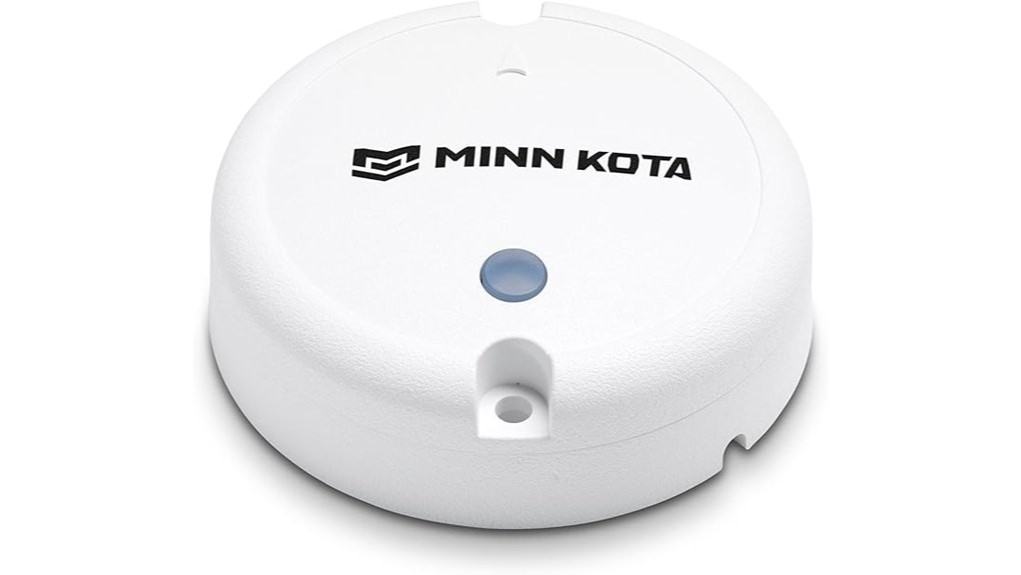
You’ll get a compact, bow‑mounted digital heading sensor that feeds continuous magnetic heading into i‑Pilot systems and enables Bluetooth Spot‑Lock Jog for precise 5‑ft adjustments. It’s built for anglers using PowerDrive or Riptide motors, draws minimal power, and tolerates high temps. Install and multi‑point calibrate away from ferrous interference for best accuracy; expect small corrections and occasional drift near large metal. It’s midrange priced, covered by a two‑year warranty, and you can learn more practical setup and compatibility details.
Some Key Takeaways
- Accurate digital heading sensor for i-Pilot systems, enabling reliable heading-based control and Bluetooth Spot-Lock Jog adjustments.
- Compact, lightweight unit (6.6 x 1.6 x 4.8 in, 0.7 lb) with 12.5″ power lead and simple bow-mount installation.
- Requires careful mounting and multi-point calibration to avoid magnetic interference and minimize heading drift.
- Performs well for freshwater and sheltered saltwater use; corrosion and sealing issues possible in harsh saltwater.
- Midrange accessory price, two-year warranty, and periodic firmware updates recommended for optimal edge-case behavior.
What the Minn Kota 1866680 I‑Pilot Heading Sensor Does and Who It’s For
Although it mounts at the bow, the Minn Kota 1866680 i‑Pilot Heading Sensor works as an onboard compass for your trolling motor, continuously relaying boat heading to enable heading‑based control and Spot‑Lock Jog adjustments. You’ll use it to maintain precise heading information for course holding, automated corrections, and incremental Spot‑Lock relocation via Bluetooth. It integrates with i‑Pilot systems to convert magnetic heading into digital commands, improving boat navigation accuracy and reducing manual steering. Designed for anglers, it provides angler assistance during casting and drift control, letting you focus on fishable water while the system maintains position. Bright strobe lighting accessories can enhance visibility and safety during low‑light water adventures.
Key Features and Specs That Matter (Heading Sensor, Bluetooth Spot‑Lock Jog, Size, Temp, Weight)
Having established how the i‑Pilot heading sensor supports heading‑based control and Spot‑Lock functionality, let’s look at the specific features and specs that affect performance and installation. You get a digital heading sensor with internal compass data and Bluetooth Spot‑Lock Jog for 5 ft increments. Compact dimensions (6.6 x 1.6 x 4.8 inches) and 0.7 lb weight simplify bow‑mount installation and reduce torque on mounting hardware. Upper temperature rating of 185°F defines thermal tolerance for hot environments. Included 12.5″ power lead and mounting kit are adequate; verify cable routing and secure fastening to maintain reliable heading input. This accessory is ideal for paddlers and anglers who pair it with VHF marine radios and other onboard gear for safer, smarter trips on the water.
Real‑World Setup and Performance: Installation, Calibration, and Heading Accuracy
When you mount and calibrate the Minn Kota i-Pilot heading sensor correctly, it delivers reliable heading data for Spot‑Lock and heading‑based steering; start by choosing a stable bow location with minimal magnetic interference, secure the sensor so its cable isn’t stressed, and route the 12.5″ lead away from power conductors and ferrous hardware. Follow installation tips: firm bow mount, correct mounting alignment relative to bow centerline, torque hardware to spec. Use a calibration checklist: level boat, perform multi‑point compass calibration, verify Bluetooth link. Monitor heading drift during trials; small corrections are normal, excessive drift indicates interference or misalignment. For kayakers and other outdoor enthusiasts, consider using purpose-built rudder cable accessories and mounting practices to maintain reliable control and reduce wear on steering components, especially when installing electronics on small craft like kayaks and canoes with limited mounting space and vibration exposure rudder cable accessories.
Pros, Cons, and Common Issues From Owners and Testing
After confirming proper installation and calibration, you’ll notice consistent heading data that enables reliable Spot‑Lock and heading control, but real‑world use exposes both strengths and limitations. You’ll get precise heading hold, easy Spot‑Lock Jog via Bluetooth range, and minimal power draw that negligibly impacts battery life. Downsides include occasional heading drift near large metal structures and dependency on periodic firmware updates to fix edge-case behavior. Owners report mounting wear where sealing is imperfect; corrosion resistance is good but not foolproof in harsh saltwater without maintenance. Common fixes: re-calibrate, secure wiring, and apply dielectric grease to connectors. For anglers and paddlers shopping for gear, consider also pairing the sensor with marine compasses and quality kayak equipment to ensure reliable navigation and durability.
Should You Buy It? Use Cases, Compatibility, Price, and Warranty Considerations
If you rely on reliable heading hold and Spot‑Lock Jog for freshwater or sheltered saltwater fishing, the Minn Kota 1866680 i-Pilot Heading Sensor is a straightforward upgrade that delivers accurate compass data and Bluetooth Spot‑Lock adjustments with minimal power draw. You’ll buy it if you use i-Pilot PowerDrive or Riptide PowerDrive motors and need heading-based control or Spot‑Lock Jog. It fits bow‑mount installations; confirm motor and head unit compatibility before ordering. Expect negligible impact on battery life and a simple install. Price sits midrange for accessories; a clean install and documentation help preserve resale value. Two‑year warranty covers defects. We also recommend considering proper water filtration and gear maintenance for any kayak or watercraft adventures.
Some Questions Answered
Can the Sensor Be Used With Non‑Minn Kota Trolling Motors?
No — it won’t reliably work with non‑Minn Kota motors. You’ll need motors that speak Minn Kota’s digital protocol; there’s no built‑in protocol translation for third‑party compatibility. You could attempt a custom interface, but that requires reverse engineering Minn Kota signals, designing hardware/software to translate commands, and accepting warranty and reliability risks. For dependable heading control and Spot‑Lock Jog features, stick with Minn Kota‑compatible systems or consult a marine electronics integrator.
Is the Unit Waterproof for Prolonged Submersion?
No — it’s not designed for prolonged submersion. You’ll find waterproof testing focuses on splash and rain resistance rather than full immersion; manufacturer specs don’t list an IP (ingress protection) rating for continuous underwater use. You should avoid submerging the unit, mount it per instructions, and keep seals and connectors clean. If you need immersion-rated gear, choose a device with an explicit IP67/IP68 rating for reliable underwater performance.
Does the Bluetooth Range Extend Beyond 30 Feet?
No, you shouldn’t expect Bluetooth range beyond 30 feet in typical conditions. Bluetooth limitations and Signal interference often reduce effective distance; metal boat structures, electronics, and water reflections degrade connectivity. You’ll get reliable Spot-Lock Jog control within roughly 20–30 feet; beyond that you’ll see dropouts or lag. For consistent performance, keep the sensor and controller line-of-sight, minimize obstructions, and avoid crowded RF environments.
Are Replacement Mounting Brackets Available Separately?
Yes — you can get replacement mounting brackets separately from Minn Kota or authorized dealers. Check bracket compatibility with your bow mount and model 1866680 before ordering. If OEM parts aren’t available, consider mounting alternatives like third-party clamps or custom plates that match the sensor’s bolt pattern and wiring clearance. Verify material corrosion resistance and secure fit; incompatible brackets can affect heading accuracy and Spot-Lock Jog performance, so confirm specs first.
Can Multiple Sensors Be Paired to One I‑Pilot System?
Yes — you can pair multiple sensors, but you’ll need to confirm firmware compatibility first. You’ll pair each heading sensor to the i‑Pilot headunit one at a time, and the system will use the active sensor data. If sensors run mismatched firmware the unit may reject them or behave unpredictably. Update controller and sensors to the latest firmware, follow Minn Kota pairing steps, and test Spot‑Lock Jog and heading response after pairing.