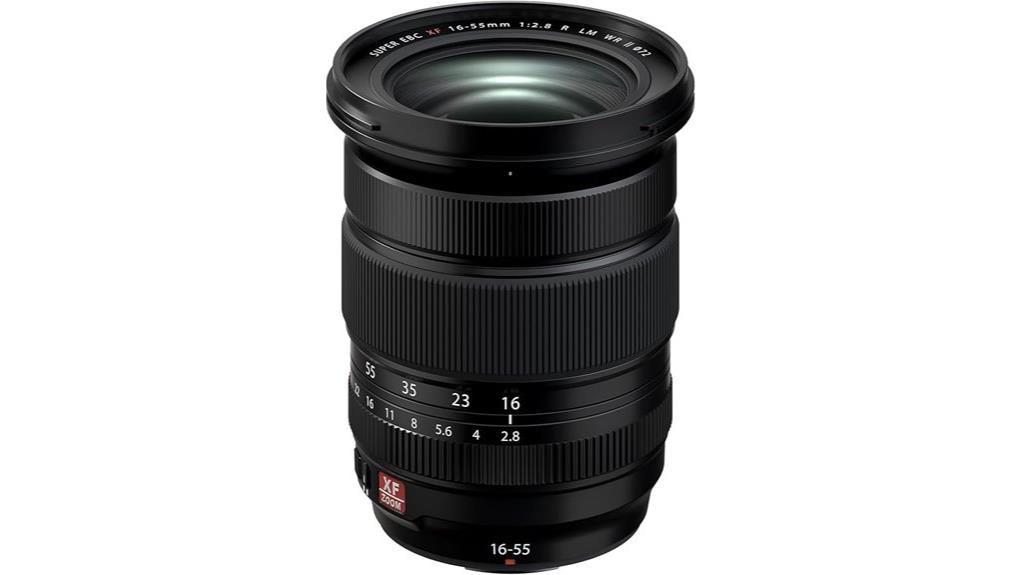
You’ll get a pro-grade constant f/2.8 walkaround zoom that’s tuned for high-resolution Fujifilm bodies and hybrid photo/video use. It pairs updated ED/aspherical elements and an 11‑blade iris with a near‑silent linear AF and weather sealing in a lighter 410 g package. Sharpness is strong from f/2.8 with peak uniformity by f/8, minimal chromatic aberration, and smooth bokeh; no IBIS and price are the trade‑offs. Keep going to see detailed comparisons and test notes.
Some Key Takeaways
- Constant f/2.8 zoom (16–55mm) delivers pro-grade, consistent exposure and shallow depth-of-field across the range.
- Updated optics with ED/aspherical elements and extra-low dispersion yield high resolution and minimal chromatic aberration.
- Compact, weather-sealed design weighs 410 g, significantly lighter and more portable than the original.
- Near-silent linear motor autofocus and smooth aperture control suit hybrid photo/video work with minimal focus breathing.
- Limitations: no in-body stabilization and premium price may deter budget buyers seeking longer reach.
What the XF16-55mmF2.8 R LM WR II Is and Who It’s For
Although it covers a classic wide-to-short-tele range, the Fujinon XF16-55mmF2.8 R LM WR II is a pro-grade, constant‑f/2.8 zoom designed for Fujifilm X‑mount shooters who demand high resolution, reliable weather resistance, and quiet, precise autofocus for mixed photo and video work. You’ll find it suits advanced enthusiasts and professionals who need a single, high-performing walkaround lens. It balances travel photography credentials with portrait versatility, delivering tight subject separation and controlled aberrations. You’ll appreciate its compact, lightweight build and robust sealing for field use. It isn’t for those prioritizing in-body stabilization or ultra-tele reach. For more gear and accessories tailored to camera enthusiasts, check out our Gear Guide for Enthusiast Photographers and Camera Fans.
Key Specs That Matter: Optics, Aperture, AF, and Ergonomics
Having established what the XF16-55mmF2.8 R LM WR II aims to do in the field, let's look at the specific specs that determine how it performs. You get a 16–55mm constant f/2.8 design with ED and aspherical elements tuned for high-resolution sensors; this drives controlled aberrations and predictable color rendition. The 11-blade iris supports smooth highlights. Autofocus uses a near-silent linear motor for precise, responsive locking. Mechanically, weather sealing and a compact footprint reflect purposeful engineering; weight reduction to 410 g improves portability. Ergonomics emphasize handling balance on X-series bodies, with intuitive rings and refined tactile feedback for rapid operation. If you're serious about exposure accuracy, consider pairing this lens with a dedicated light meter to achieve consistent results.
Real-World Performance: Sharpness, Bokeh, and Autofocus in Photo and Video
When you push the XF16-55mmF2.8 R LM WR II through typical shooting scenarios, its resolving power and control of aberrations deliver consistently crisp images across the frame, especially from f/2.8–f/5.6 where center and mid-frame sharpness are strongest; corner performance tightens noticeably by f/4 and reaches excellent uniformity by f/8. You’ll see strong edge sharpness for landscapes and architectural work, with minimal chromatic aberration. Bokeh is smooth thanks to the 11-blade iris and element design, yielding pleasing highlights and subject separation. Autofocus is fast, near-silent for video, with modest focus breathing that’s manageable in most productions. This lens is a great match for photographers who value smooth focus control and reliable build quality.
How It Compares to the Original XF16-55mm and Alternative Zooms
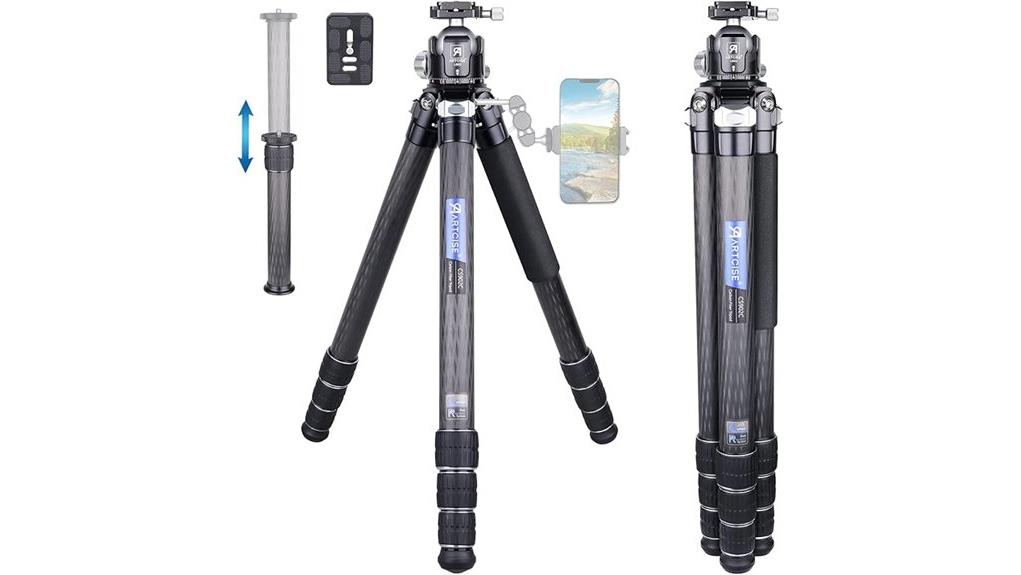
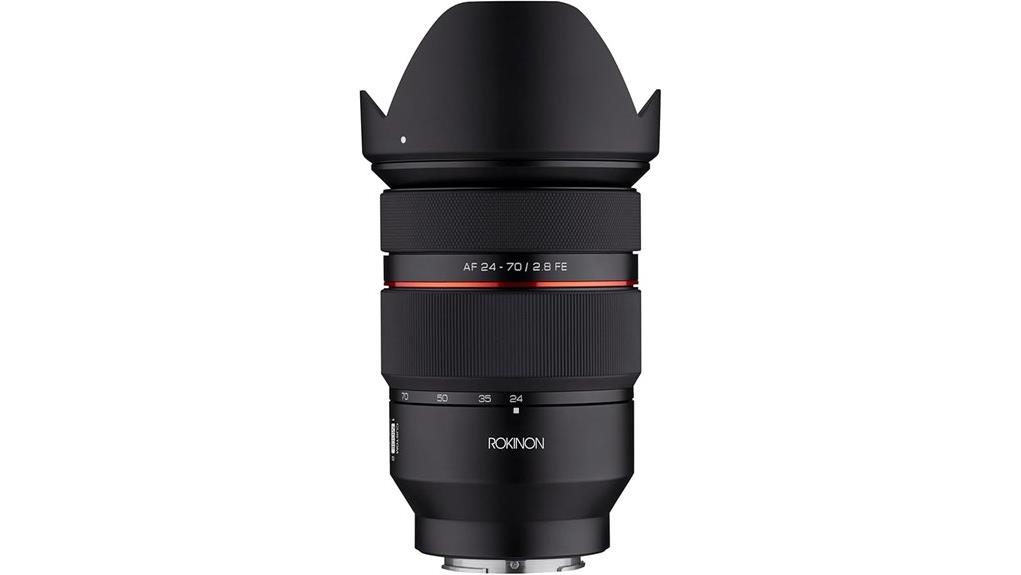
If you already liked the original XF16-55mm, you'll find the R LM WR II a clear technical refinement: it keeps the same versatile 16–55mm, constant f/2.8 character and high resolving intent but trims weight by about 37%, adds weather sealing, an updated optical formula with extra-low dispersion and precision aspherics for improved corner-to-corner resolution on high‑megapixel bodies, and a near‑silent linear AF tuned for smoother video; in short, it’s a lighter, more video‑capable, and optically tightened iteration rather than a radical redesign. You’ll notice crisper corners, quicker AF, and better handling. In direct comparison cost matters—street price sits above many third‑party alternatives, but you get Fujifilm mount longevity assurances, modern optics, and weather resistance that budget zooms lack. If you prioritize long‑term system investment and consistent performance, this II version justifies its premium; if cost is dominant, lighter third‑party zooms remain competitive. It’s also a good match for outdoor photographers who use heavy-duty tripods to maximize stability and image quality.
Verdict: Strengths, Limitations, and Who Should Buy This Lens
The II model sharpens what made the original great while cutting weight and adding weather sealing, so you get a more mobile, video‑friendly standard zoom without compromising on optical performance. You’ll appreciate consistent f/2.8 speed, high resolving power for 40MP bodies, quiet linear AF, smooth aperture control and improved handling at 410 g. Limitations include no in‑body stabilization and a premium price positioning that may deter budget buyers. Buy it if you need a versatile pro-grade walkaround for photo and hybrid video work, especially with a weather‑resistant X Series body; skip it if stabilization or lower cost is decisive. It’s an excellent fit for photographers focused on mirrorless cameras who want professional results in a compact, weather‑sealed package.
Some Questions Answered
Does This Lens Come With a Lens Hood and Case Included?
Yes — the kit comes with hood but excludes case. You’ll get the supplied petal-shaped hood for flare control and protection; a dedicated hard case or pouch isn’t included from Fujifilm. For transport, consider alternative aftermarket hoods if you want different profiles or reduced vignetting, and protective pouch options (neoprene sleeves, padded pouches, or third-party soft cases) for storage. Evaluate size, padding level, and weather resistance before buying.
Is It Compatible With Full-Frame Cameras via Adapter?
No — you can't achieve true full-frame coverage with this APS-C lens even using adapters. Its mount compatibility is limited to Fujifilm X (APS-C) bodies; adapters won't change the image circle, so full frame adaptability is effectively constrained. You can physically mount via adapter to some larger-sensor bodies with a compatible X-mount adapter, but you'll get heavy vignetting/cropping and reduced resolution rather than native full-frame performance.
Can I Use Filters on the Front Element and What Size?
Yes — you can fit filters on the front element; the lens uses filter threads 77mm. You’ll get predictable polarizer effects and graduated-filter control for landscapes. Keep stacking limitations in mind: heavy stacks increase vignetting and stress on the mount, and may affect autofocus and weather sealing. For video, rotating filters can introduce flicker; use slim or single filters where possible and avoid excessive combinations to preserve image quality.
Does It Require Any Firmware Updates for Optimal Performance?
Yes — you’ll want firmware compatibility checks for peak performance. You should update your X Series body firmware (not the lens) when Fujifilm issues updates to enable new Movie mode features and improved autofocus stability. Keep camera firmware current to access smooth aperture control and precision AF behavior. Check Fujifilm release notes before shooting, and perform updates via official tools to avoid compatibility issues or degraded autofocus stability.
Is There a Used/Refurbished Warranty or Service Option?
Yes — used or refurbished units may carry limited service options, but warranty transferability depends on seller and region; manufacturer warranty is typically non-transferable. You’ll want to verify seller-provided warranties and ask for refurbishment reports to assess refurbishment lifespan projections. Inspect warranty terms for coverage scope, duration, and service centers. If possible, get a written parts-and-labor warranty from the refurbisher to guarantee predictable support and repair timelines.