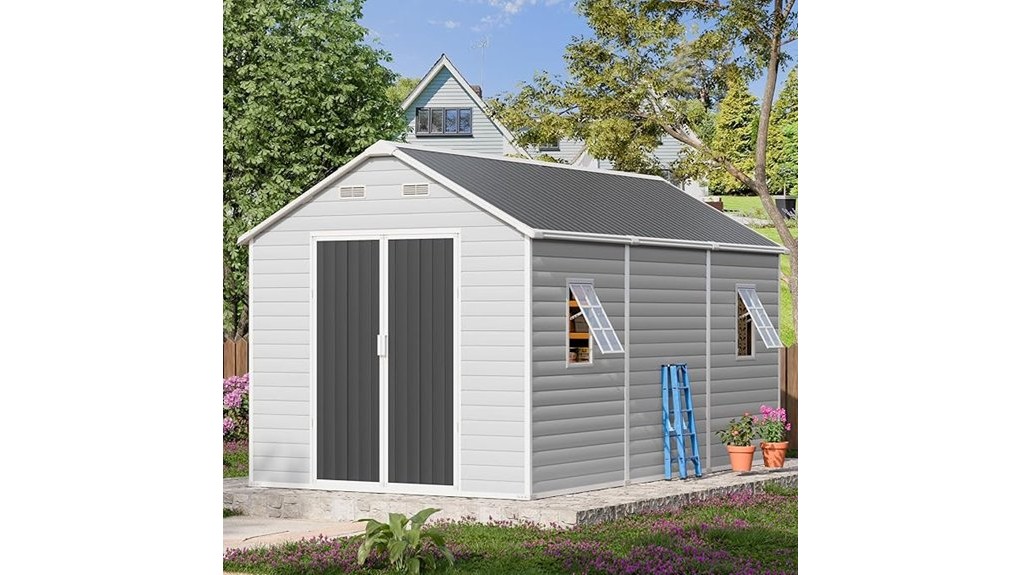
You’ll get an extra‑deep 8×14 resin storage building that’s meant for long gear, two motorcycles, and heavy seasonal overflow. It uses a 0.8 mm galvanized steel frame, 16 mm double‑layer resin walls that resist rot and swelling, and sealed anti‑slip flooring to keep out water and critters. It needs a solid concrete or compacted paver base and a 3–4 person build crew. It’s pricier than thin plastics but lasts longer—keep going to see detailed pros, cons, and setup tips.
Some Key Takeaways
- Extra-deep 8×14 footprint (157″×94″) ideal for kayaks, ladders, lumber, or lining up two motorcycles.
- Galvanized 0.8 mm steel frame and 16 mm double-layer resin walls offer superior moisture and rot resistance.
- Sealed anti-slip floor supports heavy loads, resists sagging, and keeps out water and pests.
- Assembly is heavy DIY: requires 3–4 helpers, concrete or compacted paver base, and careful part inventory.
- Good baseline security with padlock-compatible latch and lockable windows; upgrade with hasps or ground anchors recommended.
What This 8×14 FT Extra-Deep Shed Is Built For (Size, Materials, and Core Specs)
While the 8×14 FT Deep-Storage Specialist may look like a standard shed at first glance, it’s built specifically for long, heavy gear and seasonal overflow; with external dimensions of 157.09″ deep by 94.49″ wide and a 161″ roof length, you’ll get true extra depth to store kayaks, extension ladders, long lumber, or multiple motorcycles. You’ll appreciate 0.8 mm galvanized steel framing, 16 mm double-layer resin walls, and anti-slip flooring that resist rust, rot, and decay. Evaluate material sustainability and local legal considerations—permits, setbacks, and load limits—before siting. Assembly is a heavy DIY project; plan accordingly. This storage building is an excellent option for outdoor adventurers seeking reliable gear protection and organized kayak storage with kayak storage racks.
Who Should Choose This Model: Use Cases for Long Items, Motorcycles, and Bulk Storage
If you need to store long, heavy items or park multiple bikes without squeezing, this 8×14 FT Deep-Storage Specialist is built to handle them. You’ll appreciate the deep footprint and wide double doors for motorcycle storage—you can ride in, line up two bikes, or create a secure workshop area. Paddle-sport users will like kayak organization options: wall racks or overhead slings fit easily along the length. Contractors and DIYers can stash ladders, long lumber, and bulky equipment without clutter. Choose this model if you need organized, heavy-duty capacity and straightforward access rather than just a small garden shed. Gear up for smooth launches with all-terrain kayak carts to move boats to and from the water more easily.
Real-World Durability and Weatherproofing: Panels, Frame, Vents, and Floor Performance
Because the 8×14 Deep-Storage Specialist pairs a 0.8 mm galvanized steel frame with 16 mm double-layer resin walls and an anti-slip sealed floor, you can expect a solid baseline of protection against moisture, pests, and routine wear. In real use, the resin panels resist rot and limit panel swelling seen in cheaper plastics, while the steel frame gives structural stability. Vents provide needed airflow but you’ll watch for vent corrosion at fasteners or if salt air’s present; periodic checks and sealant help. The sealed floor keeps out water and critters, supporting heavy loads without sagging or rapid wear. For kayak owners, a proper kayak cover helps preserve finish and reduce UV and weather exposure during storage.
Assembly, Base Requirements, and Practical Tips for a Smooth DIY Build
Although the 8×14 Deep-Storage Specialist ships in four heavy boxes and asks for some elbow grease, you can streamline the build by planning your base, tools, and crew in advance. Prepare a solid, level concrete or compacted paver base slightly larger than 157.09″×94.49″ to make sure doors align and the anti-slip floor seals properly. Recruit 3–4 helpers, inventory parts, and keep tool organization tight—label bags and use trays. Follow panel sequence, torque fasteners evenly, and install vents and windows per instructions to preserve ventilation maintenance. Finish with seal checks and test door operation before loading. Consider adding wall-mount racks for kayaks to maximize vertical storage and keep gear organized during adventures on the water, especially when installing on an elevated wall near the shed for easy access to kayak storage.
Cost, Security, and Final Verdict: Value Compared to Alternatives and Buying Checklist
You’ve prepared the base and organized your tools, now weigh what you’ll get for the price and how well the shed will protect your gear. At its typical price point, the 8×14 offers strong value: heavy-duty resin walls, galvanized frame, and anti-slip floor beat cheap metal or thin plastic alternatives for longevity. Consider maintenance costs—resin needs little upkeep versus painted steel—and compare warranty and insurance options for stored items. Security is decent: wide double doors, padlock-compatible latch, and lockable windows; upgrade with a hasp or ground anchor. Final checklist: level base, ventilation, crew for assembly, and clear warranty terms. This shed also complements outdoor gear choices for water adventurers by offering storage suited to protect biodegradable cleaners and other eco-friendly supplies.
Some Questions Answered
Can This Shed Be Anchored to a Concrete Slab?
Yes — you can anchor it to a concrete slab. You’ll use concrete anchors through the shed’s base into the slab; pick corrosion-resistant anchors sized for the frame and floor. For slab prep, clean, level, and mark anchor locations, then drill proper-depth holes and use epoxy or wedge anchors per instructions. You’ll want at least three to four adults for safe alignment during fastening and to follow manufacturer torque and warranty guidance.
Are Replacement Parts Available From the Manufacturer?
Yes — you can get replacement parts directly from the manufacturer. Contact manufacturer support with your model and part numbers; they’ll confirm availability and fit. Check warranty details before ordering, since some parts or labor may be covered or discounted under the product warranty. If parts aren’t stocked, ask about lead times or authorized suppliers. Keep your proof of purchase and assembly photos handy to speed up the process.
Does the Roof Support Solar Panel Installation?
Yes — the roof can support solar panel installation, but it’s not fully solar-ready out of the box. You’ll need to evaluate mounting options and reinforce attachment points to handle panel weight and wind loads. Consider adding structural backing or rails anchored to the frame, use waterproof flashing for roof penetrations, and follow local code. If you’re unsure, consult a solar installer to confirm safe mounting options and maintain warranty coverage.
Can Shelving Be Bolted Into the Resin Walls?
Yes — you can bolt shelving to the resin walls, but you’ll need drill compatibility and wall reinforcement. Drill pilot holes carefully with a metal/plastic-compatible bit; avoid overtightening. Best practice: mount shelving into the steel frame or add internal reinforcement panels (plywood or metal strapping) fixed to the frame first, then secure shelves to those. That gives strong, durable attachment and prevents localized stress or panel deformation over time.
Is Indoor Temperature Control or Insulation Recommended?
Yes — you should add temperature control and thermal insulation. You’ll protect stored fabrics, electronics, and finishes from extreme heat, cold, and humidity swings in that resin structure. Insulation (foil-backed foam panels) reduces thermal transfer; a small vented heater or portable A/C with a dehumidifier stabilizes climate. Install ventilation, monitor temps, and avoid sealing completely to prevent condensation. That combo extends item life and improves comfort when you work inside.