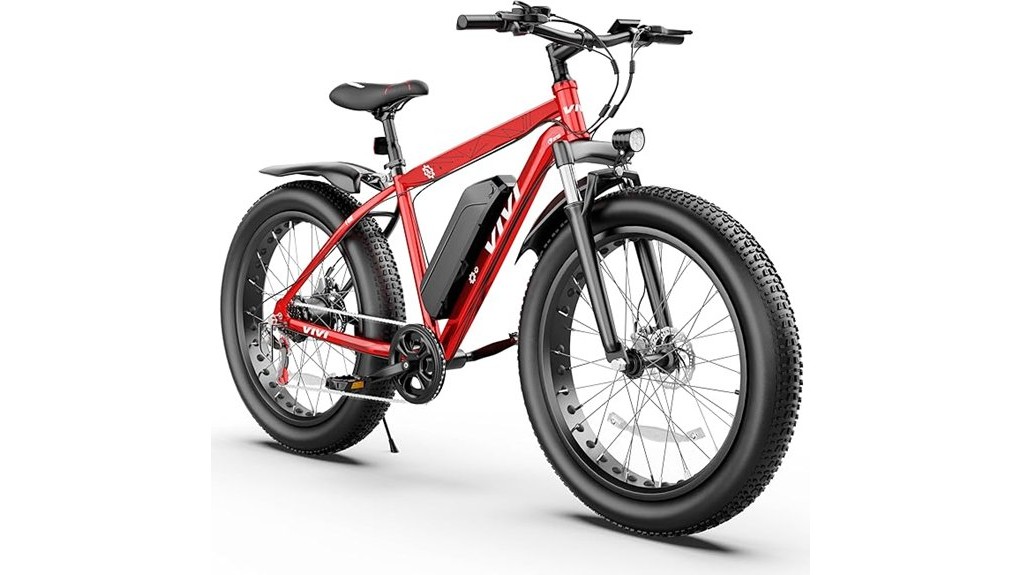
You’ll find the Vivi F26F is a rugged 25 kg fat‑tire e‑bike that floats on sand and soft snow, hits 24–25 mph with a 500W motor, and manages 28–52 miles depending on assist and load. Steering’s stable but needs firm inputs at speed; suspension soaks chatter yet bottoms on big hits. Torque sensing lags, so you’ll use the throttle; battery care matters for longevity. Keep going to see detailed tests, limits, and alternatives.
Some Key Takeaways
- 500W motor and 48V battery deliver 24–25 mph flat sprints with tailwind, suitable for fast recreational rides.
- 4.0-inch fat tires float on sand and soft snow, handling packed dirt and gravel confidently.
- Measured range varies 28–52 miles depending on assist level, rider weight, and terrain.
- Torque sensing is basic with assist lag; throttle helps but can lag when cold or on steep climbs.
- Aluminum frame is stiff and direct; front suspension soaks chatter but bottoms on bigger hits.
Real-World Ride Summary: How the Vivi F26F Performs on Road, Trail, Beach, and Snow
When you take the Vivi F26F off pavement, you’ll notice the 4.0-inch fat tires and 500W motor work together to turn uneven ground into manageable terrain: on packed dirt and gravel the bike tracks confidently and the front suspension soaks short chatter, while on sand or soft snow the wide tires provide flotation that keeps you moving without digging in. You’ll appreciate precise tire traction on loose turns; steering feels stable but needs firm input at speed. Beach runs show competent sand handling but expect slower acceleration and more pedal assist. On hardpack road, efficiency improves; suspension still trims vibration. The bike’s components and accessories are well-suited for outdoor riders seeking versatile fat tire ebike gear.
Motor, Battery, and Range Tested: Real Speeds, Hill Climbs, and Measured Mileage
Although the Vivi F26F’s 500W brushless motor and 48V battery promise solid performance on paper, you’ll want to test hills and sustained speeds to see what they really deliver. You’ll hit 24–25 mph on flat sprints with tailwind; sustained climbs above 10% grade slow you to mid-teens without aggressive pedaling. Torque sensing feels basic—assist lags under sudden power demands—so you compensate with throttle. Measured range varied 28–52 miles depending on assist level and rider weight. Watch for battery degradation over months of heavy use; keep charge cycles moderate and store partially charged to prolong pack life. Consider adding an ebike range extender when planning longer adventures to avoid running out of power.
Comfort, Handling, and Build Quality: Frame, Suspension, Brakes, and Fit for Riders
After pushing the F26F up a few steep ramps and testing its speeds, you start noticing how the bike’s hardware shapes the ride. The aluminum frame shows solid frame stiffness under acceleration and climbs, so pedaling feels direct but transmits trail buzz. The front suspension smooths chatter but bottoms on bigger hits; spring tune feels firm. Seat comfort is average—wide saddle cushions short rides, but you’ll want a longer-pad option for all-day miles. Brake modulation is predictable but lacks subtlety; discs bite hard with little progressive feel. Handlebar reach suits medium riders, though taller riders may crave more extension. For riders who enjoy outdoor trails, consider carrying essential protective gear and maintenance tools like a pump and multi-tool for safer, more prepared rides essential gear.
Features, Controls, and Daily Usability: Display, Throttle, Lights, Assembly, and Maintenance
Because you’re likely to interact with the F26F’s cockpit more than any other part, its display, throttle, lights and basic assembly really determine daily usability. You’ll find the integrated LCD useful—speed, battery, distance and 5 PAS levels are clear—but note LCD quirks: backlight timing is short and buttons feel mushy. Throttle assist is powerful but you may notice throttle lag from cold starts or steep climbs; smoothness improves as the motor warms. Assembly is straightforward—front wheel, handlebars, pedals—tool kit covers basics. LED headlight is bright. Routine maintenance is typical: check bolts, brake pads, tire pressure, and battery contacts. For riders who enjoy outdoor routes, choosing a display optimized for visibility and durability can significantly improve the ride experience, especially when paired with outdoor-focused screens.
Who Should Buy the Vivi F26F and Alternatives to Consider
If you want a sturdy, all-terrain e-bike that handles sand, snow, and rough trails without breaking the bank, the Vivi F26F deserves serious consideration. You’ll appreciate its fat tires, 500W motor, and sturdy aluminum frame for trail abuse, but check weight (25 kg) and 330 lb limit against your needs. Commuter appeal is reasonable—LED light and LCD help—but range and speed suit mixed urban/trail use more than daily long commutes. Cargo options are limited; add a rack for groceries or gear. For Camping suitability and Family rides it’s capable, though lighter cargo-focused or folding alternatives may serve better. Consider pairing it with all-season ebike tires for improved year-round traction and durability.
Some Questions Answered
Is the Battery Airline-Transport Compliant for Travel?
No — the battery isn’t airline-transport compliant for most passenger flights. You’re dealing with a 48V 13Ah (0.62 kWh) removable lithium-ion pack that exceeds many airline limits for carry-on or checked batteries without airline approval. Check battery regulations and airline limits before travel: some airlines require special paperwork or disallow >100 Wh; others may allow with airline approval. You’ll need to confirm with the carrier and maybe ship via cargo.
Can I Install a Rear Rack or Child Seat?
Yes — you can fit a rear rack and most clamp-on child seat models, but you’ll need to be precise. The aluminum frame has rear mounting points for racks, and the 25 kg bike plus 330 lb max load gives margin. Use a rack rated for e-bikes and secure to the frame, not just the seatpost. For child seat, pick one compatible with fat tires and rear rack or frame mounts, and torque bolts per spec.
Are Replacement Batteries Available From the Manufacturer?
Yes — you can get replacement batteries from the manufacturer or authorized dealers. You’ll want the 48V 13Ah removable lithium-ion pack that matches specs and connector style. Check compatibility, serial numbers, and shipping restrictions before ordering. Keep manufacturer warranty documentation handy; installing non‑OEM packs can void the warranty. If battery health drops within a year, contact customer service to pursue repair or replacement under the manufacturer warranty.
What Is the Recommended Tire Pressure for Various Terrains?
For most terrains, aim for these tire pressures: pavement 25–35 PSI, packed gravel/trails 18–25 PSI, loose sand/snow 6–12 PSI, muddy/soft ground 10–18 PSI. Use a terrain guide mindset: lower pressure increases traction but risks pinch flats; higher pressure rolls faster but reduces grip. Check pressures cold, adjust ±2–3 PSI for rider weight and cargo, and carry a pump and patch kit to respond on the trail.
Does the Bike Come With an Anti-Theft or GPS Option?
No — it doesn’t include built-in frame locks or Bluetooth tracking. You’ll need to add aftermarket security: fit a quality frame lock or heavy-duty chain, and consider a GPS tracker with Bluetooth/ cellular reporting. Inspect mounting points and battery access so devices don’t interfere with the removable 48V pack. Test alarms and geofencing, and secure cables. For serious theft prevention, combine a frame lock, a GPS tracker, and a hardened cable or U-lock.