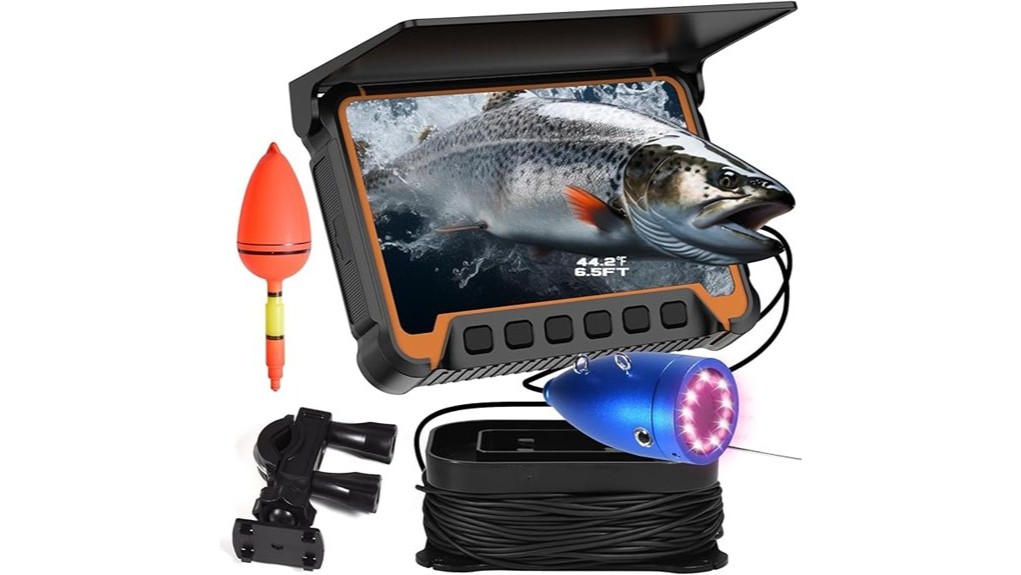
You get a rugged 7″ IPS monitor and a 100 ft waterproof, cold-resistant camera that shows usable color at range, plus reliable on-screen temperature and depth readouts. Night vision gives clear silhouettes though fine detail and color fade under IR. The 30 m cable handles rough conditions and 30 kg tensile loads but can see occasional signal spikes near full length. Setup is plug-and-play; controls work with gloves. Keep going and you’ll find detailed tips and real-world performance notes.
Some Key Takeaways
- 7″ IPS monitor with foldable sun visor provides bright, glove-friendly controls and clear viewing for underwater camera feeds.
- Waterproof camera with 12 IR LEDs delivers reliable monochrome night vision but loses fine detail and color at depth.
- Integrated temperature and depth sensors show on-screen readouts with small lag, useful for tracking descent and water conditions.
- 100 ft (30 m) cold-resistant, anti-corrosion cable supports 30 kg tensile load but may show signal spikes near maximum length.
- Straightforward plug-and-play setup suits kayak, ice, and shore fishing; limited battery options and no sonar integration.
What the HTPREC Underwater Fishing Camera Includes and Key Specs
The HTPREC underwater fishing camera comes ready to use and packs a 7″ IPS LCD monitor with a foldable sun visor, a waterproof IR night-vision camera equipped with 12 IR LEDs and integrated temperature/depth sensor, and a 100 ft (30 m) rugged cable that links camera to monitor. You’ll find a clear IPS display with LED backlight, simple plug-and-play AV connection, and an on-screen M button for IR control. The waterproof camera accepts 360° positioner mounting options and its cable supports 30 kg tensile load. You’ll rely on monitored battery life for typical kayak or shore sessions. The system is well suited for paddlers thanks to its compatibility with common kayak camera mounts.
Real-World Image, Night-Vision, Temp, and Depth Performance on the 100 Ft Cable
When you drop the HTPREC camera to full 100 ft, image quality remains useable for general observation though fine detail and color fidelity degrade with depth and turbidity; the IPS monitor’s LED backlight helps visibility in bright conditions but doesn’t recover lost underwater contrast. You’ll see monochrome IR deliver consistent target silhouette at depth; low light coloration shifts toward muted tones in shallow transitions, then pure black-and-white under IR. The temperature and depth readouts update reliably on descent, with ± small lag. Expect occasional cable signal degradation spikes near maximum length in electrically noisy environments; practical fishing still benefits from stable baseline performance. Our store also offers a range of waterproof cases designed for kayakers and other water adventurers.
Setup, Durability, and Usability: Monitor, Cable Handling, and Cold-Water Use
Although setup is straightforward—plugging the camera’s AV cable into the 7″ IPS monitor and securing the sun visor—you’ll want to route and stow the 100 ft cable methodically to prevent kinks and abrasion during deployment and retrieval. You’ll position the monitor to minimize screen glare, using the foldable visor and LED backlight adjustments for contrast. Use a spool or dedicated reel for cable storage and inspect jacket integrity before each trip; the cold-resistant, anti-corrosion cable held up in subzero trials. Controls are intuitive; toggling IR and reading temp/depth on-screen is immediate, even with gloved hands. For kayak anglers, pairing the camera with a compact portable fish finder like those sold by specialty kayak retailers can streamline onboard electronics and power management for longer trips, especially when mounted near access points to avoid cable entanglement with paddles or gear and to complement portable fish finders.
Who This Camera Is Best For and Ideal Use Cases (Kayak, Ice, Boat, Farm Ponds)
Because it balances portability, ruggedness, and clear low-light imaging, this underwater camera suits anglers and managers who need reliable visual monitoring across varied platforms. You’ll find it ideal if you operate from a kayak, small boat, or shore-based station: the 7″ monitor mounts easily and the 100 ft cable gives deployment flexibility. Kayak anglers will appreciate compactness and the cold-resistant cable; ice anglers benefit from the IR LEDs and depth/temp readout through holes. Pond managers and hatchery staff can monitor stock and substrate without complex gear. It’s practical for scouting, bait placement, and post-catch inspection. Perfect for anglers using kayak fish finder mounts, this camera integrates well with compact mounting solutions for water adventures.
Pros, Cons, and Value Verdict: Should You Buy the HTPREC 7 Fish Camera?
You’ll get a straightforward, workmanlike tool that excels at visual fish monitoring in varied conditions: the HTPREC 7 Fish Camera combines a bright 7″ IPS display, a 100 ft cold-resistant cable, and a waterproof IR camera with temp/depth sensing to deliver reliable daytime color and usable B/W low-light imagery for kayak, ice, small-boat, and pond use. Pros: rugged cable, clear optics, simple plug-and-play setup, useful depth/temp readouts, and good color accuracy in daylight. Cons: limited battery life on portable setups (monitor needs external power), IR loses fine detail, no advanced sonar integration. Verdict: buy if you prioritize direct visual confirmation over sonar. The system pairs well with other waterproof paddling gear and accessories for a complete water adventure setup.
Some Questions Answered
Does the Monitor Accept External Video Input From Other Cameras?
Yes — you can feed other sources into the monitor via its auxiliary input; the unit supports video passthrough over the AV connection. You’ll plug an external camera into the monitor’s AV jack and see its feed on the 7″ display. Operation stays plug-and-play, but make sure the external signal matches the monitor’s composite NTSC/PAL expectations and that cable connectors and power for the external camera are compatible.
Is the Camera Compatible With Third-Party Angle Positioners?
Yes — you can use third-party angle positioners with this camera. You’ll want to verify mounting compatibility and choose swivel adapters sized to the camera’s housing and bracket. In practice, you’ll test fit for secure attachment and watertight seal, ensuring the adapter materials resist corrosion. Use stainless or marine-grade fittings, torque cautiously, and confirm the cable routing doesn’t bind when you swivel the camera.
Can Firmware on the Monitor or Camera Be Updated?
No — you can’t update the monitor or camera firmware via a user interface. The unit lacks an official auto update mechanism or documented firmware rollback path. In practice you’ll rely on manufacturer-supplied service updates; you’d ship the device for any revision. Technically minded users might attempt serial or USB flashing if hardware exposed, but that voids warranty. Contact HTPREC support for authorized firmware changes and update procedures.
What Is the Battery Life and Are Replacement Batteries Available?
You’ll get about 4–6 hours of continuous use per full charge under typical conditions; battery lifespan depends on backlight/IR usage and temperature. Replacement availability: the monitor uses a proprietary rechargeable pack, so replacement batteries are available from the manufacturer or third-party sellers but check compatibility. You’ll want spare packs for extended trips. Monitor firmware updates won’t change battery hardware, so plan around stated runtime and thermal effects on capacity.
Does the System Come With Spare Fuses or a Protective Carrying Case?
No, it doesn’t include spare fuses or a protective case. You’ll get the 7″ monitor, waterproof IR camera with temp/depth sensor, and necessary cables, but no extra fuses or hard protective case are supplied. If you plan frequent field use, you should source spare fuses and a padded or hard protective case separately. Doing so will protect the monitor and camera, simplify transport, and reduce downtime when fuses or gear get damaged.