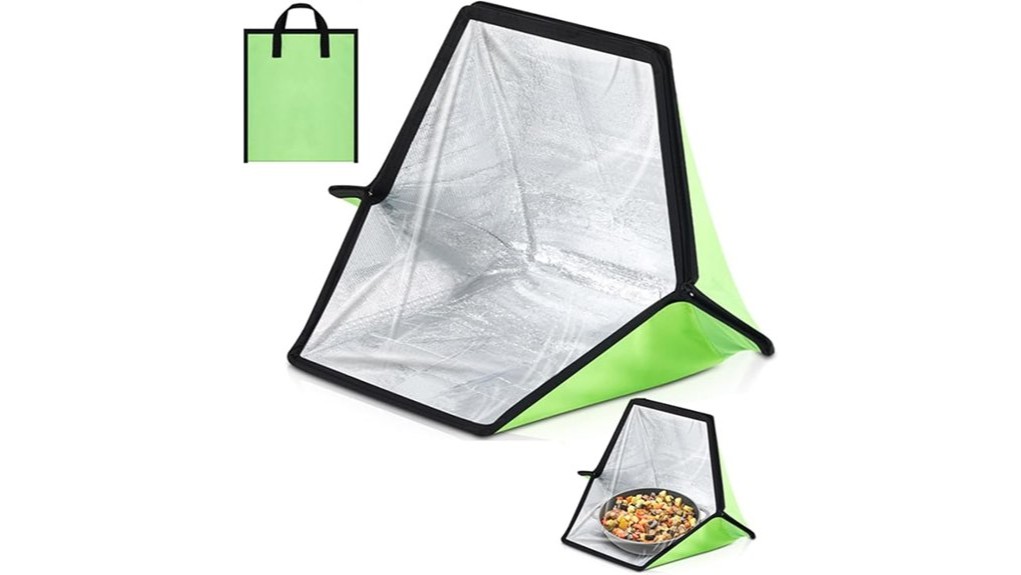
You’ll find the Teenyyou 1‑Pack portable foldable solar oven a cheap, lightweight option that’s great for reheating meals, slow‑cooking stews in strong sun, and giving compost a temperature boost. It’s easy to set up, packs small, and fits a 5‑quart Dutch oven, but performance varies with weather and it won’t match a conventional oven’s consistent high heat. Expect longer cook times and occasional lid tweaks; keep going to see setup tips, fixes, and real‑world test notes.
Some Key Takeaways
- Practical, budget-friendly solar oven that’s lightweight, foldable, and fits a 5‑quart Dutch oven.
- Near-boiling temps on hot, sunny afternoons but inconsistent performance in mornings or cloudy conditions.
- Good for reheating plates, slow-cooking stews/casseroles, and modestly speeding compost pasteurization.
- Constructed with foam panels, waterproof Oxford cloth, reflective interior, metal zipper, and PVC frame; zipper may wear under heavy strain.
- Best for campers, RVers, and emergency use when accepting slower cook times and weather dependence.
Quick Verdict: Is the Teenyyou 1-Pack Solar Oven Worth Buying?
Wondering if this tiny solar oven delivers? You’ll find it’s a practical, budget-friendly option for casual outdoor cooks. Your affordability assessment will likely rate it high: low cost, lightweight materials, and compact storage offer clear value. It won’t replace conventional ovens, but it reliably reheats, cooks in hot sun, and speeds composting when used correctly. User testimonials mention simple setup, decent heat in direct sun, and occasional lid sagging that’s easily fixed. You should buy it if you want an inexpensive, portable solar cooker for camping or emergencies; skip it if you need consistent, high-heat performance. It’s especially handy for those who enjoy camping and using portable fire pits for cooking or warmth, making it a complementary outdoor camping tool.
What the Teenyyou Solar Oven Includes and How It’s Built
If the Teenyyou oven meets your budget and needs, you’ll want to know exactly what comes in the box and how it’s made. You get the foldable green oven, a storage bag, and basic instructions. Construction uses thick foam panels, waterproof Oxford cloth, reflective insulation and a reflective metal interior to capture heat. A metal zipper secures the cavity; zipper durability seems adequate for occasional outdoor use but may wear under heavy strain. PVC components and a lightweight frame keep weight down while fitting a 5-quart Dutch oven. Overall build balances portability and practical materials without overstating ruggedness. Cozy campers often pair solar ovens with camping string lights to extend evenings at the campsite.
Real-World Performance: Cooking, Reheating, and Composting Tests
We tested the Teenyyou solar oven across cooking, reheating, and compost-acceleration tasks to see how it performs in real conditions. You’ll notice temperature variability throughout the day; on hot, sunny afternoons it reached near-boiling, but mornings and clouds dropped performance. Cooking times were longer than stovetop expectations—stews and casseroles took hours but finished evenly if you monitor sun angle. Meal capacity suits a 5-quart Dutch oven, so you can feed a small group but not a crowd. Reheating worked reliably for single plates. For composting, modest temperature boosts sped fermentation. Overall, expect trade-offs and real world limitations. These results align with typical outcomes for camping gear powered by portable solar panels, where performance depends heavily on sunlight and device design.
Setup, Placement, and Simple Fixes to Prevent Lid Sagging
After seeing how much sun, time, and positioning affect cooking and composting results, proper setup and placement become the factors you can control to get consistent performance. You’ll place the Teenyyou on a hard, flat surface—table or concrete—facing direct sun and angling it for maximum exposure. Check zipper tensioning each time; a taut zipper lifts the lid and improves heat retention. For lid sagging, apply adhesive reinforcement along stress points or tuck a small wooden stick under the rim to prop the center. These simple fixes keep the reflective surface aligned and maintain peak temperatures without tools or modifications. Bright and reliable solar lanterns can also improve campsite lighting for safer evening tasks, especially when paired with solar lanterns.
Who Should Buy It: Honest Pros and Cons
Because it’s lightweight, foldable, and runs on sunlight alone, the Teenyyou solar oven suits campers, RVers, and anyone who needs simple off-grid cooking or emergency food/water heating. You’ll appreciate it if you’re a budget camper wanting compact, low-tech gear or an urban gardener who wants to pasteurize compost or heat soil. Pros: portable, easy storage, no fuel costs, fits a 5‑quart Dutch oven, useful in outages. Cons: weather-dependent, slower than stovetop, needs solid surface, potential lid sagging fixes required, limited high‑temperature consistency. Buy it if you accept tradeoffs for convenience and low cost. Solar ovens are a great low-tech option for campers looking to power their campsite without fuel.
Some Questions Answered
Can I Use This Solar Oven in Snowy or Rainy Conditions?
Yes — but with limits. You can use the solar oven in snowy, cold or rainy conditions for solar camping and winter survival, but performance drops. Snow can reflect sunlight and boost heat if panels stay dry; rain or wet snow will reduce reflectivity and risk soaking the insulation and zipper. You’ll need a dry, elevated surface, shelter from precipitation, and clear sun to reach useful temperatures for cooking or composting.
Is a Thermometer Included With the Oven?
No, a digital thermometer or infrared gauge isn’t included with the oven. You’ll need to buy one separately if you want precise temperature readings. A probe digital thermometer gives accurate internal food temps, while an infrared gauge measures surface or air temp quickly. For reliable cooking and compost monitoring, consider carrying both or choosing the probe type for food safety. They’re inexpensive and useful additions.
How Heavy Is the Solar Oven With Its Storage Bag?
It’s very light — you’ll find the solar oven with its storage bag weighs only a few pounds, emphasizing lightweight portability and carry convenience. You’ll appreciate how easy it is to lift, pack, and tote to campsites or emergency spots without strain. Functionally, it balances portability with enough structure to hold a 5-quart Dutch oven. If you need exact ounces, check the seller’s spec sheet for precise weight details.
Are Replacement Reflective Panels Available Separately?
No, replacement panels aren’t typically sold by the manufacturer, so you won’t find official replacement panels for this unit. You can explore aftermarket options — generic reflective panels or emergency blankets can work as substitutes if cut to size and secured properly. You should evaluate fit, reflectivity, and durability before buying aftermarket options. Be aware substitutes may reduce efficiency and could void any warranty if they alter the original construction.
Can I Cook Frozen Food Directly Without Thawing?
You can, but it’s not ideal. Cooking frozen food directly increases cook time and can cause uneven heating, risking food safety if the center stays too cool. You’ll likely see texture changes and longer moisture loss. For better energy efficiency and consistent results, partially thaw or preheat the pan inside the oven, then cook; that short step reduces total time and improves safety and texture without wasting solar heat.