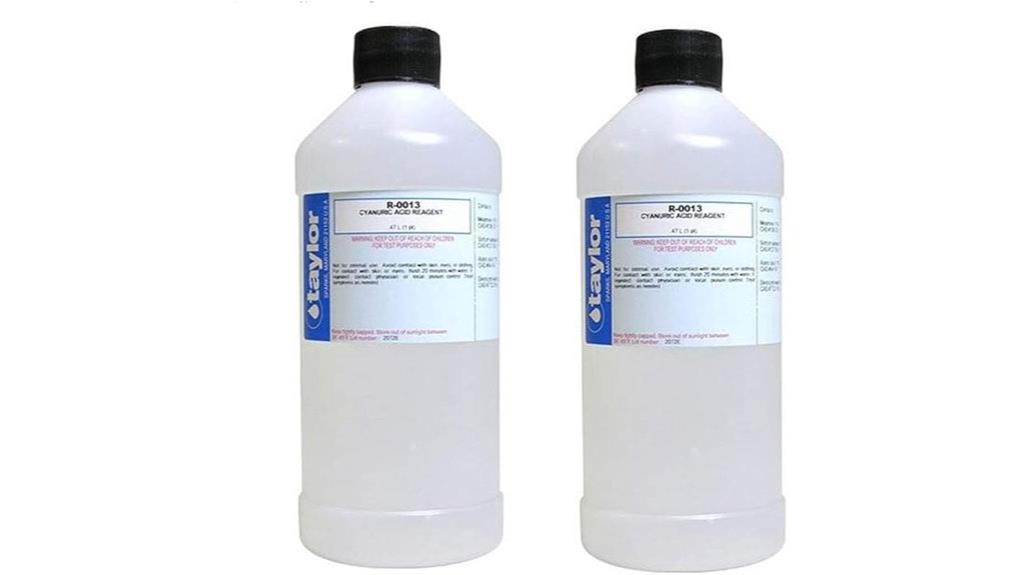
You’ll get a reliable cyanuric acid reagent refill designed for Taylor kits that measures pool stabilizer levels affecting chlorine and UV protection. It ships as two sealed 16‑oz bottles with hazard labeling; store upright, away from heat and children. Use clean glassware, follow Taylor’s stepwise A/B additions, time drops precisely, and compare the immediate color match. Wear goggles and gloves, discard expired solution, and verify accuracy with control samples — keep going to see full usage and sourcing tips.
Some Key Takeaways
- Two 16-ounce Taylor cyanuric acid reagent bottles provide a cost-effective 32 fl oz refill for Taylor CYA test kits.
- Accurate CYA readings require fresh reagent, correct sample volume, and strict adherence to Taylor’s step-by-step procedure.
- Wear goggles and gloves, store bottles upright sealed and away from heat, and replace annually for safety and reliability.
- Weak, inconsistent color or shifted results indicate reagent degradation, contamination, or user error; run controls to verify accuracy.
- Buy from Taylor or authorized dealers (including Amazon) and compare per-ounce pricing versus professional testing services.
How This Reagent Fits Taylor Test Kits and What It Measures
Because cyanuric acid stabilizes chlorine, you’ll use this Taylor reagent specifically with Taylor cyanuric acid test kits to measure CYA levels in your pool or spa. You follow kit instructions, match reagent to the labeled sample volume, and treat the reagent as a stability indicator for UV-sensitive pools. Check calibration compatibility before testing to make certain results align with your meter or comparator. You handle reagents carefully to avoid unintended chemical interactions, wear protective gear, and discard expired solution. Replace annually for reliable readings. Accurate measurement helps maintain safe chlorine efficacy and prevents masked sanitation issues in recreational water.
What’s Included in the Two‑Bottle Package and Key Specs
Inside the two‑bottle package you’ll get two 16‑ounce liquid reagent bottles (32 fl oz total) clearly labeled for Taylor cyanuric acid testing, so you can refill your Taylor CYA test kit without guessing which solution to use. You’ll receive two sealed liquid bottles; Bottle contents are formulated specifically for Taylor cyanuric acid titration and shipped in leak‑resistant plastic. Label details include reagent name, hazard icons, lot number, expiration/replacement guidance, and manufacturer contact. The pack weight and UPC match product specs. Store upright, away from children and heat, and replace annually to maintain test accuracy and safety.
How to Use the Cyanuric Acid Reagent Step‑by‑Step With a Taylor Kit
With the two bottles on hand and their labels checked, you’re ready to perform the cyanuric acid (CYA) test on your Taylor kit. Gather clean containers, a calibrated Taylor comparator, and distilled water; prepare samples from mid‑depth away from return jets. Follow safety precautions: wear goggles and gloves, work in a ventilated area, and avoid skin contact. Use the prescribed sample volume, add reagent A, invert gently, then add reagent B dropwise while timing per instructions. Compare color against the chart immediately. Rinse all glassware after testing, cap reagents, and store them upright at recommended temperatures.
Accuracy, Reliability, and When to Replace the Reagent
If you want consistent, accurate cyanuric acid readings, use fresh reagent, follow the kit procedure exactly, and control sampling variables like depth and dilution. You’ll check for measurement drift by running a known control solution periodically; unexpected shifts indicate reagent degradation or user error. Store bottles upright, sealed, away from heat and sunlight to maximize storage stability and reduce contamination risk. Replace reagent annually at minimum, sooner if controls fail or color responses become weak or inconsistent. Keep records of lot, purchase date, and control results so you can trace issues and maintain safe, reliable pool chemistry.
Who Should Buy This Reagent and Where to Get It (Value and Alternatives)
After checking reagent performance and keeping strict records, you’ll know whether you should repurchase the Taylor cyanuric acid reagent. If you manage multiple pools, run a professional service, or prioritize lab‑grade consistency, this two‑bottle pack delivers predictable results and annual replacement fits safety protocols. Budget buyers maintaining a single residential pool may find the 2×16 oz size cost‑effective versus frequent small purchases, but compare per‑ounce pricing. Buy from reputable retailers—Taylor’s site, authorized dealers, or Amazon (check warranty/return terms). For alternatives, consider certified reagents from equivalent brands or contracting a professional service for periodic testing and supply management.
Some Questions Answered
Is This Reagent Safe to Ship Internationally With Lithium Battery Restrictions?
No — this reagent isn’t related to lithium and doesn’t trigger lithium restrictions, so shipping safety concerns about lithium restrictions don’t apply. You should still follow hazardous liquid rules: declare the chemical, use appropriate packaging, label for corrosive or hazardous materials if required, and check carrier and destination regulations. Consult MSDS and carrier dangerous goods guides, and confirm customs rules to guarantee compliant, safe international shipment.
Can I Use This Reagent to Test Cyanuric Acid in Hot Tubs Above 104°F?
No, you shouldn’t test cyanuric acid in hot tubs above 104°F. Temperature limits affect reagent chemistry and test accuracy; elevated temperatures can degrade reagents and skew results. Cool sampled water to room temperature before testing, follow manufacturer instructions, and replace reagent annually to maintain reliability. For safety, wear gloves and avoid contamination. If unsure, contact manufacturer support for guidance specific to your test kit and conditions.
Does the Bottle Labeling Include Expiration Date and Lot Number?
Yes — the bottles show a lot number and an expiration date on the label, so you can confirm labeling clarity and manufacturing traceability at a glance. You should inspect each cap and back panel before use, and note the date to track annual replacement. If either code is missing or illegible, don’t use the reagent; contact the manufacturer for batch verification to maintain safe, reliable testing.
Are There Special Storage Conditions to Prevent Reagent Degradation?
Yes. You should store the reagent cool, dry, and out of direct sunlight; avoid heat and keep containers tightly closed. Don’t refrigerate unless manufacturer instructs—refrigerant storage isn’t recommended. Keep bottles upright, away from corrosives and children, and use within a year of opening. Label with date received/opened, and dispose of any discolored or cloudy reagent per local hazardous-waste guidance to prevent inaccurate tests and safety risks.
Is This Reagent Compatible With Third‑Party Comparator Tubes or Meters?
You can often use this reagent with third party compatibility, but you shouldn’t assume universal fit. Verify tube dimensions, reagent volumes, and reaction timing against the third‑party comparator’s specs. Perform a control test to check for colorimetric interference before routine use. Store reagents per label, wear PPE, and document results. If colours shift or readings differ from expected, stop use and contact the manufacturer or supplier for guidance.