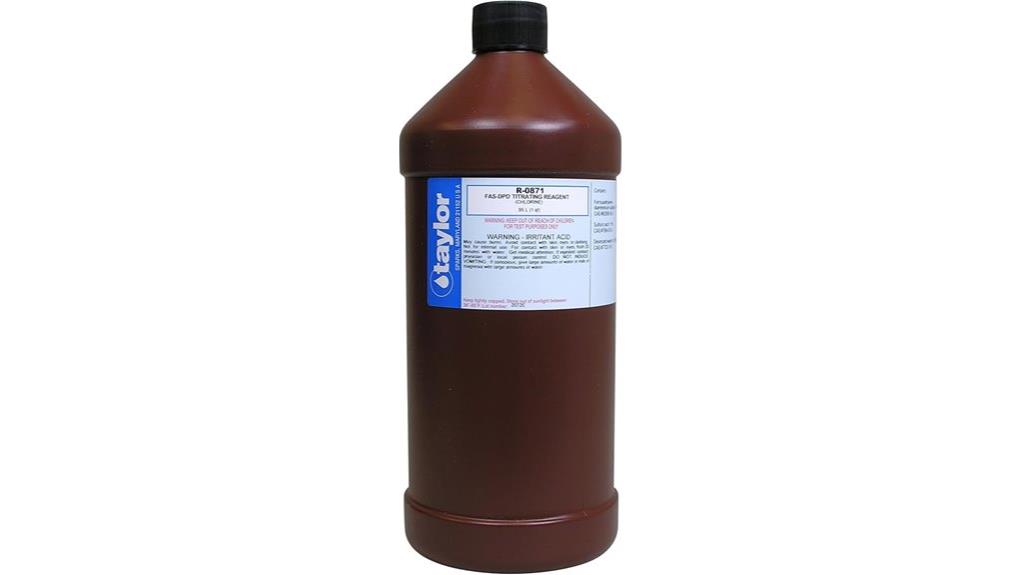
The Taylor R0871‑F is a lab‑grade liquid FAS‑DPD titrant in a 32 fl oz bottle that drops into Taylor kits so you can run precise free and total chlorine tests in the field. It’s aimed at pool pros and homeowners who want repeatable, low‑variance results and fewer reruns. Follow standard DPD/FAS titration steps, verify drop volume, and log duplicates; note storage limits and temperature effects. Continue for details on performance, pitfalls, and buying tips.
Some Key Takeaways
- Taylor R0871-F is a 32 fl oz liquid FAS titrant for FAS‑DPD free and total chlorine testing in Taylor kits.
- Delivers repeatable titration endpoints with operator variance around ±0.1 ppm under controlled conditions.
- Best for pool pros and homeowners needing lab‑grade accuracy and compatibility with established FAS‑DPD procedures.
- Performance affected by sample age, turbidity, temperature, and interferents like cyanuric acid or bromide.
- Store cool, monitor expiry, verify dropper/burette calibration, and keep duplicate logs to maximize accuracy and cost savings.
What the Taylor R0871-F FAS‑DPD Reagent Is and Who It’s For
Think of the Taylor R0871-F FAS‑DPD reagent as the liquid titrant that lets you quantify free and total chlorine in pool or spa water quickly and accurately. You’ll use a calibrated titration to determine chlorine demand and decide on shocking or supplemental dosing. The reagent’s formulation suits routine field tests and replacement needs for Taylor kits, offering consistent endpoints and minimal preparation. It’s aimed at Pool professionals who need repeatable results and Homeowners testing their systems with lab-grade chemistry. You’ll appreciate the quart volume for multiple tests and the compatibility with established FAS‑DPD procedures for precise control.
How to Use R-0871-F for Accurate Chlorine and Demand Tests
Now that you know what the R-0871-F is and who uses it, here’s how to get accurate chlorine and demand readings: collect a representative water sample, add the prescribed DPD reagents to establish the free chlorine color endpoint, then perform the FAS titration with small, measured drops of R-0871-F until the pink color disappears. Use consistent sample collection technique and fresh reagents. Verify proper calibration of your titration burette or dropper and record drop volume. Calculate concentration using kit instructions, correcting for sample volume. Repeat duplicate tests for verification and log results to spot trends or procedural drift.
Performance and Accuracy: Real‑World Testing Results
When you test the R-0871-F under typical pool and spa conditions, it delivers consistent titration endpoints and repeatable chlorine demand results across multiple operators and sample types. You’ll observe strong operator consistency in controlled trials: different users produced ±0.1 ppm variance. Field variability arose mainly from sample age and turbidity rather than reagent performance. Temperature effects were measurable; cold samples slowed endpoint development and required standard compensation. Interference compounds such as high cyanuric acid or bromide elevated baseline readings unless pre-treated. Overall, results indicate the reagent yields accurate, reliable data when you control sampling, temperature, and known interferents.
Practical Pros and Cons for Pool and Spa Owners
Given the reproducible accuracy described above, pool and spa owners can weigh clear, practical advantages and limitations of the R-0871-F for routine maintenance. You’ll appreciate easy maintenance: the liquid reagent fits existing Taylor kits and reduces dosing guesswork. Cost savings appear over seasons when fewer repeat tests and less wasted chemical result from accurate readings. Quick troubleshooting becomes simpler because consistent titration narrows variables when levels look off. For seasonal prepping, you can rely on predictable measurements to plan shock and balancing steps. Limitations include reagent shelf life and storage sensitivity—monitor expiry and avoid temperature extremes.
Where to Buy, Price Expectations, and Replacement Tips
Across retailers and specialty pool-supply outlets, you’ll find the Taylor R0871-F sold as a standalone 32 fl oz replacement bottle and as part of kit refill packs; expect prices to vary by channel, with big-box and online marketplaces often listing it lower than specialty stores. You’ll compare unit price, shipping, and return policy. Check online retailers for current ASIN listings and seasonal promotions. If you manage multiple pools, pursue bulk discounts or multi-pack offers to lower per‑unit cost. When replacing reagent, label date opened, store upright in cool dark place, and rotate stock to preserve accuracy and shelf life.
Some Questions Answered
Is R-0871-F Safe to Ship Internationally With Liquid Restrictions?
You can ship R-0871-F internationally, but you’ll face liquid restrictions and must check carrier rules. You’ll need proper international shipping classification, safety data sheet references, and complete customs paperwork declaring contents and volume. Some countries or airlines may ban or require hazardous materials handling if reagent concentration meets regulated thresholds. Verify destination import rules, choose a compliant carrier, and label and package it per IATA/IMDG or postal regulations to avoid delays.
Can This Reagent Be Used Interchangeably With Other Brands’ FAS-DPD Kits?
Yes — you can often use it with other brands’ FAS-DPD kits, but you shouldn’t assume perfect interchangeability. You’ll need compatibility testing because reagent strength, indicator sensitivity, and calibration differences can shift endpoints. Verify by running known-concentration controls and comparing results to your kit’s standards. If discrepancies appear, recalibrate your procedure or stick with matched reagents to guarantee accurate chlorine demand and dosing decisions.
What Is the Shelf Life After Opening the Bottle?
You should expect an expiration timeframe of about 6–12 months after opening, depending on storage. You’ll monitor usage and reagent clarity: if color, smell, or test responses change, discard immediately. Keep the bottle tightly sealed, stored cool and dark to maximize life. Track open date and usage monitoring results so you can rotate stock and avoid inaccurate readings; when in doubt, replace rather than risk faulty chlorine measurements.
How Should I Dispose of Unused Reagent Responsibly?
You should treat unused reagent as hazardous waste and not pour it down drains. Check the product label and SDS for specific disposal instructions, then contact your local household hazardous waste program or community collection event to arrange drop-off. If permitted, tightly seal the original container, label it, and transport it per local rules. Don’t mix with other chemicals. Keep records of disposal if required by local regulations.
Does Temperature Affect Reagent Stability During Storage?
Yes — temperature sensitivity matters. You should store reagents at stable, moderate temperatures away from heat and freezing; fluctuations accelerate degradation. For FAS-DPD liquids, follow storage recommendations: keep sealed, upright, in a cool (room temperature or slightly cooler), dark place, avoiding direct sunlight and heat sources. Inspect before use for discoloration or sediment. If storage conditions were poor, discard reagent and replace to guarantee accurate titrations.