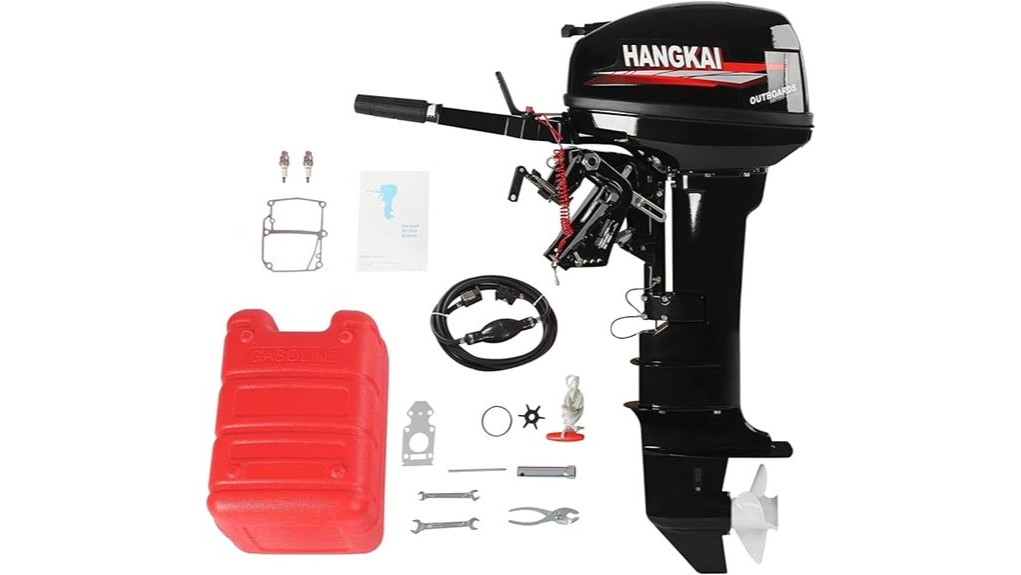
You’ll get a compact, hard‑pulling 18 HP from a 246 cc two‑stroke that’s tuned for strong low‑ and mid‑range thrust, quick plane‑up, and efficient cruising on light to moderate loads. The long shaft and three‑blade prop give good immersion, reduced cavitation, and predictable tiller steering; fit to inflatable, aluminum, or small V‑hulled boats with reinforced transoms. Maintenance is straightforward—25:1 break‑in mix, then 50:1—and the guide below outlines setup, limits, and service. When considering 2stroke outboard motor specifications, it’s essential to evaluate the engine’s weight-to-power ratio and fuel efficiency. This makes it easier to determine compatibility with your boat type, ensuring optimal performance. Additionally, always check for any specific installation requirements to maximize the benefits of your chosen model.
Some Key Takeaways
- 246 cc air‑cooled two‑stroke delivers up to 18 HP (4,500–5,500 rpm) with strong low‑to‑mid range thrust for quick plane‑up.
- Long‑shaft tiller model suits deeper transoms, improving prop immersion and steering leverage for V‑hull and small boats.
- Three‑blade prop and anti‑swirl plate reduce cavitation, improve acceleration, and stabilize tracking for coastal fishing.
- Fuel/oil: break‑in 25:1 (first 50 hrs) then 50:1 TCW‑2; add gear oil before first run and change at 50 hours.
- Suited to inflatables, aluminum, and small fiberglass craft if transom reinforced and bracket supports 28 kg plus steering loads.
Quick Verdict: Who the 2 Stroke 18HP Outboard Is Best For
If you need a compact, high-thrust motor for small boats, the 2 Stroke 18HP Outboard fits the bill: it delivers 18 HP from a 246 cc two-stroke air-cooled engine. You’ll appreciate its long shaft tiller, manual pull-start simplicity, and 6.34-gallon tank for extended outings. It suits budget buyers who need reliable propulsion for inflatable, aluminum, or small fiberglass craft. Coastal anglers will value the three-blade prop, 360° tiller steering, and anti-swirl plate for cleaner wakes. You should note maintenance needs—fuel-oil mix and initial gear oil—and the modest 28 kg weight for handling. These features make it a great match for owners of V-hull kayaks who seek efficient, stable performance on varied waterways and adventurous conditions, especially when paired with V-hull designs for improved tracking and stability.
Real-World Performance and Handling (Power, Speed, Load Limits)
When you push the throttle, the 246 cc two-stroke delivers crisp, linear power up to its 18 HP peak (4,500–5,500 rpm), translating into strong low- to mid-range thrust ideal for quick plane-up on small boats. You’ll notice consistent power delivery across the usable band, with stepless speed change and reliable torque at moderate loads. Top speed falls as load approaches the 2,204 lb limit; expect efficient cruising with light-to-moderate payloads and diminished acceleration with heavy loads. Handling nuances include responsive tiller steering, predictable gear shifts, and manageable torque steering when trimming or reversing under load. Perfect for paddlers looking to complement their trips, these motors pair well with kayaks and anchor trolleys for extended water adventures.
Key Specs That Matter on the Water (Engine, Shaft, Prop, Cooling, Noise)
After feeling how the motor delivers power and handles loads, you’ll want to examine the specifications that determine on-water performance: the 246 cc air-cooled two-stroke engine’s 18 HP band (4,500–5,500 rpm) defines available thrust and fuel-map behavior; the long shaft suits deeper transoms and affects leverage and steering tendency; the three-blade streamlined propeller balances acceleration and top speed while reducing cavitation risk; the water-cooling system with multiple cooling holes and an anti-swirl plate manages thermal stability and reduces spray; and the silencer cover with sound-absorbing material limits acoustic output.
You should assess engine vibration at cruise RPMs, monitor shaft length influence on trim and steering response, confirm prop pitch matches load for peak thrust and fuel use, and verify cooling efficiency under sustained runs.
Fitment and Compatibility: Which Boats, Mounts, and Use Cases It Suits
How well does this 2-stroke 18HP long-shaft outboard match your boat and mission? You’ll find it suited to small inflatables, aluminum, plastic, fiberglass, and wooden boats within the specified size limits. Inflatable compatibility is valid only with reinforced transoms or external mounting plates; consider transom reinforcement for repeated high-thrust use. The long shaft clears shallow transoms and improves prop immersion at planing speeds. Mounting requires standard engine-mount hardware and a rated bracket for 28 kg mass plus moments from throttle and steering. Use cases include fishing, light transport, and small‑boat aquaculture where moderate load and speed are acceptable. For extended comfort on fishing trips, pair the boat with a comfortable kayak seat to improve endurance and enjoyment.
Ownership Checklist: Maintenance, Start-Up, Fuel Mix, and Warranty
Because regular care keeps the engine reliable and legal, you should follow a concise ownership checklist covering maintenance, start-up, fuel mix, and warranty actions. Before purchase, complete a pre purchase inspection and confirm the accessory list. Add gear oil before first run and follow the service schedule: break-in change at 50 hours, then regular intervals. Use TCW-2 two-stroke oil; mix 25:1 for first 50 hours, 50:1 thereafter. Verify cooling passages and anti-swirl plate, test pull-start and kill switch. Maintain precise recordkeeping of services and fuel batches. Register warranty claims within one year per documentation. Also make sure to carry essential water-safety and filtration gear like a personal flotation device and a compact water filter when planning multi-day trips.
Some Questions Answered
Does It Include a Prop Wrench or Tool Kit for Installation?
No, it doesn’t include a prop wrench or installation tools. You’ll need to supply a prop wrench and basic installation tools (socket set, screwdrivers, torque wrench) separately. Before fitting, add gear oil and confirm propeller fitment and torque specs. Use recommended two-stroke oil mixture during break-in. Retain manufacturer paperwork for warranty. If you want a factory kit, contact the seller to verify availability or request accessory recommendations.
Can the Tiller Be Extended or Adjusted for Different Operator Heights?
Yes — the tiller is adjustable: you can set the long non-slip ergonomic handle to different angles for operator comfort. It doesn’t telescopically extend lengthwise, but the 360° steering and adjustable mounting angle let you position the adjustable tiller to suit varying heights and reach. You’ll still need to confirm specific tilt stops and secure fasteners during installation; follow manufacturer torque specs and safety checks before operation.
Is There an Electric Start Retrofit Option Available?
No official electric start option is offered, but you can perform a battery conversion retrofit yourself or via a technician. You’ll need to mount a compact starter motor, install a starter solenoid, fit a marine battery with secure box, and run heavy-gauge wiring and a kill-switch. Verify shaft/frame compatibility, add a charging stator or external charger, and follow torque and waterproofing specs. Expect professional help for reliable, safe installation.
What Winterization Steps Are Recommended for Storage in Cold Climates?
You should winterize by draining fuel or adding fuel stabilizer steps: run treated fuel through the carburetor for several minutes, then shut down. Next perform winter fogging: with engine running, spray fogging oil into intake per manufacturer until smoke clears, then stop. Drain and replace lower unit gear oil, remove battery, lubricate linkages, and store motor upright in a dry, ventilated area. Inspect seals and cover to prevent moisture intrusion.
Are Spare Lower Units or Rebuild Parts Readily Available From the Manufacturer?
Yes — you can obtain spare lower units and rebuild parts, but availability varies. You should contact the manufacturer for parts availability and factory support; they list model 2 Stroke 18HP (MPN 255) and can confirm stock. Expect common consumables and housings to be offered, while specialized internals may require lead time. Keep serial/model info ready to speed procurement and guarantee compatibility with your long-shaft tiller configuration.2-stroke 18HP long-shaft outboard match your boat and mission?d for strong low‑ and mid‑range thrust, quick plane‑up, and efficient cruising on light to moderate loads. The long shaft and three‑blade prop give good immersion, reduced cavitation, and predictable tiller steering; fit to inflatable, aluminum, or small V‑hulled boats with reinforced transoms. Maintenance is straightforward—25:1 break‑in mix, then 50:1—and the guide below outlines setup, limits, and service. When considering 2stroke outboard motor specifications, it’s essential to evaluate the engine’s weight-to-power ratio and fuel efficiency. This makes it easier to determine compatibility with your boat type, ensuring optimal performance. Additionally, always check for any specific installation requirements to maximize the benefits of your chosen model.
Some Key Takeaways
- 246 cc air‑cooled two‑stroke delivers up to 18 HP (4,500–5,500 rpm) with strong low‑to‑mid range thrust for quick plane‑up.
- Long‑shaft tiller model suits deeper transoms, improving prop immersion and steering leverage for V‑hull and small boats.
- Three‑blade prop and anti‑swirl plate reduce cavitation, improve acceleration, and stabilize tracking for coastal fishing.
- Fuel/oil: break‑in 25:1 (first 50 hrs) then 50:1 TCW‑2; add gear oil before first run and change at 50 hours.
- Suited to inflatables, aluminum, and small fiberglass craft if transom reinforced and bracket supports 28 kg plus steering loads.
Quick Verdict: Who the 2 Stroke 18HP Outboard Is Best For
If you need a compact, high-thrust motor for small boats, the 2 Stroke 18HP Outboard fits the bill: it delivers 18 HP from a 246 cc two-stroke air-cooled engine. You’ll appreciate its long shaft tiller, manual pull-start simplicity, and 6.34-gallon tank for extended outings. It suits budget buyers who need reliable propulsion for inflatable, aluminum, or small fiberglass craft. Coastal anglers will value the three-blade prop, 360° tiller steering, and anti-swirl plate for cleaner wakes. You should note maintenance needs—fuel-oil mix and initial gear oil—and the modest 28 kg weight for handling. These features make it a great match for owners of V-hull kayaks who seek efficient, stable performance on varied waterways and adventurous conditions, especially when paired with V-hull designs for improved tracking and stability.
Real-World Performance and Handling (Power, Speed, Load Limits)
When you push the throttle, the 246 cc two-stroke delivers crisp, linear power up to its 18 HP peak (4,500–5,500 rpm), translating into strong low- to mid-range thrust ideal for quick plane-up on small boats. You’ll notice consistent power delivery across the usable band, with stepless speed change and reliable torque at moderate loads. Top speed falls as load approaches the 2,204 lb limit; expect efficient cruising with light-to-moderate payloads and diminished acceleration with heavy loads. Handling nuances include responsive tiller steering, predictable gear shifts, and manageable torque steering when trimming or reversing under load. Perfect for paddlers looking to complement their trips, these motors pair well with kayaks and anchor trolleys for extended water adventures.
Key Specs That Matter on the Water (Engine, Shaft, Prop, Cooling, Noise)
After feeling how the motor delivers power and handles loads, you’ll want to examine the specifications that determine on-water performance: the 246 cc air-cooled two-stroke engine’s 18 HP band (4,500–5,500 rpm) defines available thrust and fuel-map behavior; the long shaft suits deeper transoms and affects leverage and steering tendency; the three-blade streamlined propeller balances acceleration and top speed while reducing cavitation risk; the water-cooling system with multiple cooling holes and an anti-swirl plate manages thermal stability and reduces spray; and the silencer cover with sound-absorbing material limits acoustic output.
You should assess engine vibration at cruise RPMs, monitor shaft length influence on trim and steering response, confirm prop pitch matches load for peak thrust and fuel use, and verify cooling efficiency under sustained runs.
Fitment and Compatibility: Which Boats, Mounts, and Use Cases It Suits
How well does this 2-stroke 18HP long-shaft outboard match your boat and mission? You’ll find it suited to small inflatables, aluminum, plastic, fiberglass, and wooden boats within the specified size limits. Inflatable compatibility is valid only with reinforced transoms or external mounting plates; consider transom reinforcement for repeated high-thrust use. The long shaft clears shallow transoms and improves prop immersion at planing speeds. Mounting requires standard engine-mount hardware and a rated bracket for 28 kg mass plus moments from throttle and steering. Use cases include fishing, light transport, and small‑boat aquaculture where moderate load and speed are acceptable. For extended comfort on fishing trips, pair the boat with a comfortable kayak seat to improve endurance and enjoyment.
Ownership Checklist: Maintenance, Start-Up, Fuel Mix, and Warranty
Because regular care keeps the engine reliable and legal, you should follow a concise ownership checklist covering maintenance, start-up, fuel mix, and warranty actions. Before purchase, complete a pre purchase inspection and confirm the accessory list. Add gear oil before first run and follow the service schedule: break-in change at 50 hours, then regular intervals. Use TCW-2 two-stroke oil; mix 25:1 for first 50 hours, 50:1 thereafter. Verify cooling passages and anti-swirl plate, test pull-start and kill switch. Maintain precise recordkeeping of services and fuel batches. Register warranty claims within one year per documentation. Also make sure to carry essential water-safety and filtration gear like a personal flotation device and a compact water filter when planning multi-day trips.
Some Questions Answered
Does It Include a Prop Wrench or Tool Kit for Installation?
No, it doesn’t include a prop wrench or installation tools. You’ll need to supply a prop wrench and basic installation tools (socket set, screwdrivers, torque wrench) separately. Before fitting, add gear oil and confirm propeller fitment and torque specs. Use recommended two-stroke oil mixture during break-in. Retain manufacturer paperwork for warranty. If you want a factory kit, contact the seller to verify availability or request accessory recommendations.
Can the Tiller Be Extended or Adjusted for Different Operator Heights?
Yes — the tiller is adjustable: you can set the long non-slip ergonomic handle to different angles for operator comfort. It doesn’t telescopically extend lengthwise, but the 360° steering and adjustable mounting angle let you position the adjustable tiller to suit varying heights and reach. You’ll still need to confirm specific tilt stops and secure fasteners during installation; follow manufacturer torque specs and safety checks before operation.
Is There an Electric Start Retrofit Option Available?
No official electric start option is offered, but you can perform a battery conversion retrofit yourself or via a technician. You’ll need to mount a compact starter motor, install a starter solenoid, fit a marine battery with secure box, and run heavy-gauge wiring and a kill-switch. Verify shaft/frame compatibility, add a charging stator or external charger, and follow torque and waterproofing specs. Expect professional help for reliable, safe installation.
What Winterization Steps Are Recommended for Storage in Cold Climates?
You should winterize by draining fuel or adding fuel stabilizer steps: run treated fuel through the carburetor for several minutes, then shut down. Next perform winter fogging: with engine running, spray fogging oil into intake per manufacturer until smoke clears, then stop. Drain and replace lower unit gear oil, remove battery, lubricate linkages, and store motor upright in a dry, ventilated area. Inspect seals and cover to prevent moisture intrusion.
Are Spare Lower Units or Rebuild Parts Readily Available From the Manufacturer?
Yes — you can obtain spare lower units and rebuild parts, but availability varies. You should contact the manufacturer for parts availability and factory support; they list model 2 Stroke 18HP (MPN 255) and can confirm stock. Expect common consumables and housings to be offered, while specialized internals may require lead time. Keep serial/model info ready to speed procurement and guarantee compatibility with your long-shaft tiller configuration.