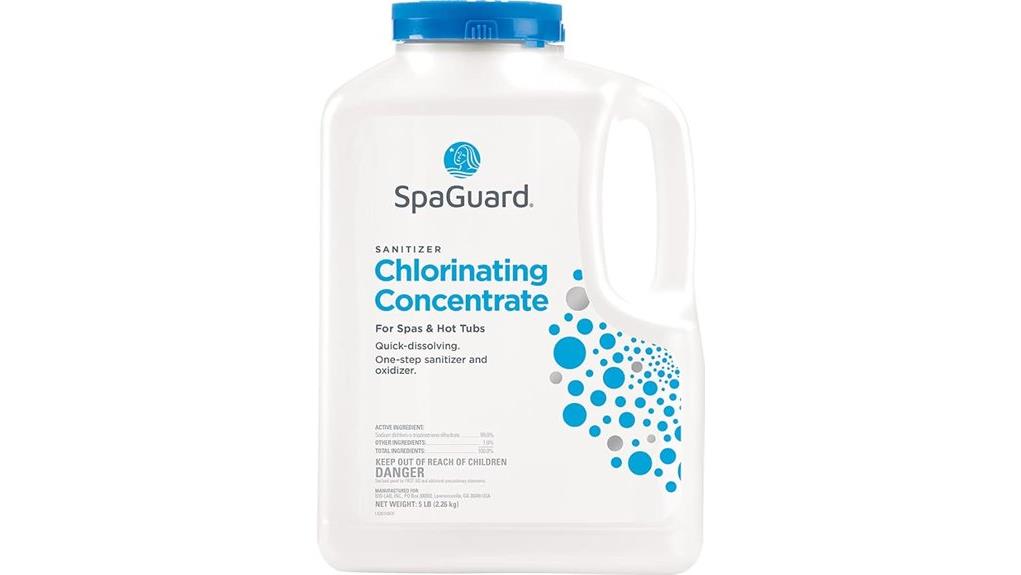
You’ll find SpaGuard Spa Chlorinating Concentrate is a fast-dissolving, pH-neutral granular chlorine that gives predictable free-chlorine sanitation for routine and shock treatments. It releases hypochlorous acid to oxidize and inactivate microbes, dissolves in minutes with pump circulation, and avoids pH drift so you won’t need extra adjustment. Handle granules carefully and wait for chlorine to return to safe levels before use. Keep going for specifics on dosing, performance, and buyer fit. SpaPure product review and benefits highlight its effectiveness in maintaining clean and clear water in spas. Users often praise its ability to dissolve quickly, ensuring no downtime between treatments. Additionally, the product’s consistent performance makes it a reliable choice for spa owners looking to simplify their maintenance routine.
Some Key Takeaways
- Fast-dissolving granular chlorine designed for hot tubs and spas with rapid dissolution in circulating water.
- pH-neutral formulation maintains stable pH and minimizes alkalinity drift during routine use.
- Releases hypochlorous acid for effective microbial inactivation and oxidizes combined chlorine when shocked.
- Practical for routine and shock dosing; rinse hands after handling and retest chlorine before re-entry.
- Best for convenience-focused spa owners and small operators; limited to a single 5 lb packaging option.
Quick Verdict: Is SpaGuard Spa Chlorinating Concentrate Worth Buying?
While it’s primarily a straightforward chlorine sanitizer, SpaGuard Spa Chlorinating Concentrate delivers fast, pH-neutral disinfection and dissolves quickly when added with the pump running, so you’ll get reliable routine sanitation and effective shock treatments without upsetting your water balance. You’ll find it worth buying if you prioritize proven efficacy, rapid dissolution, and minimal pH adjustment. In a cost comparison, the 5 lb granular format yields competitive per-dose pricing versus tablets and liquid, especially given reduced chemical waste. Expect negligible scent impact when used per instructions; any chlorine odor indicates dosing or circulation issues, not product formulation.
What SpaGuard Chlorinating Concentrate Is and How It Works
Think of SpaGuard Spa Chlorinating Concentrate as a fast-dissolving, pH-neutral granular chlorine sanitizer engineered for hot tubs and spas: you add it to circulating water, where the active chlorine rapidly releases hypochlorous acid to inactivate bacteria and organic contaminants, and at higher doses functions as an oxidizer to break down combined chlorine and organic load. You rely on its chlorine mechanism to deliver free available chlorine that destroys microbes by oxidation and cell wall disruption. Fast dissolution minimizes undissolved residues and guarantees uniform distribution via the pump. Use routine doses for sanitation and higher shock doses when oxidation is required. SpaGuard brominating concentrate benefits include its ability to effectively sanitize water while providing a smoother feel compared to traditional chlorine. This product not only helps maintain water clarity but also reduces the formation of chloramines, leading to a more enjoyable experience for bathers. Additionally, it offers a convenient alternative for those seeking a non-chlorine option that still delivers reliable results in maintaining a safe and clean spa environment.
Real-World Performance: Dissolving Speed, pH Neutrality, and Sanitation
Having covered how SpaGuard releases chlorine and functions as an oxidizer, we’ll now look at how that chemistry performs in practice: you’ll find the granules dissolve rapidly when added to circulating water, leave no detectable residues, and maintain neutral pH so your total alkalinity and pH don’t drift. In trials your dissolution timing is consistently fast—complete within minutes with pump circulation. Measured residual chlorine stabilizes at target levels without overshoot. Buffering interaction is minimal; the formulation’s pH neutrality prevents significant carbonate shifts. You won’t detect tactile residue on surfaces or filters, confirming complete solubilization and effective sanitation.
How to Use It Safely and Effectively (Routine Dosing vs. Shock)
Because spa chemistry and user needs differ, you should dose SpaGuard based on the task—routine sanitation or shock oxidation—and follow pump circulation during application. For routine dosing, add the manufacturer’s measured granules with the pump running to guarantee rapid, complete dissolution and stable free chlorine; this maintains sanitation without altering pH. For shock dosing, increase dose per instructions, run jets longer, and retest chlorine before re-entering. Monitor pump maintenance to guarantee consistent mixing and filter performance. Rinse hands after handling, avoid direct skin contact, and observe for skin sensitivity; wait until chlorine returns to safe levels before using the spa.
Pros, Cons, and Who Should Buy This 5 Lb Spa Chlorine Container
Now that you know how to dose SpaGuard for routine sanitation and shock, consider who benefits from the 5 lb container and what trade-offs to expect. You get fast-dissolving, pH-neutral sanitizer ideal for frequent spa use; reliability and simple dosing reduce maintenance time. Pros: cost-effective unit dosing, compact packaging, predictable performance. Cons: single 5 lb size limits bulk buyers; granular handling needs care. Who should buy: spa owners who prioritize convenience over bulk inventory, small commercial operators testing marketing strategies, and those comparing cost comparison pool alternatives. Check packaging sustainability if disposal or recycling matters.
Some Questions Answered
Is This Product Compatible With Bromine-Based Sanitizer Systems?
No — you shouldn’t use this chlorine product concurrently with a bromine system. Chlorine will disrupt bromine interactions and convert active bromine compounds, requiring sanitizer conversion and restart of bromine residuals. If you switch, drain or neutralize residual bromine, rebalance water, then dose chlorine per instructions and allow conversion period before reintroducing bromine tablets. Follow manufacturer guidelines to avoid over-chlorination and guarantee effective sanitizer conversion.
Can It Be Used in Inflatable or Portable Spas Safely?
Yes — you can use it in inflatable or portable spas safely. You’ll add the quick-dissolving granules with the pump running, maintaining proper dosing and circulation for inflatable maintenance and portable safety. It’s pH-neutral so it won’t upset balanced water when used as directed. Follow routine sanitizer doses or shock doses for super‑chlorination, and avoid adding undissolved granules directly onto surfaces or cover materials.
What Is the Shelf Life of an Unopened Container?
You can expect an unopened container to retain full effectiveness for about 2–3 years; storage lifespan depends on dry, cool, dark conditions and intact packaging. Unopened stability is maintained when you avoid moisture, heat, and contaminants; keep the container sealed and store off concrete. Inspect for caking or discoloration before use. If stored properly, chlorine potency and dissolution characteristics should remain within specification for the stated 2–3 year period.
Are There Any Materials or Surfaces It Can Damage?
Yes — at high concentrations or prolonged contact you can harm metal surfaces and rubber components. You should avoid spilling undiluted granules on stainless steel, aluminum, or chrome and rinse promptly if contact occurs. Rubber seals, gaskets, and valve boots can degrade with repeated shock-level exposures; minimize direct contact and guarantee proper dilution and circulation. Follow dosing and run the pump to prevent localized damage.
Is the Product Safe for People With Chlorine Sensitivities?
You shouldn’t assume it’s safe if you have chlorine sensitivities. People with sensitivities can experience skin reactions and respiratory irritation from chlorine exposure; even pH-neutral, quick-dissolving products release chlorine that can trigger symptoms. You should avoid direct contact, make certain ventilation, run the pump to disperse properly, and use lower concentrations or alternative non-chlorine sanitizers. Consult a physician or allergist before regular use and perform a patch or brief exposure test first.