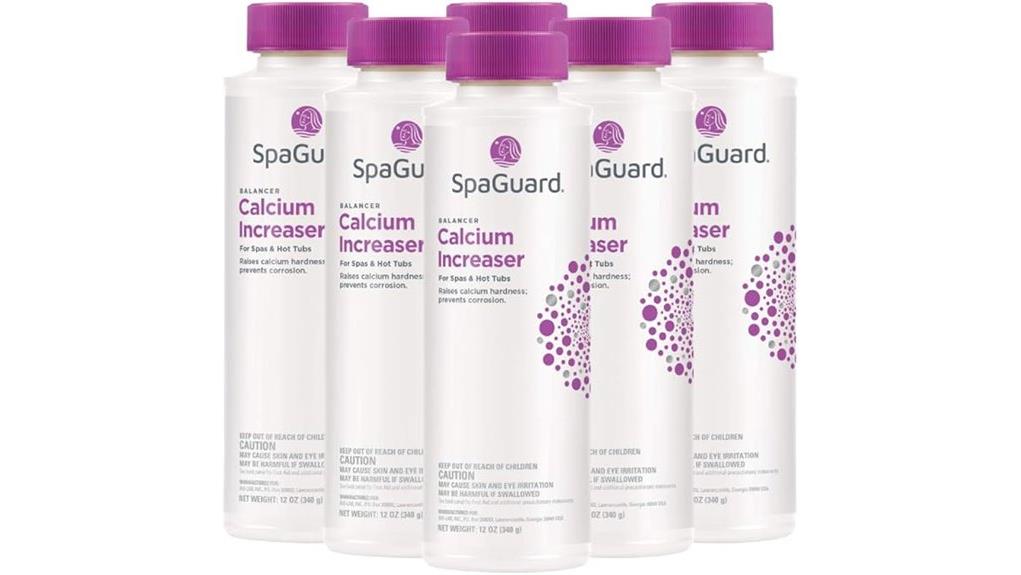
You’ll get a precise, granular 12 oz dose that predictably raises and stabilizes spa calcium hardness to the recommended 200–400 ppm, preventing corrosive attack on heaters, jets, plumbing, and acrylic surfaces. You test current hardness, dissolve measured portions, add to circulating water, and retest after 30–60 minutes to guarantee controlled increments and avoid supersaturation. It’s compatible with chlorine, bromine, ozone, and biguanide when used as directed, and the following sections explain practical dosing and value tips. Aqua Joe calcium hardness increaser benefits include prolonging the life of your spa and enhancing water clarity. It effectively minimizes potential damage caused by fluctuations in calcium levels, ensuring a more enjoyable spa experience. By maintaining optimal hardness levels, you not only protect your investment but also create a more inviting environment for relaxation.
Some Key Takeaways
- Raises spa calcium hardness predictably into the recommended 200–400 ppm range with measured, repeatable dosing.
- Granular formula dissolves and adds calcium without neutralizing chlorine, bromine, ozone, or biguanide sanitizers.
- Prevents corrosion and scale by stabilizing hardness, protecting heaters, jets, plumbing, and acrylic surfaces.
- Dose from 12 oz bottle based on spa volume; dissolve in bucket, add with pump running, retest after 30–60 minutes.
- Best for routine maintenance, multiple fills, or seasonal owners; buying a 6-pack offers unit-cost savings and spare bottles.
What SpaGuard Calcium Hardness Increaser Does and Why Calcium Levels Matter
Because low calcium lets water become aggressive, SpaGuard Calcium Hardness Increaser raises and stabilizes calcium hardness to the recommended 200–400 ppm, preventing corrosive attack on plumbing, jets, heating elements, and tub surfaces. You’ll control calcium chemistry to avoid undersaturation that strips metal and etches acrylic. The granular formula provides measured hardness increments compatible with chlorine, bromine, ozone, and biguanide systems. By maintaining target ppm, you reduce electrochemical corrosion, scale volatility, and pH drift that compromise equipment. This product supports corrosion prevention and extends component life, letting you preserve system integrity with predictable, testable adjustments to spa water hardness.
How to Use the 12 Oz Granular Bottle: Dosing, Timing, and Testing Tips
Start by testing your spa water to determine the current calcium hardness, then calculate dose from the 12 oz granular bottle based on your spa’s volume and the product’s ppm-per-ounce guidance. For granular application, dissolve measured portions in a bucket of water before adding to circulating spa water to prevent undissolved solids. Add with pump running; allow 30–60 minutes circulation, then retest. Target incremental adjustments—don’t exceed recommended per-treatment dose. Establish testing frequency: test before treatment, 24 hours after, then weekly once stable. Record doses and results to maintain 200–400 ppm and protect equipment.
Performance Review: How Well It Raises Hardness to 200–400 Ppm and Protects Equipment
Typically, SpaGuard Calcium Hardness Increaser raises calcium levels predictably, allowing you to bring spa water into the 200–400 ppm target range with measured doses. You’ll add specified grams per gallon, retest after circulation, and observe consistent ppm increments per dose. That stability aids scale prevention by minimizing sudden supersaturation events. Maintaining 200–400 ppm reduces corrosion risk to heaters, jets, and plumbing, extending component life. For best results, you’ll integrate hardness checks into regular maintenance and perform sensor calibration on digital testers to confirm dosing accuracy. Overall, performance is reliable when you follow dosage tables and verify with calibrated instruments.
Compatibility and Safety: Chlorine, Bromine, Ozone, Biguanide, and Spa Materials
While you maintain sanitizer levels and sanitizer type, SpaGuard Calcium Hardness Increaser remains chemically compatible with chlorine, bromine, ozone, and biguanide systems and won’t interfere with their sanitizing action when used as directed. You’ll see no adverse sanitizer interactions when dosing per label; the granular calcium source simply increases dissolved calcium hardness without neutralizing oxidizers. For material compatibility, use measured adjustments to reach 200–400 ppm to prevent corrosive water that damages heaters, jets, and fixtures. Apply to circulating water, avoid overdosing, and follow manufacturer guidelines to maintain balanced pH and total alkalinity for optimality equipment protection.
Who Should Buy It and Best Value Use Cases (6‑Pack, Routine Maintenance, Troubleshooting)
Maintaining proper sanitizer compatibility and balanced water chemistry sets the stage for deciding who should buy SpaGuard Calcium Hardness Increaser and how to get the best value. You should buy the 6-pack if you manage multiple fills, service several spas, or want stock for seasonal owners who open and close spas infrequently. Budget buyers benefit from unit-cost savings and granular dosing control. Use it routinely to keep calcium in the 200–400 ppm target, protecting heaters, jets, and surfaces. Keep spare bottles for troubleshooting low-hardness events after heavy dilution or frequent draining to prevent corrosion and equipment failure.
Some Questions Answered
Is This Product Safe for Inflatable Hot Tubs?
Yes — you can use it, but you’ll need caution. You’ll monitor vinyl compatibility and avoid high local concentrations that could promote liner swelling. Dissolve and disperse granular product in a bucket of water first, then add slowly to the inflatable tub while running the pump to guarantee even distribution. Target 200–400 ppm calcium hardness; check levels after dosing. Rinse spills promptly and follow manufacturer dosing limits to protect the vinyl.
Can I Store Opened Bottles Outdoors Between Uses?
No — you shouldn’t store opened bottles outdoors between uses. You’ll need controlled storage conditions: cool, dry, shaded, and away from moisture to preserve granule stability and prevent clumping. Maintain container integrity by keeping caps tightly sealed and using original packaging or a corrosion-resistant secondary container. Avoid temperature extremes and direct sunlight, which degrade product effectiveness and may compromise the container’s seal, risking contamination or hydrolysis.
Does It Affect Water Clarity or Foam Levels?
No, it won’t directly harm water clarity or increase foam formation when used correctly. You’ll raise calcium hardness to the 200–400 ppm range, which stabilizes water chemistry and reduces corrosive dissolution that could cloud water. Excessive overdosing may cause slight turbidity, but normal dosing keeps clarity intact and won’t promote persistent foaming. Follow label directions and balance sanitizer and pH to maintain peak clarity and minimize foam.
Is It Pet-Safe if They Contact Treated Water?
Direct contact with treated water poses low acute risk, but you shouldn’t assume it’s fully pet-safe; calcium hardness increasers are salts that can irritate skin or eyes and upset digestion if ingested. Minimize pet exposure to spa water, rinse pets if they’ve been in it, and keep containers secured. If a pet shows irritation, vomiting, or lethargy, seek veterinary guidance promptly. Consult your vet for species-specific precautions and dosing concerns.
Are There Temperature Limits for Effective Dissolving?
Yes — temperature affects dissolution. In cold water you’ll see slower dissolution and potential slow settling of granules, so pre-dissolve in a bucket of warm water for rapid dissolution. Add dissolved solution to warm baths or spa while circulating to guarantee uniform distribution. Avoid adding directly to very cold spa water. Circulate 15–30 minutes and re-test hardness; repeat dosing if needed until you reach target 200–400 ppm.