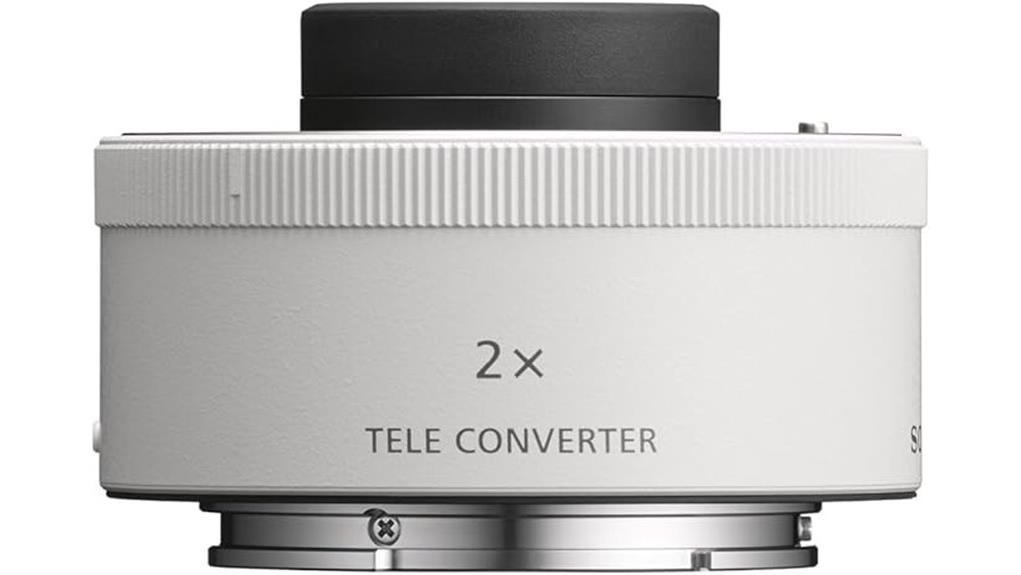
If you need reliable 2x reach from compatible Sony FE telephotos without hauling bigger glass, the FE 2.0x doubles focal length while costing about two stops of light and some corner microcontrast. Autofocus stays usable for static or slow subjects but slows and loses sensitivity on fast, erratic motion, especially in low light. Stabilization and center sharpness remain strong on high-quality G/GM lenses. Continue for specifics on lenses, mounting, and optimized workflow.
Some Key Takeaways
- Doubles effective focal length (e.g., 200mm → 400mm) while costing roughly two stops of light, affecting exposure and AF sensitivity.
- Best suited for sports, wildlife, and bird photographers who already own compatible FE telephoto lenses.
- Center sharpness remains strong on high-quality G/GM lenses, but corners and microcontrast typically soften.
- Autofocus stays usable for static or slow subjects but slows and struggles with fast, erratic motion in low light.
- Offers lighter, more compact reach versus native 400–600mm glass, with tradeoffs in low-light performance and edge resolution.
Who Should Buy the Sony FE 2.0x Teleconverter (Who Benefits Most)
If you need to double your focal length without carrying bulky glass, the Sony FE 2.0x Teleconverter is aimed at sports, wildlife, and distance shooters who already own compatible FE telephoto lenses. You’ll benefit if you’re a sports photographer needing reach from the sidelines, a birdwatchers enthusiast seeking distant subjects, or a wildlife shooter minimizing gear weight. You’ll accept ~2 stops light loss for doubled focal length and preserved autofocus, metering, and stabilization performance dependent on the host lens. You’ll also value the compact, weather-sealed construction and E-mount compatibility with Sony’s specified telephoto lineup. Many photographers prefer teleconverters because they extend reach while keeping kit lightweight and portable.
How the 2.0x Changes Focal Length, Exposure, and Handling
Having doubled your reach with the SEL20TC, you’ll see three concrete effects on focal length, exposure, and handling: your effective focal length doubles (e.g., a 200mm becomes 400mm), the lens loses about two stops of light requiring slower shutter speeds or higher ISO for equivalent exposure, and autofocus and stabilization behavior depend on the host lens and camera body. Focal magnification is a fixed 2x, so composition shifts predictably and depth of field changes accordingly. Plan exposure compensation of roughly +2 stops when using evaluative metering or set manual adjustments. Handling: added length, slight weight shift, and increased sensitivity to camera shake. For those building their kit, remember to consider compatible zoom lenses and mounts when pairing teleconverters.
Real-World Performance With Compatible FE Telephotos (Autofocus, Sharpness, Stabilization)
When you mount the SEL20TC on compatible FE telephotos, autofocus remains usable but shows a measurable slowdown and reduced subject-acquisition sensitivity compared with the native lens. You’ll notice autofocus reliability stays acceptable for predictable subjects—static or slowly moving—but tracking fast erratic motion suffers, especially in low light due to the two-stop light loss. Sharpness retention is generally strong at center frame with high-quality G and GM optics; corner microcontrast takes a hit and fine detail softens slightly. In-lens OSS continues to stabilize effectively, though handshake correction becomes more critical as effective focal length doubles, so tripod or faster shutter speeds help. For photographers who value precise focus, consider investing in dedicated lens calibration tools to optimize performance.
Pros, Cons, and Key Tradeoffs vs. Carrying Longer Lenses
Although the SEL20TC gives you a straightforward 2x reach extension, it forces clear tradeoffs: you lose about two stops of light which slows and reduces AF sensitivity, and image corners and microcontrast soften compared with native longer primes; in return you gain a lighter, more compact rig that preserves center sharpness and OSS function, letting you convert existing FE telephotos for occasional long-reach needs instead of carrying dedicated 400–600mm lenses. You’ll benefit from reduced bulk and simpler logistics, accepting lower low-light performance and marginal edge resolution. Consider weight tradeoffs versus native optics and potential resale value when deciding whether versatility outweighs ultimate image quality. Also remember that photographers who frequently shoot long-reach subjects may prefer large capacity memory options to handle higher-resolution files and longer sessions.
Buying and Usage Tips: Compatible Lenses, Mounting, and Maximizing Image Quality
Because the SEL20TC alters effective aperture and AF behavior, check lens compatibility and shooting conditions before mounting it so you can expect performance tradeoffs and plan accordingly. Use it only with officially supported FE lenses to preserve AF, metering, and image quality; unsupported optics or lens adapters can disable AF or introduce alignment errors. Anticipate aperture impacts—roughly two-stop light loss—so raise ISO or slow shutter accordingly, and verify stabilization performance per lens. Mount carefully, align tabs, and confirm firmware updates for camera and lens. For critical work, bracket exposures, use a tripod, and review high‑resolution crops to validate sharpness. Consider using lens mount adapters only when they are known to maintain proper flange distance and electronic communication to avoid additional image degradation.
Some Questions Answered
Will the Teleconverter Work on APS-C Sony E-Mount Bodies?
Yes — you can mount the FE 2.0x on APS-C Sony E bodies if the lens is compatible. You’ll get a 2x focal length increase plus the APS-C crop factor, so effective focal length multiplies accordingly. Expect about 2 stops light loss; autofocus performance and image quality depend on the specific lens and camera AF system, and performance can be reduced in low light. Weather sealing and optical stabilization remain lens-dependent.
Can I Use Filters With the Teleconverter Attached?
Yes — you can use filters, but filter compatibility depends on the attached lens and adapter limitations. The teleconverter itself has no front thread; filters mount to the lens’ front element. Wide-angle or specialty filters may vignette when doubling focal length, and some thick adapters or step-up rings can interfere with rear clearance or electronic coupling. Check your lens’ thread size, use slim filters if needed, and verify any adapter doesn’t obstruct optical path or AF.
Is There a Warranty Beyond the Seller’s 30-Day Return?
No — there’s no manufacturer warranty listed beyond the seller’s 30-day return; you’ll need to check Sony directly for manufacturer warranty coverage or repairs. If you want longer protection, consider purchasing extended protection from the retailer or a third-party provider at time of sale. Keep your receipt and serial number; those are typically required for manufacturer warranty claims or extended protection plans, and verify terms for accidental damage and service turnaround.
Does the Teleconverter Affect Lens Weather Sealing Integrity?
No — attaching the teleconverter won’t inherently compromise weather resistance, but you’ll need to make certain mount integrity. You’ll maintain dust- and moisture-resistant performance when both the teleconverter and lens mounts are clean, undamaged, and properly seated. Any degraded seals, damaged threads, or misalignment at either interface can reduce protection. Inspect sealing surfaces before use, avoid exposing joints to heavy precipitation, and reseal or service components showing wear to retain weather resistance.
Can I Use the Teleconverter With Third-Party FE Lenses?
You can sometimes use the teleconverter with third-party FE lenses, but third party compatibility isn’t guaranteed. You’ll need lenses that fully support Sony E-mount electronic communication; otherwise autofocus, metering and stabilization may fail. Avoid non-native mounts unless you employ mounting adapters that preserve electronic contacts and flange distance precisely. Test specific lens+adapter combinations before critical work, and expect potential firmware or performance limitations when mixing brands and adapters.