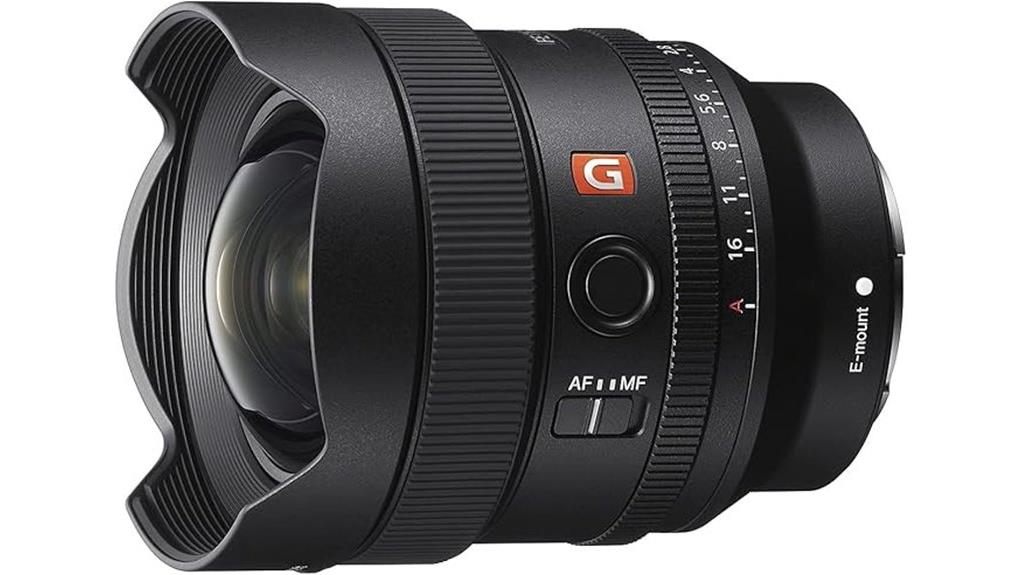
If you need an ultra-wide that excels in low light and astro work, the Sony FE 14mm f/1.8 GM delivers class-leading center resolution at f/1.8, creamy nine-blade bokeh, and tightly controlled aberrations thanks to ED/XA elements. Corners sharpen by f/4 for landscapes and architecture, while two XD linear motors give fast, quiet AF with minimal breathing and solid tracking. It’s compact and balanced for gimbals but lacks optical IS and carries a premium—keep going to see detailed tests and comparisons.
Some Key Takeaways
- Exceptional center sharpness at f/1.8 with high microcontrast, improving corner performance by f/4 for landscape and architecture.
- Fast f/1.8 aperture and nine-blade diaphragm deliver excellent low-light, astrophotography performance, and creamy bokeh.
- Two XD linear motors provide fast, quiet, and accurate AF with reliable tracking and minimal focus breathing for video.
- Lightweight (≈460 g), compact build with internal focusing and advanced coatings, but no in-lens optical stabilization.
- Premium price justified by class-leading optics and coatings; cheaper Samyang/Rokinon and Sigma alternatives exist with compromises.
Quick Verdict : Who Should Buy the Sony FE 14MM F/1.8 GM
If you need an ultra-wide prime that balances extreme sharpness with a fast f/1.8 aperture, the Sony FE 14mm f/1.8 GM is the lens to contemplate. You’ll appreciate its compact travelogue-friendly footprint and 460 g weight when packing light for landscape runs or city grids. For enthusiast astrophotography you’ll get a bright aperture, minimized coma, and coatings that suppress flare—critical for star work. Videographers and vloggers benefit from internal focus and dual XD motors for smooth, silent tracking. If you want ultimate edge-to-edge performance in a portable package and accept no in-lens stabilization, this is for you. The lens also pairs exceptionally well with telephoto lens techniques commonly used by wildlife and sports photographers for fast subject acquisition.
Optical Performance: Sharpness, Bokeh, Distortion and Chromatic Aberration
Having praised its build and astro-friendly aperture, let’s examine how the optics actually perform: sharpness, bokeh, distortion and chromatic aberration. You’ll see exceptional center resolution at f/1.8; microcontrast and edge rendering are superb. Corner sharpness improves markedly by f/4, delivering usable corner detail for landscape and architecture. Creamy bokeh chromaticity is impressive for an ultra-wide: nine blades yield smooth, nearly round highlights with minimal color fringing. Geometric distortion is modest for 14mm and correctable in RAW with predictable straight-line behavior. Lateral and longitudinal CA are well controlled thanks to ED and XA elements, with rare residual fringing. This lens is a strong choice for portrait shooters looking for portrait-optimized optics while also offering astro-friendly performance.
Autofocus, Handling and Video Usability for Creators
Expect fast, precise AF and a handling profile geared toward run-and-gun creators: two XD linear motors deliver snappy, quiet subject acquisition and reliable tracking for both stills and 4K video, while internal focusing keeps the lens balanced on gimbals and stabilizers. You’ll notice responsive manual override via de-clicked focus ring options on compatible bodies, aiding pull-focus work. At 460 g the lens aids gimbal balance and reduces front-heaviness. There’s minimal focus breathing, yet you’ll still apply remedial reframing in critical shots. No in-lens stabilization means you’ll rely on body IBIS or external stabilizers for smooth handheld footage. For photographers who mount accessories, consider pairing the lens with a sturdy L-bracket to improve stability and handling on tripods and gimbals.
Real-World Tests: Landscape, Architecture, Astrophotography and Vlogging Samples
With autofocus and handling validated in dynamic shooting, let’s put the FE 14mm f/1.8 GM through practical field scenarios—landscape, architecture, astrophotography, and vlogging—to assess optical performance, flare control, edge-to-edge resolution, and real-world usability. You’ll find landscapes benefit from crisp center-to-corner acuity; focus stacking for hyperdetail works reliably. Architecture shots show minimal distortion and controlled flare, preserving line integrity. For astrophotography the wide aperture and coatings yield pinpoint stars with limited coma during long exposure, though star trailing requires short exposures or time lapse strategies. Vlogging gains from internal focus and low motion blur in handheld pans. Our site also offers practical buying tips and accessories to get the most from wide-angle primes like this one, including recommended zoom lens care practices.
Value and Alternatives: Price, Pros/Cons and Lenses to Compare
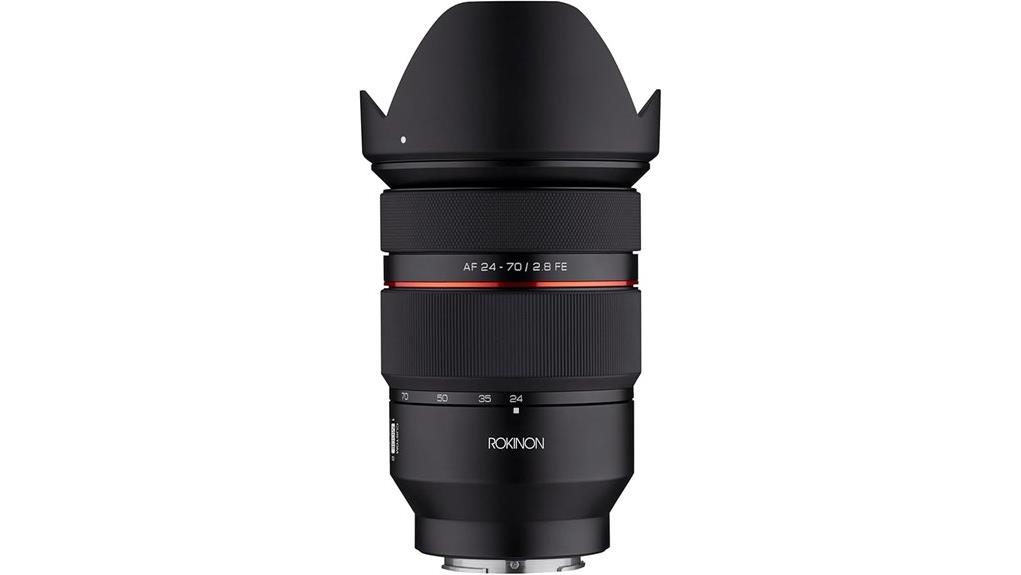
Although the FE 14mm f/1.8 GM targets serious shooters, its premium price demands scrutiny against real-world benefits: you get class-leading edge-to-edge sharpness, ultra-wide f/1.8 brightness for low-light and astrophotography, top-tier coatings and aberration control, and fast XD linear-motor AF in a compact 460 g package. You’ll pay top-dollar versus older 14mm primes and third-party options; a strict price comparison shows Sony’s optical, AF, and build justify cost if you need highest performance. Pros: stellar IQ, low-light, compactness. Cons: high cost, no optical IS. Competing alternatives include Samyang/Rokinon and Sigma options with lower cost but trade-offs. Gear Guide serves enthusiasts with curated camera-related products and buying advice, making it a useful resource for enthusiast photographers.
Some Questions Answered
Is This Lens Weather-Sealed for Shooting in Rain or Dust?
No — it’s not fully weather-sealed for heavy rain, but it does include a gasketed mount and some internal sealing for moisture protection. You’ll get limited resistance to light spray and dust, yet prolonged exposure or driving rain can breach seals. Treat it as splash-resistant, not waterproof: use additional rain covers, a protective hood, or avoid severe conditions to preserve electronics and optics.
Does It Accept Screw-On Neutral Density or Polarizing Filters?
No — you can’t screw standard ND or polarizing filters onto the front element because the bulbous front prevents a traditional filter thread; filter mountability requires a specialized filter holder or rear gelatin. You’ll need a dedicated ultra-wide filter system that clamps to the lens hood or uses a large square/rectangular holder designed for this lens. That preserves image quality but adds cost and handling complexity for polarizers or strong NDs.
What Is the Minimum Focus Distance in Meters/Feet?
The minimum focus distance is 0.25 meters (0.82 feet). You’ll appreciate the lens’ close focusing for dramatic ultra‑wide closeups, though you should note some focus breathing when racking focus; framing shifts slightly as you change distance. Optically it maintains strong corner‑to‑corner resolution at close range, but critically inspect edges if you need absolute micro‑sharpness. For video, plan pulls knowing breathing and close‑focus behavior will affect composition.
Can It Be Adapted for APS-C Sony Bodies and What’s the Crop Equivalent?
Yes — it’s APS C compatibility is native via Sony E-mount APS-C bodies; you just mount it and the camera crops. On APS-C the crop equivalent focal length is about 21mm (14mm × 1.5 crop factor), so expect an effective field of view similar to a 21mm full-frame lens. You’ll keep the ultra-wide perspective, slightly reduced angle of view, and unchanged optical characteristics aside from the cropped framing.
Does This Lens Support In-Camera Lens Corrections/Firmware Updates?
Yes — your camera can apply in-camera lens corrections for this lens and Sony issues firmware updates when needed. You’ll benefit from corrections for distortion, vignetting and chromatic aberration that complement the lens’s autofocus performance. The lens itself lacks image stabilization, so corrections can’t emulate sensor-shift stabilization. Keep your camera and lens firmware current; updates occasionally improve communication, autofocus performance, and correction profiles for peak results.