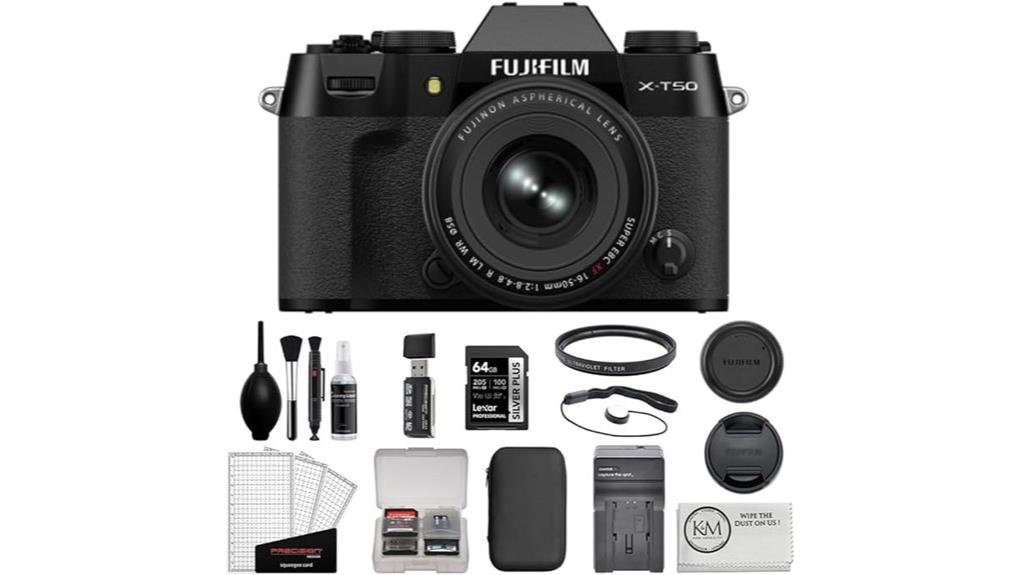
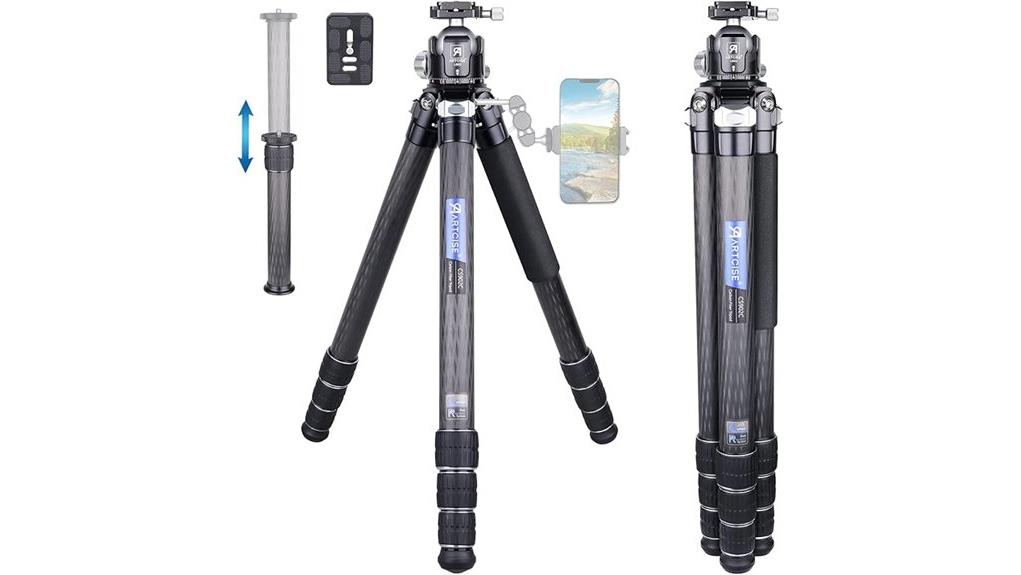
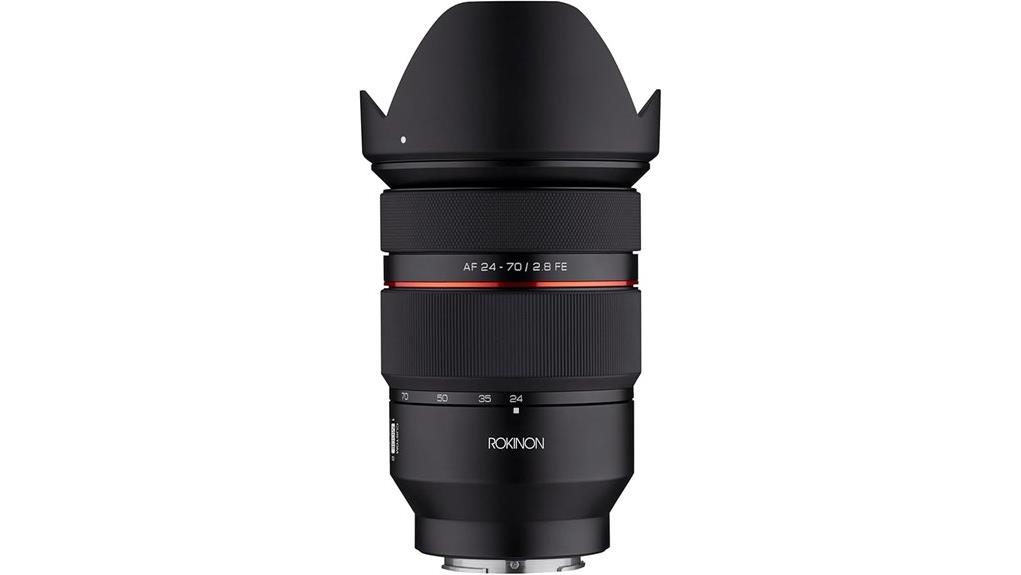
You’ll get a 33MP α7 IV body with stabilized 28–70mm kit zoom plus a higher‑quality 24–70mm f/4 ZA OSS, 64GB card, tripod and filters—aimed at beginner vloggers and travel shooters who want a single hybrid system. The Exmor R sensor and BIONZ XR deliver fine texture and usable files to ISO 3200–12800, reliable 759‑point AF and 10 fps bursts, IBIS and OSS for handheld work, and internal 10‑bit 4:2:2 4K60 with S‑Log/S‑Cinetone; more specifics follow.
Some Key Takeaways
- Excellent 33MP image quality with Exmor R sensor and BIONZ XR, preserving fine detail and smooth color up to high ISOs.
- Reliable 759-point phase-detection AF and 10 fps continuous shooting make it strong for fast-moving subjects and vlogging.
- Robust video features: internal 4K60 oversampled from 7K, 10-bit 4:2:2, S-Log2/3 and S-Cinetone for grading and pleasing OOC tones.
- In-body stabilization plus OSS in the 28–70mm kit lens enable steady handheld travel and vlogging footage.
- Great starter kit value—versatile zooms, tripod, 64GB card, and filters—though kit glass limits low-light and wide-aperture control.
What the Sony α7 IV Kit Includes and Who It’s for
While the α7 IV kit comes ready to shoot right out of the box, it bundles a versatile toolkit: the 33 MP full-frame α7 IV body, a 28–70mm OSS zoom for stabilized handheld work, a higher-quality Vario-Tessar FE 24–70mm f/4 ZA OSS for expanded standard zoom performance, a 64GB card, tripod, filter kit, and other accessories. You’ll find the package addresses both stills and 4K video workflows: stabilization, versatile focal lengths, and utility accessories. It’s optimized for beginner vloggers and travel photographers needing a single hybrid system that balances portability, robust autofocus, and professional recording formats without forcing immediate upgrades. For enthusiasts building out their mirrorless kit, this bundle covers many essential items for mirrorless camera shooting and everyday travel use.
Real-World Image and Low-Light Performance (33MP Sensor, Color, Detail)
Because the α7 IV pairs a 33 MP back-illuminated Exmor R sensor with the BIONZ XR engine, you’ll get images that balance high detail with strong low-light capability: fine textures and edge definition remain well-preserved up to mid-to-high ISOs, and noise is controlled with pleasing grain structure rather than harsh luminance blotching. You’ll notice excellent high ISO resilience in real scenes — usable files at ISO 3200–12800 with manageable noise. Color gradation is smooth across tones, aiding skin and shadow shifts. Detail retention supports cropping and printing, and RAW flexibility lets you prioritize noise reduction or detail sharpening during processing. Consider using a color calibration device to ensure your monitor and prints reflect the camera’s true color and tonal range.
Autofocus, Burst Shooting, and Stabilization in Action
Put the Sony α7 IV’s autofocus and burst systems to work and you’ll see how they change the way you capture fast, unpredictable subjects. You rely on a dense 759‑point phase-detection array with face detection and subject recognition to lock fast; continuous AF maintains tracking while you compose. Burst shooting at 10 fps delivers decisive frames, though real-world throughput depends on buffer depth and card speed. Optical SteadyShot in the kit lens and in‑body stabilization combine to reduce motion blur for handheld action. For manual-focus situations, focus peaking highlights edges so you confirm critical sharpness quickly and reliably. The kit pairs well with essential accessories for DSLR enthusiasts, including protective cases and extra memory cards to support extended shooting sessions with reliable gear.
Video Features and Workflow: 4K60, 10‑Bit 4:2:2, S‑Log/S‑Cinetone
Frequently, you’ll reach for the α7 IV when you need high-resolution, production-ready footage: it records oversampled 7K-to-4K video and supports 4K up to 60p with internal 10-bit 4:2:2 capture, giving you greater color fidelity and grading latitude than 8-bit modes. You’ll choose S-Log2/3 to maximize dynamic range and preserve Log color for aggressive grading, or S‑Cinetone when you want pleasing out-of-camera tones. Plan your File workflow: record high-bitrate XAVC or RAW proxies concurrently, transcode proxies for edit responsiveness, then relink to masters for color work using LUTs and accurate scopes for final deliverables. Consider adding an external monitor with accurate color to ensure your exposure and color decisions on set match what you expect in post.
Value Verdict: Kit Lenses, Accessories, Pros vs. Cons, and Buy Recommendation
While the α7 IV body delivers flagship-level imaging and video tools, the bundled kit lenses and accessories shape how quickly and effectively you’ll put those capabilities to work. The 28–70mm OSS and 24–70mm f/4 ZA OSS cover common needs—stabilization, focal-range flexibility and immediate usability—so you can shoot pro stills and 4K60 video without an early lens upgrade. Included tripod, 64GB card and filters add practical value; consider a warranty extension for peace of mind if you use it commercially. Pros: image quality, AF, video tools. Cons: kit glass limits low-light and wide-aperture control. Recommended for hybrid prosumers. This kit is a strong starting point for photographers moving into telephoto workflows.
Some Questions Answered
Does the Camera Support Vertical Video Recording With a Dedicated Grip?
Yes — you can record vertical video with a dedicated grip. You’ll mount the grip that adds a vertical shutter, improved grip ergonomics, and vertical controls so framing and handling for vertical portraiture are natural. The camera supports sensor rotation-aware metadata and vertical orientation detection, maintaining AF, stabilization, and 4K recording. That setup preserves ergonomics and workflow for run-and-gun vlogging, social formats, and professional vertical portraiture.
Is There Built-In GPS or Geotagging Support?
No — the camera doesn’t offer built in geotagging via an internal GPS module. You’ll use GPS alternatives: pair the camera with your smartphone through the Imaging Edge Mobile app to transfer location data or attach an external GPS logger that syncs timestamps for later geotagging in software. These methods provide accurate location metadata; they’re practical technical workarounds when internal GPS isn’t available, preserving workflow precision for mapping and cataloging.
How Long Does Battery Life Last With Continuous 4K60 Recording?
You’ll get roughly 45–70 minutes of continuous 4K60 recording on a fully charged NP-FZ100 battery, depending on settings and usage. Battery endurance drops with IBIS, LCD use, and frequent menu/AF activity. Expect recordings to end sooner if the camera hits thermal throttling under hot conditions or extended takes; the camera may stop or reduce frame rates to protect components. Carry spares or external power for reliable long sessions.
Can the Camera Be Tethered to a Smartphone via USB for Remote Control?
Yes — you can USB tether the camera to your smartphone and control it using Sony’s Remote app. USB tethering enables live view, remote shutter, exposure adjustments, and file transfer; the Remote app provides intuitive controls and supports basic settings and image browsing. You’ll need a compatible USB-C cable and the latest firmware and app versions. For advanced workflows use wired tethering for reliability; check cable quality and phone power management during shoots.
Are There Weather-Sealing Ratings for Lens and Body Compatibility?
No formal ingress protection (IP) rating is published, so you can’t rely on an explicit IP number; rather, Sony uses weather sealing compatibility between the α7 IV body and lenses. You should assume the body and Sony FE OSS lenses feature dust- and moisture-resistant construction but not full waterproofing. For critical shoots, you’ll want additional protection (covers, rain sleeves) and to verify specific lens seals before exposing gear to severe conditions.