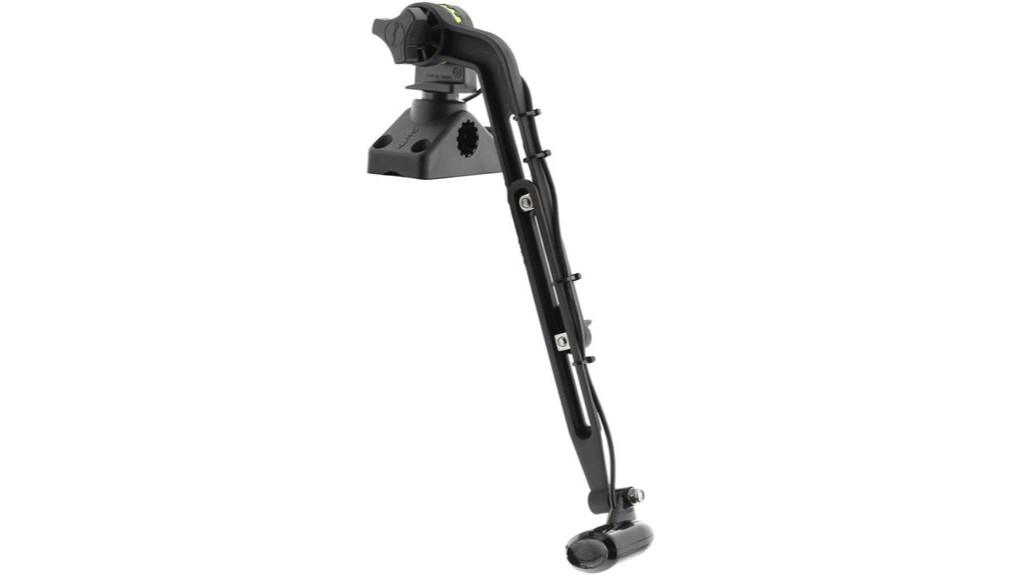
You’ll find the Scotty 140 is a lightweight, low-drag pole- or panel-mounted transducer arm that fits most kayaks and SUPs designed for a pole mount. It’s molded plastic with an 18-inch projection, resists corrosion, and keeps small transducers stable at trolling speeds. Installation is straightforward on existing pole mounts or panels, but plastic limits impact resistance and heavy-duty adjustability. It’s ideal for paddling and modest conditions—keep going to see fit checks, install steps, and trade-offs.
Some Key Takeaways
- Lightweight molded-plastic arm designed for pole- or panel-mount use on kayaks and SUPs, projecting about 18 inches for transducer clearance.
- Easy installation: mark, drill pilot holes, secure base, route cable with zip ties, and seal panel penetrations with marine sealant.
- Performs well at trolling and paddling speeds with minimal oscillation, but flexes more in high-speed or heavy chop conditions.
- Best suited for small transducers and users prioritizing low weight and simple installs; avoid for heavy transducers or rough, fast runs.
- Durable and corrosion-resistant for casual use, but plastic construction offers less impact resistance and adjustment than metal alternatives.
How the Scotty 140 Fits Kayaks and SUPs (Who It Works With)
Although designed primarily for pole-mounted installations, the Scotty 140 fits most kayaks and SUPs that accept a pole-mount arm, letting you position a transducer off the stern or alongside the hull. You’ll assess mount compatibility by checking pole diameter, panel cutouts, and available deck space. Measure projected arm length against hull geometry to make certain adequate hull clearance and prevent prop/track interference. The plastic construction and panel mounting style keep weight low and installation simple; you’ll secure it with standard fasteners and confirm transducer alignment. Use it where pole mounts are already installed or planned for minimal modification. For paddlers who rely on navigation electronics, consider pairing mounts with GPS backup batteries to keep your transducer and fishfinder powered during long outings.
What the Scotty 140 Is and How It’s Built (Key Specs and Materials)
If you’ve confirmed your kayak or SUP can accept a pole-mount arm, it’s useful to know what you’re mounting: the Scotty 140 is a compact, black painted plastic transducer arm designed for panel or pole mounts, measuring roughly 7.05 x 6.78 x 2.7 inches with an 18-inch depth for projection. You’ll get a single-unit, molded plastic construction from Scotty (Blue Sea Systems), optimized for low weight and corrosion resistance. Key specs: model 0140, part 1111, ASIN B08QRZRWJ8. The mount material is durable plastic; the mounting finish is painted black to resist UV and wear. This product is well suited for paddlers who value essential gear for safe and enjoyable time on the water.
Step-by-Step Installation on a Pole Mount or Panel
Begin by positioning the Scotty 140 where you want the transducer to sit relative to the hull and pole, then verify clearances for movement and cable routing. Mark fastener locations on the pole or panel, then remove the arm and drill pilot holes sized to the supplied hardware. Follow the mounting sequence: secure base plate, attach arm, torque fasteners to snug (avoid over-tightening plastic). Route the transducer cable along the arm, using zip ties at intervals to prevent chafing; keep bend radius generous. Seal panel penetrations with marine sealant. Recheck alignment, operate the pole through its range, and confirm unobstructed cable routing. Consider mounting near a wall-mount rack to keep your kayak and gear organized when the rig is not in use.
Real-World Performance: Transducer Stability, Drag, and Durability
When you mount the Scotty 140 on a kayak or SUP pole, expect a compact, rigid platform that keeps most small transducers stable at slow to moderate speeds; its molded plastic arm resists flex under typical trolling and paddling loads but will show more movement in higher-speed runs or heavy chop. You’ll notice minimal transducer oscillation during steady-speed fishing; vibrations are damped by the molded geometry and secure clamp. Drag is low—profile and finish reduce wake—but aggressive angles increase pull and can induce waterline interference on marginal installs. Durability is adequate for plastic: inspect fittings periodically and avoid repeated high-impact loads. For paddlers who also use accessories like deck-mount pumps, this mount integrates cleanly with common deck-mount setups and won’t intrude on essential gear.
Should You Buy It? Pros, Cons, and Best Use Cases
Because it balances a compact, rigid profile with low drag, the Scotty 140 is a practical choice if you need a simple, lightweight transducer mount for kayak or SUP pole setups; it keeps small transducers stable at trolling and paddling speeds while minimizing wake and installation complexity. You should buy it if you prioritize low weight, easy panel/pole mounting, and affordability versus bulkier aluminum arms. Cons: plastic limits impact resistance and adjustment range. For heavier or high-speed use, consider alternative mounts with metal construction. Do a cost comparison against stainless or CNC options; pick the 140 for budget, simplicity, and modest conditions. Our store also offers compatible kayak accessories and mounts designed for kayak fish finder mounts to help you outfit your craft.
Some Questions Answered
Is the Scotty 140 Compatible With Fishfinder Transducer Cables?
Yes — you can route fishfinder transducer cables through the Scotty 140, but you’ll need to manage transducer routing and cable strain relief yourself. The arm accepts typical transducer cables and lets you position the transducer off a pole mount, yet it lacks integral molded channels or clamps. You should secure cables with ties, grommets, or adhesive mounts to prevent chafing and provide proper cable strain relief for reliable performance.
Can It Be Used in Saltwater Without Corrosion Issues?
Yes — you can use it in saltwater, but you’ll need stainless compatibility awareness and routine saltwater care. The plastic arm resists corrosion, yet any metal fasteners or mating pole hardware must be stainless or treated. Rinse with fresh water after each use, lubricate stainless fittings with anti-corrosion spray, and inspect seals and mounting points regularly. Doing so will prevent galvanic corrosion and extend service life in marine environments.
Does It Require Any Special Tools for Mounting?
No, it doesn’t require special tools. You’ll find the design hand tool friendly and intended for quick pole or panel attachment; no drilling needed if you use an existing pole mount or compatible bracket. Use common hand tools—screwdriver, wrench, and pliers—to tighten fasteners and adjust alignment. Follow torque recommendations, use marine-grade hardware and thread locker as needed, and double-check clearances to prevent vibration or interference while underway.
What Is the Warranty or Return Policy?
Warranty duration typically depends on retailer or manufacturer policy; you should expect a limited warranty covering defects for a defined period (check your receipt). For returns, follow retailer return procedures: retain packaging, proof of purchase, and initiate return within the allowed window. If defective, contact the manufacturer’s support with serial details for warranty claim; they’ll advise repair, replacement, or refund per their terms and processing times.
Can the Arm Be Trimmed or Modified for Different Depths?
Yes — you can trim the arm for shallower depths, but you’ll want to plan length trimming precisely. You’ll cut plastic and re-finish edges to avoid stress concentrators, then test fit and secure fasteners. For larger changes consider custom fabrication or replacing with a longer arm to maintain strength and alignment. Use appropriate plastics tools, deburr, and verify transducer angle and cable routing after modifications to guarantee reliable performance.