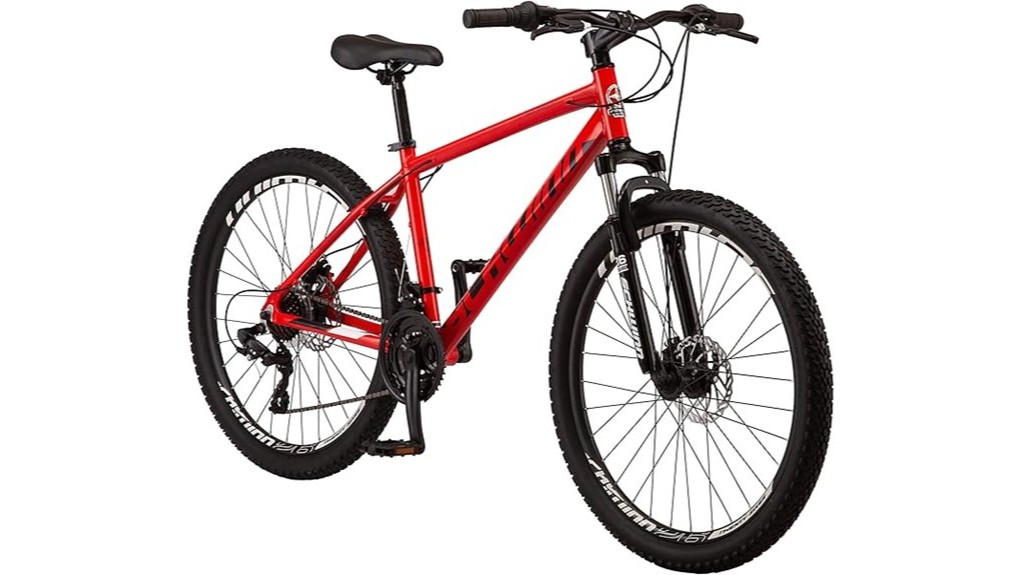
You’ll find the Schwinn High Timber is a budget-friendly, confidence-inspiring mountain bike that suits casual trail and urban-commute use. It comes in 24″–29″ wheels with aluminum or steel frames, basic front suspension, wide knobby tires, and 7- or 21-speed drivetrains for straightforward shifting. Brakes are cable-actuated and components favor durability over performance. A 16.5″ aluminum frame fits about 5’4″–6’2″ for lighter handling. Keep reading to get setup tips, sizing guidance, and buying advice.
Some Key Takeaways
- Affordable, entry-level mountain bike best for urban commuting and light trail use rather than aggressive off-road riding.
- Available in 24″–29″ wheels with 16.5″ aluminum frame fitting riders about 5’4″–6’2″ for versatile sizing.
- Front suspension and wide knobby tires provide comfortable bump absorption and predictable traction on loose surfaces.
- 7- or 21-speed drivetrain with alloy crank and twist shifters offers simple, low-maintenance shifting for casual riders.
- Cable-actuated brakes and durable components prioritize reliability and easy servicing over high-performance refinement.
Schwinn High Timber at a Glance : Key Specs and Who It’s For
Get rolling with the Schwinn High Timber: a versatile entry-level mountain bike offered in wheel sizes from 24″ to 29″, with lightweight aluminum or more economical steel frames (a 16.5″ aluminum example fits riders roughly 5’4″–6’2″). You’ll find 7- or 21-speed drivetrains, alloy crank, twist shifters, and alloy wheels with wide knobby tires. Front suspension soaks bumps; quick-release seat post eases fit adjustments. It ships ~80% assembled; basic tools finish setup. Ideal if you mix urban commuting with occasional off-road loops, or if you need a budget-friendly platform that tolerates basic trail maintenance and routine care. This model pairs well with outdoor riding gear commonly used by ebike and bike riders who enjoy outdoor activities.
How It Rides: Handling, Suspension, Tires, and Gearing Performance
Having covered the High Timber’s specs and who it suits, let’s look at how it actually rides on trails and streets. You’ll notice stable handling from wide knobby tires and alloy wheels that provide traction and predictable grip, boosting cornering confidence on loose surfaces. The front suspension smooths small impacts, keeping momentum without excessive bob. With 7- or 21-speed options and twist shifters, gear changes are straightforward; the alloy crank aids smooth shifts and low maintenance. Cadence responsiveness is adequate for moderate climbs and flats, though it’s not race-oriented. Overall it’s confidence-inspiring for recreational trail and street use. For riders who frequent mixed terrains, consider investing in performance ebike tires designed for outdoor rides to enhance traction and durability.
Build Quality and Components: Frame, Wheels, Brakes, and Drivetrain
While the High Timber keeps things straightforward, you’ll notice Schwinn prioritized durability over frills: frames come in aluminum for a lighter ride and steel for added toughness, both welded to reasonable tolerances for a value-oriented bike. You get alloy wheels with wide knobby tires and basic front suspension that balance grip and comfort across surfaces. Braking is cable-actuated with emphasis on predictable brake modulation rather than performance stopping; pads and calipers are serviceable. Drivetrain options (7- or 21-speed) use alloy cranks and twist shifters for simple, low-maintenance shifting. Overall build favors material longevity and practical reliability. Riders who enjoy trails should also consider essential gear for mountain e-bike riders such as protective helmets and gloves to enhance safety and comfort.
Fit, Sizing, and Who Should Choose the 16.5 Aluminum Model
Now that you’ve seen how the High Timber balances durable materials and straightforward components, it’s worth looking at how those choices affect fit and who’ll benefit from the 16.5-inch aluminum model. The 16.5-inch aluminum frame suits riders roughly 5’4″ to 6’2″, offering lightweight responsiveness and easier handling. You’ll appreciate improved rider comfort from the alloy frame and front suspension on varied trails. Check standover clearance before buying—enough room lets you dismount safely on technical terrain. Choose this size if you want a versatile adult-sized bike that balances maneuverability, lower weight, and practical trail performance. Riders who plan to tackle rougher singletrack may also want to consider compatible mountain ebike pedals to improve traction and control.
Value, Assembly Tips, and Final Buying Recommendation
Because the High Timber pairs durable basics with user-friendly components, it delivers solid value for casual riders and budget-conscious enthusiasts alike. When you run a price comparison, factor wheel size and gearing options; the 16.5-inch aluminum model often offers the best balance of weight and cost. Check the retailer’s return policy before purchase. Expect about 20–40 minutes assembly time since the bike ships ~80% assembled. Use a clear tool checklist: Phillips head, 2.5–8 mm Allen wrenches, adjustable wrench, pliers with cable cutters. Overall, buy if you want dependable, low-maintenance trail performance at an entry-level price. For outdoor ebike riders, consider keeping a basic maintenance kit on hand to extend component life and reliability, including essential ebike maintenance practices.
Some Questions Answered
Can I Attach a Rear Rack or Panniers to the Frame?
Yes — you can attach a rear rack, but pannier compatibility depends on mounting points. If your High Timber frame has eyelets on the rear dropouts and seatstay braze-ons, you’ll mount a rack and use panniers. Many models lack full braze-ons, so you’ll need a rack that clamps to the seatpost or uses axle mounts. Measure wheel size and clearance, choose a sturdy alloy rack, and confirm pannier rail fit for secure transport.
Is the Bike Compatible With Clipless Pedals?
Yes — you can use clipless pedals, but check cleat compatibility with the crank and shoe type first. The stock pedals are platform-style, so you’ll need clipless pedals and possibly pedal adapters to fit specific spindle diameters or to convert from platform if you want dual-sided use. Make sure your shoes accept the cleat pattern (2-bolt vs 3-bolt) and confirm crank/pedal thread standard (usually 9/16″) for proper, safe installation.
Does It Come With a Warranty and What Does It Cover?
Yes — it includes a limited warranty. You’ll get a warranty duration that typically covers the frame for one year and components for 90 days (verify your specific model paperwork). The warranty covers defects in materials and workmanship, not normal wear, misuse, or cosmetic damage. If you need help, contact customer support for claims, proof-of-purchase instructions, and authorized service guidance; keep receipts and serial numbers handy.
Can I Upgrade to Hydraulic Disc Brakes Later?
Yes — you can upgrade to hydraulic disc brakes later, but it’s not plug-and-play. You’ll need a hydraulic conversion that matches your frame mounts, rotor size, and hub type. Expect to fit brake adapters, new calipers, hoses, lever compatibility, and possibly new wheels or hubs. If your frame lacks disc mounts, conversion may be impractical. Have a mechanic assess mounting points and costs before buying parts or attempting the swap.
Are Fenders/Mudguards Compatible With the Fork and Frame?
Yes — you can fit fenders, but check fender clearance and mounting compatibility first. The fork and frame have moderate clearance for wide knobby tires and usually lack dedicated eyelets; you’ll need clip-on or stay-mounted fenders that accommodate front suspension. Rear fenders can attach to the seatpost quick-release or use clamp-on brackets. Measure tire width and fork space, and choose adjustable mounts to guarantee proper fit and clearance.