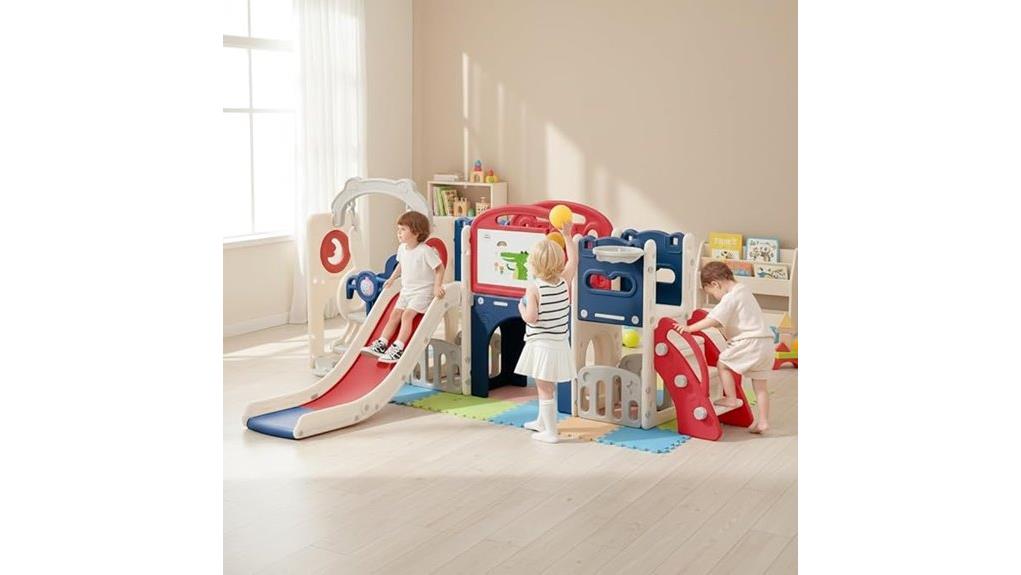
You’ll want a compact 12‑in‑1 playset if you need durable, space‑smart gear that grows with toddlers and boosts balance, coordination, and sensory play. Pick models with rounded edges, non‑toxic finishes, weather‑resistant frames, secure harness swings, gentle slides, varied climbers, and tunnels that drain. They cut screen time, fit small yards or balconies, and ease caregiver maintenance with replaceable parts. Keep an eye on warranty and clear sightlines — keep going to find top models and buying tips.
Some Key Takeaways
- Evaluate modularity and included stations (swing, slide, climbing wall, tunnel) to ensure versatile play and developmental progression.
- Prioritize durable, non‑toxic materials, weather‑resistant finishes, and rounded edges for safety and outdoor longevity.
- Check age‑range labeling, secure harnesses, gentle slide slopes, and appropriate grip spacing for toddler motor-skill development.
- Review installation, anchoring options, drainage design, and recommended surfacing for stable, low‑maintenance outdoor use.
- Compare price tiers, warranty length, and availability of replacement parts to assess long‑term value and support.
Why Choose a 12‑In‑1 Outdoor Toddler Playset?
Choose a 12‑in‑1 outdoor toddler playset when you want one compact, research‑backed solution that grows with your child and supports multiple developmental needs. You’ll get varied stations—swing, slide, climbing wall, tunnel—that encourage gross motor development, balance, and coordination through active play. Careful design and sturdy, non‑toxic materials reduce injury risk while enabling confident exploration. The mix of open movement and focused spots supports imaginative roleplay and sensory exploration, letting you offer diverse experiences without multiple bulky items. You’ll cut screen time, maximize small spaces, and provide a durable, versatile hub that adapts as your toddler gains skills. Many homeowners find these playsets ideal for creating an outdoor play oasis that keeps kids engaged on their property.
Who Benefits Most From These Playsets (Age, Space, Caregiver Needs)?
Although toddlers vary widely, these 12‑in‑1 playsets are especially well suited for children aged 2–6 years because their modular stations match developmental milestones—early walkers build balance on low slides and tunnels, while older preschoolers refine coordination with swings, climbing walls, and ball play. You’ll find them ideal if you have limited outdoor or indoor space: compact footprints create rich activity zones without large yards. Caregivers who need durable, low‑maintenance equipment will appreciate easy assembly and weather‑resistant materials. They also support multigenerational play and offer measurable therapy benefits for kids needing sensory input or motor‑skill practice. These playsets are perfect for turning your property into an engaging backyard adventure zone that encourages imaginative outdoor play.
Must‑Have Features That Define a Quality 12‑In‑1 Playset
When you’re evaluating a 12‑in‑1 playset, focus on core features that guarantee safety, longevity, and developmental value: durable, non‑toxic materials with rounded edges and a stable base; modular elements like adjustable swings, a low‑impact slide, and varied climbing options to match growing skills; weather‑ and fade‑resistant finishes for outdoor use; and a compact, space‑efficient footprint for flexible placement. You’ll want multiple activity zones—swing, slide, climbing wall, tunnel, hideout and hoop—plus clear age‑range labeling. Look for interchangeable modules, varied color options to engage kids, integrated sensory panels for tactile and visual stimulation, and simple tool‑free adjustments. Regular inspections and a checklist help maintain safety and spot wear before it becomes hazardous, particularly when monitoring playset surfacing and hardware.
How Safety and Materials Compare Across Top Models
After you’ve identified the must‑have features, it helps to compare how top 12‑in‑1 models actually handle safety and materials so you can pick the best fit for your child and environment. You’ll want models with non toxic finishes, rounded edges, and sturdy fastenings that resist wobble during active play. Check whether frames and plastics meet impact testing standards and whether weather‑resistant coatings preserve integrity outdoors. Look for clear manufacturer data on load limits, age recommendations, and certification marks. Prioritize units with replaceable parts and easy inspections so you can maintain safety as your toddler grows. Also consider accessories like safety handles specifically designed for playsets that help keep kids secure during outdoor play and are tailored for homeowners managing kid‑friendly backyard spaces with playset safety handles.
Performance by Activity: Swing, Slide, Climber, Tunnel, and Hoop
Because each activity challenges different skills and safety needs, you’ll want to assess swing, slide, climber, tunnel, and hoop performance on their own merits. For swings, look for secure harnesses and smooth motion—rhythm swings that promote vestibular development help balance and timing. Slides should have gentle slopes, non-slip steps, and manageable height to build confidence. Climbers need varied grips and routes to develop strength and coordination; check spacing for toddler reach. Tunnels and hideouts encourage crawling and spatial awareness; sensor games can add cognitive prompts without overstimulation. Hoops should be low, soft-edged, and sized for success and safe shooting practice. Consider choosing playset components that are designed specifically for backyard use and include bucket swings to match your outdoor space.
Durability and Weather Resistance: What to Look for Outdoors
Inspecting each play element for performance naturally leads you to think about how the whole set will hold up outside; weather can change how swings glide, slides age, and fasteners corrode. You should prioritize UV protection to prevent fading and plastic brittleness, and look for proven material coatings that resist rust and abrasion on metal parts. Confirm drainage design in slides and tunnels to avoid water pooling and mildew. Finally, check anchoring systems—ground stakes or concrete-ready options—to keep the hub stable in wind. These features extend lifespan and keep play safe, backed by industry durability testing and real-world use. Consider choosing pressure-treated timbers with rot-resistant protection to ensure structural longevity in outdoor playsets.
Ease of Assembly and Everyday Maintenance Tips
Getting your 12-in-1 adventure hub set up shouldn’t take all day — manufacturers design these playsets with clear, step-by-step instructions and simple hardware so you can assemble it quickly and safely. You’ll find predrilled parts and labeled components reduce guesswork; enlist a second adult for larger pieces. Keep fasteners organized in a dedicated tool storage bin during build and follow torque recommendations. For maintenance, do routine inspections monthly: check connectors, wear on ropes, and surface anchors. Clean with mild soap and UV-safe protectant, tighten loose bolts, and replace worn parts promptly to keep play safe and durable. Consider keeping an essential playset maintenance kit on hand to make routine care and repairs easier.
Size, Footprint, and Where Each Model Fits (Indoor vs Outdoor)
When you choose a 12-in-1 adventure hub, match its footprint to the space you’ve got—indoors or out—to guarantee safe, functional play without overcrowding other activities. You’ll appreciate the compact footprint for small playrooms, apartments, or tight backyard corners; measure ceiling height and allow a clearance zone around swings and slides. Outdoors, pick a flat, well-drained spot away from hard surfaces and obstacles. Placement tips: anchor on soft ground or use protective mats indoors, keep sightlines clear for supervision, and leave room for kids to run. These choices maximize safety, longevity, and play value. For outdoor installs, consider using playground edging to define the play area and help keep surfacing materials contained.
Price Tiers and Value: Budget, Midrange, and Premium Picks
Although price often reflects materials, features, and durability, you don’t have to overspend to get a safe, engaging 12‑in‑1 adventure hub that fits your child and space. You’ll find budget picks that prioritize core functions—slide, swing, climb—with durable plastics and simple assembly; understanding budget psychology helps you weigh trade-offs without sacrificing safety. Midrange models add sturdier frames, weather-resistant finishes, and extra accessories for longer use. Premium options invest in hardwood-like materials, advanced modularity, and styling that lifts premium resale later. Decide by lifespan needs, frequency of use, and whether resale value or immediate savings matters most.
Best 12‑In‑1 Playsets for Small Yards and Apartments
Now that you’ve weighed how price affects features and longevity, focus on fit: small yards and apartments demand compact 12‑in‑1 playsets that pack versatility into a tight footprint. Choose models with space saving designs that fold or stack components, offer modular attachments, and keep active features—slide, swing, climbing wall, tunnel—within safe clearances. For urban balconies, prioritize non-slip bases, low profiles, and weather-resistant, lightweight materials you can move as needed. Look for easy assembly, rounded edges, and certified safety. That lets you maximize developmental benefits—gross motor skills, balance, coordination—without sacrificing limited outdoor or indoor living space.
How to Evaluate Warranty, Replacement Parts, and Customer Service
Because playsets get heavy use and outdoor exposure, you’ll want to prioritize clear warranties, available replacement parts, and responsive customer service before you buy. Check warranty duration—longer coverage for structural and plastic parts signals manufacturer confidence. Verify which parts are user-replaceable and whether single-component orders are offered; small items like swings and fasteners should be easy to source. Read reviews and test response times to assess customer responsiveness; prompt, helpful support reduces downtime and safety risks. Keep documentation of purchase and serial numbers so claims go smoothly. Choosing brands with transparent policies and spare-part availability saves time and money.
Final Buying Checklist: Pick the Right 12‑In‑1 Playset for Your Child
When you’re comparing 12‑in‑1 playsets, focus on a concise checklist that balances safety, longevity, and developmental value so you get the best fit for your child and space. Verify age appropriate sizing (2–6 years), weight limits, and activity reach to match your child’s growth. Confirm non‑toxic materials, rounded edges, and stability for outdoor use. Check weather resistance and warranty length for durability. Review assembly ease, replacement parts availability, and customer service reputation. Note developmental benefits—climbing, swinging, balance—and follow parental supervision guidelines for active play. Prioritize fit, safety, and long‑term engagement.
Some Questions Answered
Can Multiple Children Use Different Features Simultaneously Without Overcrowding?
Yes — you can. You’ll find distinct components let multiple children use different features simultaneously without overcrowding. Research-based layout and compact footprint create separate play areas, reducing conflict in shared zones while promoting safe interaction. You’ll encourage staggered turns at high-demand elements like the slide or swing, and sturdy, rounded construction supports concurrent use. Supervision and simple turn-taking rules keep play cooperative and developmentally beneficial for toddlers.
How Easy Is It to Move the Playset Between Indoor and Outdoor Spaces?
You’ll find it very easy to move between indoor and outdoor spaces. The design emphasizes lightweight portability and quick disassembly, so you can shift locations without strain. Research-backed features—compact footprint, clear instructions, and modular components—let you break down and reassemble quickly. You’ll appreciate weather-resistant parts that tolerate outdoor exposure and non-toxic, sturdy materials that keep play safe when you relocate the set.
Are There Recommended Weight Limits for Each Individual Activity?
Yes — the manufacturer lists a maximum capacity and activity specific limits for safety. You’ll see overall weight caps (usually around 50–75 lbs) and lower limits for individual features: swings and slides often max 40–50 lbs, climbing walls and hideouts typically 50–60 lbs, and the basketball hoop is light-use only. You should follow those activity specific limits, monitor wear, and never exceed the stated maximum capacity for combined or simultaneous use.
What Cleaning Products Are Safe for Non-Toxic, Weather-Resistant Materials?
You can safely use mild, pH-neutral cleaners, diluted dish soap, or water-based natural cleaners and plant based sprays to clean the non-toxic, weather-resistant materials. Avoid bleach, harsh solvents, or abrasive pads. Rinse thoroughly and let parts air-dry. For mildew, use a vinegar solution (1:1 with water) or a recommended plant based spray labeled for outdoor plastics. Test any product on a small hidden spot first to make sure colorfastness.
Can Accessories or Expansions Be Added Later for Longer Use?
Yes — you can add modular upgrades and seasonal accessories later to extend use. You’ll find compatible add-ons like extra swings, climbing modules, or themed panels that fit the original frame. Research shows phased enhancements keep engagement high and support skill development as children grow. You’ll want to follow manufacturer guidelines for compatibility and weight limits, and choose weather-resistant, non-toxic pieces to maintain safety and longevity.