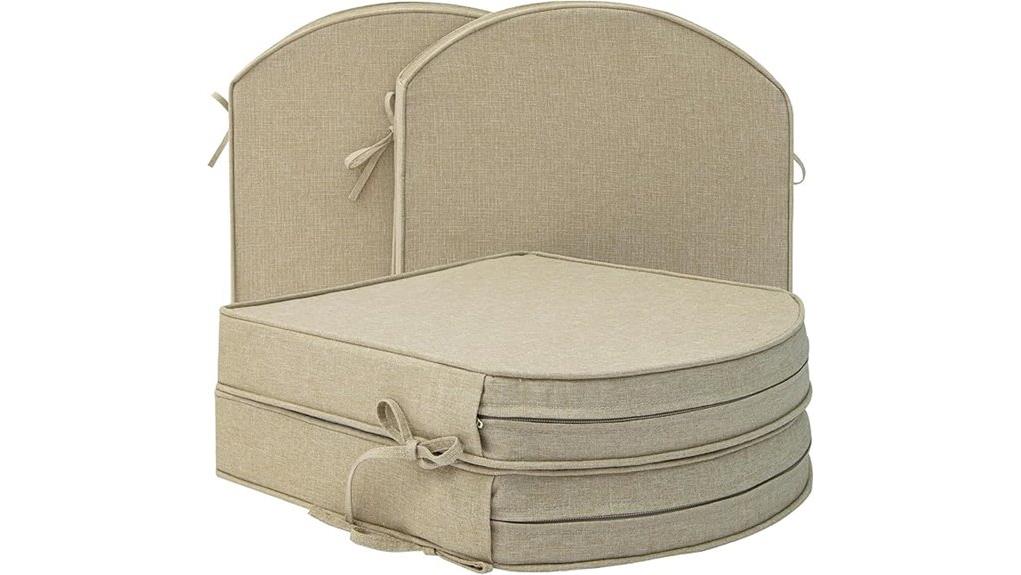
You want cushions that actually resist sun and rain, so look for fabrics labeled water-resistant with AATCC UV fade ratings (Class 4 after 800+ hours is solid) and independent colorfast tests. Prefer high-density, high-resilience foam with a 17×16″ D-shaped profile, hidden-zip covers, non-slip bottoms and tie straps for secure fit. Expect one–two seasons in intense sun; wipe spills quickly and launder covers as directed. Keep going to get specific test-based picks and care steps.
Some Key Takeaways
- Verify fabric specs (AATCC fade class and water-repellency) and look for independent lab results like Class 4 after 800+ hours UV testing.
- Prefer high-density, high-resilience foam with ergonomic D-shaped 17×16″ profile for firm support and broad chair compatibility.
- Check construction: hidden-zip removable covers, durable water-repellent coatings, reinforced seams, and non-slip bottoms.
- Expect water-resistant fabrics to shed light rain and stains but require prompt drying and airing to prevent mold and seam saturation.
- Buy coordinated multi-packs, machine-washable covers, and plan 1–2 season replacement in intense sun unless protected.
How to Tell If a Cushion Is Truly Fade- and Water-Resistant
Start by checking the fabric specs and testing claims: look for descriptions like “water-resistant” and AATCC-class UV ratings, and verify that the manufacturer cites objective measures (for example, AATCC Class 4 after 800+ hours of UV exposure). You’ll then review colorfast testing results and ask whether independent labs confirmed retention of hue. Inspect fabric coatings and treatments—durable water repellents versus surface finishes wear differently. Evaluate water repellency using reported hydrostatic or spray test scores. Finally, confirm seam sealing and zipper quality; sealed seams prevent wicking and stitched openings often undermine lab-rated resistance, despite strong fabric metrics. Also consider weatherproofing products and sealers designed for outdoor use to extend cushion life and maintain performance with patio sealers.
Construction and Comfort: Foam, Size, and Shape
When you sit down, the cushion’s construction determines how well it holds shape and supports you: choose high-density, high-resilience foam for firm resilience and long-term support. A 17 x 16 inch, round-corner D-shaped profile balances coverage without excess bulk. Look for foam that resists sagging yet compresses enough for comfort; hidden-zipper removable covers simplify cleaning without affecting fill. The ergonomic contour should cradle hips and lower back for varied outdoor seats. Non-slip bottoms stabilize the cushion so foam performance isn’t compromised. Prioritize durable seams and consistent foam density across the pad to maintain shape and predictable comfort. Many people shopping for patio cushions prefer products designed specifically for outdoor use with fade-resistant fabrics and water-resistant features.
Which Outdoor Seats Each Cushion Fits and How to Secure Them
Because the 17 x 16 inch D-shaped profile balances coverage and clearance, you can confidently match these cushions to a wide range of outdoor seats: patio dining chairs, Adirondack and deep-seating lounge chairs, ottomans, rocking and swivel chairs, and most wicker, rattan, aluminum, wood, and metal frames. You’ll appreciate clear Adirondack compatibility for angled backs and generous seat pans. The non-slip bottom reduces movement; adjustable tie straps and thoughtful Strap routing across frame gaps let you anchor cushions to slatted or open-backed furniture. For narrow or rounded seats, confirm width and use ties or slip-on anchors to prevent shifting during use. These cushions are designed specifically for people who enjoy enhancing their patio space and creating comfortable, stylish outdoor seating options for entertaining and relaxation, making them a great addition to any deep seat patio cushions collection.
Real-World Durability: Weather, UV, and Stain Performance
Although these cushions are built to handle everyday outdoor exposure, you should understand their limits: the water-resistant, tear-resistant fabric sheds light rain and resists abrasion, while AATCC Class 4 fade resistance after 800+ hours of lab UV testing means colors will stay rich for roughly one to two seasons in sun-heavy climates. In practice, you’ll find good stain performance for spills if you wipe promptly; deep saturation can penetrate seams over time. Mold resistance is adequate with regular airing and drying, but prolonged dampness undermines it. Check regional UV index testing data when estimating service life under intense sun. Many buyers also invest in outdoor cushions and coordinated patio accessories to complete their space.
Buying Tips: Colors, Pack Sizes, Care, and When to Replace
If you want cushions that stay looking sharp and work with your furniture, pick colors and pack sizes based on how you use the space and how often you’ll clean them. Choose popular color trends that hide dirt—neutrals or patterned options—and match seasonal throws if you rotate decor. Buy 2-packs for single chairs, 4- or 6-packs to outfit sets or replace worn pieces consistently. Use machine-washable covers and spot-clean spills immediately; air-dry fully before storing. Expect a replacement timeline of 1–2 seasons in sun-heavy exposure; replace sooner if foam compresses, seams fail, or waterproofing degrades. Consider adding outdoor throw pillows to create a cohesive, cozy patio space that complements your cushions.
Some Questions Answered
Do These Cushions Contain Any Flame-Retardant Chemicals?
No, they don’t contain added flame-retardant chemicals. You’ll find chemical testing focuses on fabric durability, water resistance, and UV fade performance rather than flame retardancy. The manufacturer reports regulatory compliance for outdoor textile standards but doesn’t list flame-retardant treatments. If flame resistance is essential, you should request certificates or third-party test reports verifying any flame-retardant claims and confirm compliance with specific regional fire-safety regulations before purchase.
Are Replacement Covers Sold Separately?
Yes — replacement covers are sold separately and noted for retail availability through the manufacturer and authorized sellers. You’ll find zipper options including hidden zippers on most listings, making swaps neat and secure. Check color matching guides or swatch photos to pair covers with existing cushions; exact matches depend on dye lots. Ordering multiple covers at once can improve consistency if you need uniform color across seats.
Do Cushions Off-Gas Any New-Product Odors?
You might notice minor chemical off gassing initially, but it’s typically faint and short-lived. Manufacturers use water-resistant, tear-resistant fabrics and high-density foam that can emit mild odors; odor mitigation is usually achieved by airing the cushions several days in a well-ventilated area or sunning briefly. Washing removable covers before use also helps. If strong smells persist beyond a week, contact the seller for replacement or refund options.
Are These Cushions Made From Recycled or Sustainable Materials?
No, these cushions aren’t marketed as made from recycled fibers or guaranteed sustainable sourcing. You’ll still get durable, water- and fade-resistant fabric with high-resilience foam and a removable cover, but the product details don’t state recycled content or certified sustainable sourcing. If recycled fibers or verified sustainable sourcing matter to you, you should contact the seller for documentation or seek alternatives explicitly labeled with recycled content and sustainability certifications.
Is There a Warranty or Satisfaction Guarantee Included?
Yes — you get a money back option plus a limited warranty. You’ll have a satisfaction window for returns and refunds if the cushions don’t meet expectations, and a limited warranty covers manufacturing defects for a specified period. Check the seller’s policy for exact timeframes, exclusions, and how to file a claim. Keep your receipt and photos of any defects to speed up replacements or refund processing.