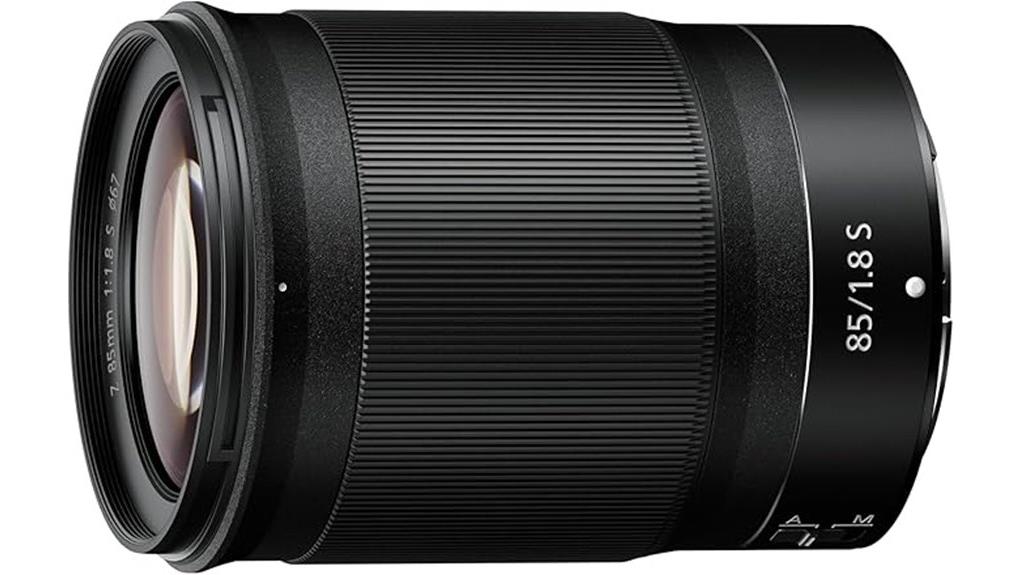
If you shoot portraits with a Z-body, you’ll like the NIKKOR Z 85mm f/1.8 S: it’s compact, solidly built, and delivers sharp subjects with creamy bokeh and reliable color. The f/1.8 aperture plus two ED elements and Nano Crystal Coat keep chromatic aberration and flare low, while a nine-blade diaphragm yields pleasing highlights. Handling is tactile and weather-sealed for real-world use, and the price reflects its quality—keep going for specifics on performance and alternatives.
Some Key Takeaways
- Exceptional portrait optics: f/1.8 aperture, two ED elements, and Nano Crystal Coat deliver sharp subjects and creamy bokeh.
- Reliable handling: compact, balanced build with customizable control ring and quiet, responsive autofocus.
- Robust construction: metal mount and comprehensive weather sealing suit field and location work.
- Consistent image quality: strong micro-contrast, natural skin tones, and even edge-to-edge sharpness at mid apertures.
- Considerations: premium price, limited focal flexibility, and heavier than some budget third-party alternatives.
Which Shooters Should Consider the Nikon NIKKOR Z 85MM F/1.8 S?
Who benefits most from the Nikon NIKKOR Z 85mm f/1.8 S? You will appreciate this lens if you prioritize portraits, need a compact prime for Z-series bodies, or want reliable build for varied conditions. Beginner photographers find its straightforward focal length and shallow depth control forgiving for learning composition and subject isolation. You’ll also like the customizable control ring and durable, sealed construction for field use. It’s less ideal for dedicated action shooters who need faster autofocus and wider reach, though it can handle occasional movement. Overall, choose it when image rendering and handling matter more than extreme speed. This lens is a great fit for photographers focused on portrait optics and image rendering.
Key Optical Features That Define Image Quality on the Z 85MM F/1.8 S
Because optical decisions determine how your images look, the Z 85mm f/1.8 S’s key features—its f/1.8 maximum aperture, two ED elements, Nano Crystal Coat, and nine-blade diaphragm—work together to deliver tight subject separation, controlled chromatic aberration, and smooth bokeh while maintaining high contrast and color fidelity. You’ll notice the wide aperture gives depth control without sacrificing edge performance. The ED elements reduce color fringing; the Nano Coating tames flare and preserves microcontrast. The diaphragm shapes highlights into pleasing discs, and overall design keeps transmission uniform across the frame. Those engineering choices define the lens’s optical character and reliability. The choice of mount adapters for different camera systems can expand creative possibilities with this lens by enabling cross-system compatibility.
Real-World Portrait Performance: Sharpness, Bokeh, and Color Rendering
In practical portrait work, the Z 85mm f/1.8 S gives you crisp subject detail, creamy out-of-focus areas, and faithful color that require little post correction. You’ll notice edge-to-edge sharpness at mid apertures and striking micro-contrast that defines hair and eyelashes without oversharpening. At f/1.8 the shallow bokeh isolates subjects smoothly; the nine-blade diaphragm renders rounded highlights with minimal onion-ring artifacts. Skin rendering is natural and lifelike, thanks to ED elements and Nano Crystal Coat reducing chromatic aberration and veiling flare. Colors stay true across lighting situations, so you can focus on composition and expression rather than heavy color grading. For consistent color-critical work, pairing the lens with a color checker ensures accurate color reproduction straight out of camera.
Handling, Build, and Weather Sealing: Daily Use and Field Durability
After seeing how the Z 85mm f/1.8 S renders skin, bokeh, and fine detail, you’ll appreciate how its handling supports long portrait sessions and on-location work. You get a compact, balanced prime that won’t fatigue your wrist on full-frame Z bodies. The customizable control ring and responsive tactile controls let you shift exposure or aperture without menu diving, speeding workflow. Build feels solid—metal mount, reassuring heft—and extensive sealing provides genuine weather resistance for outdoor shoots. Focus action is quiet and reliable, so you can concentrate on framing and expression. Overall, ergonomics and durability suit professional daily use. Consider pairing it with a dedicated camera shoulder bag to protect the lens and improve portability.
Value and Alternatives: Price, Pros/Cons, and Comparable Lenses
While the Z 85mm f/1.8 S sits at a premium compared with basic 85mm primes, you’ll get strong value from its combination of optical quality, build, and handling that professionals demand. You’ll appreciate lifelike rendering, creamy bokeh, weather sealing, and a useful control ring for studio and location work. Downsides are weight, price, and limited focal flexibility versus zooms. If cost bites, consider budget alternatives or third party options adapted to Z via FTZ—some Sigma and Tamron primes deliver good sharpness and lower prices but may lack sealing or identical AF refinement. Choose based on priorities: image quality vs. budget. Many photographers who enjoy working with zoom lenses also invest in high-quality primes to complement their kits, especially when seeking optical quality.
Some Questions Answered
Does It Accept Filters or Requires Rear Gel Filters?
Yes — you can use front filters; the lens has filter threads so you won’t need rear gel filters. You’ll screw standard filters onto the front threads and still use front caps when not shooting. The optical design with ED elements and Nano Crystal Coat tolerates typical filter use, but you’ll avoid stacking thick filters to prevent vignetting. For specialized effects with minimal flare, choose high-quality slim filters and keep front caps handy between shots.
Is It Compatible With Teleconverters?
No — it isn’t compatible with Nikon teleconverters, so you can’t rely on teleconverter compatibility to extend reach. You’ll avoid mechanical and electronic issues, but if a third‑party adapter existed you’d face notable optical degradation, reduced autofocus performance, and slower effective aperture. For portraits you’re better off staying with the native 85mm f/1.8 S or cropping; that preserves image quality, bokeh character, and reliable handling.
What Is the Closest Focusing Distance and Magnification Ratio?
The closest focusing distance is 0.45 m, yielding about 0.12x magnification. You’ll get modest subject isolation at f/1.8, so use close up lighting to emphasize detail and separate your subject from the background. You’ll appreciate the nine-blade diaphragm and large aperture for smooth bokeh, while ED elements and Nano Crystal Coat preserve contrast. For tighter framing or higher magnification, consider extension or macro-specific solutions.
Does It Support In-Camera Lens Corrections and Firmware Updates?
Yes — you’ll get in camera corrections and firmware updates. The lens communicates electronically with Z bodies so the camera applies profile corrections (vignetting, distortion, chromatic aberration) and optimizes autofocus behavior. Firmware updates for the lens are handled via Nikon’s camera firmware or SnapBridge/Support tools, letting you install performance and compatibility fixes. You’ll want to check Nikon’s site or your camera’s menu periodically for the latest updates.
Is There a Noticeable Focus Breathing During Video Use?
You won’t notice significant focus breathing; the lens maintains stable framing during focus shifts, so your video usability is strong. You’ll see minimal mechanical breathing only during extreme close-focus pulls, but normal portrait and interview pulls stay consistent. That steadiness, combined with the shallow depth of field and smooth control ring, makes it reliable for video work. Overall, focus breathing won’t hamper typical filmmaking scenarios.