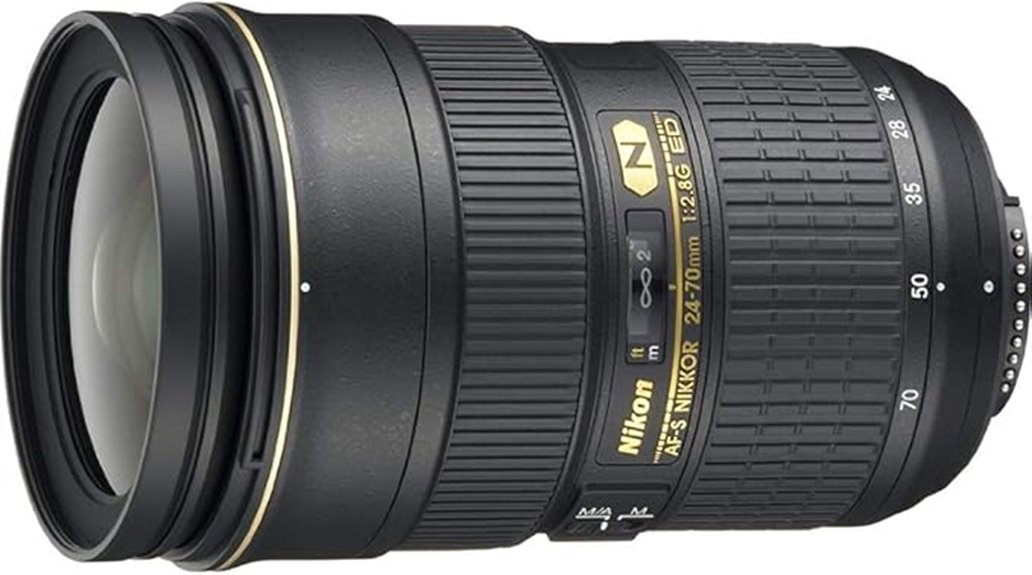
You’ll find the Nikon 24–70mm f/2.8G AF‑S delivers pro-grade, constant-aperture performance with strong center sharpness and excellent microcontrast, especially when stopped down one stop. You’ll get reliable, quiet SWM autofocus, internal focusing that preserves filter use, and rugged metal build, though it’s heavy and lacks stabilization. Bokeh is generally smooth, with occasional nervous highlights and modest chromatic fringing in high-contrast areas. If you want more on optics, handling, and buying a renewed unit, keep going.
Some Key Takeaways
- Exceptional center sharpness, especially stopped down one stop; edges reach usable clarity by f/5.6.
- Constant f/2.8 aperture gives consistent exposure and attractive background separation across 24–70mm.
- Silent Wave Motor and internal focusing deliver fast, quiet AF with no front-element rotation.
- Robust metal construction and Nano Crystal Coat resist flare but add significant weight and lack stabilization.
- Renewed units offer savings with a 90-day Nikon refurb warranty; inspect AF, coating, and mechanics before buying.
Quick Verdict: Who This Nikon 24‑70mm F/2.8g Is Best for
Although it’s a renewed unit, the Nikon 24–70mm f/2.8G remains a workhorse for professionals and advanced enthusiasts who need a fast, versatile zoom with consistent optics. You’ll appreciate its fixed f/2.8 across 24–70mm, SWM autofocus, and internal focus for predictable handling during dynamic shoots. Travel photographers will value focal-range flexibility and Nano Crystal Coat resilience against stray light; event shooters will rely on speed and reliable AF in mixed lighting. It’s heavy and lacks modern stabilization bells, so you’ll accept trade-offs: robust optics and ergonomics over the newest weight savings or in-body stabilization conveniences. Enthusiasts who shoot mirrorless systems will still find it complements their kits well due to its essential gear status for versatile shooting.
Real-World Sharpness, Bokeh, and Chromatic Aberration Performance
When you stop the Nikon 24–70mm f/2.8G down just one stop from maximum it delivers conspicuously sharp, contrast-rich images across the frame, with center sharpness strong even wide open and edge performance improving markedly by f/4–f/5.6. You’ll find microcontrast excellent, rendering fine detail without over-sharpening artifacts; edge sharpness at 24mm is the limiter but becomes reliably usable by f/5.6. Bokeh is generally smooth — creamy bokeh near 70mm at f/2.8 — though specular highlights can show nervousness. Chromatic aberration is controlled by ED elements, but occasional color fringing appears in high-contrast borders. Note modest focus breathing during close-focus zooming. The lens is a staple for many photographers who value a versatile zoom with professional build and consistent optical quality, often recommended on enthusiast photography sites.
Autofocus, Handling, and Build: SWM, Internal Focus, and Usability
Because Nikon equipped the 24–70mm f/2.8G with a Silent Wave Motor and internal focusing, you’ll get fast, quiet AF and a constant barrel length that preserves working distance and balance during use. You’ll notice genuine silent operation in busy environments; AF locks quickly with minimal hunting. Internal Focus aids focus consistency and avoids front element rotation for filters and polarizers. The metal mount and thick zoom/helicoid assemblies deliver robust construction, resisting play over time. Controls are stiff but precise; ergonomic handling favors professional use though weight and grip ergonomics may fatigue during handheld all-day shoots. The lens is a staple for many photographers who prioritize essential lens gear in their kits.
Technical Breakdown: Optics, Coatings, Focal Range and Specs
While compact for a pro-grade zoom, this 24–70mm f/2.8G packs a deliberate optical formula that prioritizes sharpness, contrast, and aberration control across its focal range. You get two ED elements and PGM asphericals that suppress chromatic aberration and maintain edge-to-edge resolution from 24 to 70mm. The constant f/2.8 aperture preserves exposure and depth control; measured optical transmission is strong at wide apertures but drops slightly toward edges at 24mm. Nano Crystal Coat mitigates ghosting and flare; you should still evaluate coating durability under heavy use. Specs suit FX/DX bodies; performance is predictably professional. This lens is a solid choice for photographers who use lens mount adapters to expand compatibility across systems.
Buying Guide: Renewed Unit Pros/Cons, Warranty and Compatibility Considerations
Having established the lens’ optical strengths and coatings, you should weigh the trade-offs of buying a renewed 24–70mm lens f/2.8G. You get Nikon factory refurbish variability mitigated by Nikon USA refurbishment and a 90-day limited warranty, but inspect for handling wear and confirm parts authenticity. Test AF, IF mechanics, and Nano Crystal Coat performance immediately; verify return policy duration and conditions. Compare savings in a strict price comparison against new units and reputable used sellers factoring in potential repair costs after warranty. If you need long-term coverage, consider extended protection or opt for a new unit. Also consider protective storage and transport in a Pelican case to safeguard the lens during travel and insure longevity.
Some Questions Answered
Does This Lens Include a Front or Rear Lens Cap?
Yes — the renewed kit typically includes a Front cap and a Rear cap. You’ll get both caps with a factory-refurbished Nikon 24-70mm f/2.8G; they protect the optics during shipping and handling. Inspect caps for fit and wear on arrival; refurbished items can show minor scuffs. If a cap’s missing or ill-fitting, contact the seller or Nikon USA warranty support within the 90-day coverage window for replacement.
Is a Tripod Collar Compatible or Required for Heavy Use?
You don’t need a tripod collar, but you might want one for heavy use. The lens’s tripod compatibility is limited by its weight distribution—at 2.89 pounds the camera’s mount bears most stress. For extended shooting, long exposures, or large bodies you’ll reduce strain and improve balance with an aftermarket collar or lens support. Critically assess your rig: if you’re shifting frequently or using heavy bodies, add a collar for stability and reduced mount wear.
Can It Be Used With Full-Frame and Mirrorless via Adapter?
Yes — you can use it on full frame bodies natively, and you can mount it to mirrorless via an adapter. Full frame compatibility is native for FX cameras; Adapter performance depends on the adapter quality and electronic pass-through. You’ll retain optical characteristics but may lose fast native autofocus responsiveness and image stabilization behavior on some adapters. Choose a high-quality adapter with electronic contacts to maximize AF accuracy and maintain EXIF communication.
What Is the Filter Thread Size for Screw-On Filters?
The filter thread is 77mm thread, so you’ll use 77mm screw-on filters. You should note that the front capless design on some renewed units makes protecting the element trickier; you’ll want a 77mm protective filter to avoid scratches since there’s no dedicated front cap seating. Use high-quality multi-coated glass to preserve Nano Crystal Coat performance. Also confirm the specific unit fitted, as aftermarket modifications can alter accessory fit and clearance.
Are There Known Issues With the Autofocus Motor After Refurbishment?
You generally won’t see widespread autofocus reliability problems after Nikon factory refurbishment; the Silent Wave Motor is tested and serviced, so motor longevity is usually preserved. Still, inspect for any hunting, slow starts, or noise during focus—these can indicate issues. Test on both AF-S and AF-C modes, across the zoom range. Use the 90-day warranty promptly if you notice degraded autofocus performance or unusual motor wear.