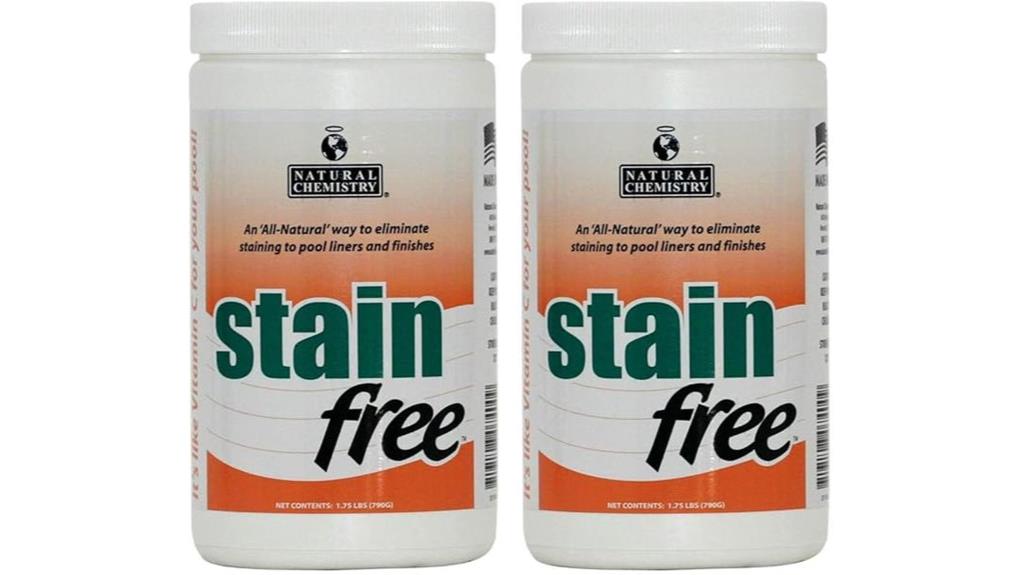
You’ll find Natural Chemistry Stain Free uses 100% citric acid to chelate iron, copper, and manganese, so you can remove fresh metal stains and reduce re-deposition when you dose precisely per label instructions. It rapidly destabilizes metal complexes for filtration or sequestration, with visible improvement often in 24–72 hours under proper circulation. It’s compatible with vinyl and fiberglass if not concentrated, but won’t fully fix oxidized or embedded stains. Continue for application, safety, and performance details.
Some Key Takeaways
- Natural Chemistry Stain Free uses 100% citric acid to chelate iron, copper, and manganese, effectively reducing metal stains.
- Typical visible stain reduction occurs within 24–72 hours under proper dosing and normal pool circulation.
- Dose at 1 lb per 10,000 gallons, pre-dissolve granules, and broadcast with the pump running for best results.
- Safe for vinyl liners and fiberglass when used as directed, but avoid concentrated prolonged contact.
- Heavy, oxidized, or embedded stains may need repeat treatments and mechanical cleaning for full removal.
Does Natural Chemistry Stain Free Actually Remove and Prevent Metal Stains?
While results vary with water chemistry and stain severity, Natural Chemistry Stain Free uses 100% citric acid to chelate metals and can both remove existing metal stains and reduce future staining when dosed and applied per instructions. You’ll observe rapid destabilization of iron, copper, and manganese complexes via metal chelation, facilitating filtration or sequestration. Lab-aligned claims note compatibility with sanitizers and pool surfaces, supporting regulatory-friendly labeling. For long term efficacy, you’ll need periodic monitoring of metal levels and pH control to prevent re-deposition. Data-driven maintenance, not single treatment reliance, guarantees sustained stain prevention and compliance with manufacturer guidance.
How to Use Natural Chemistry Stain Free: Dosages, Timing, and Step-by-Step Application
Before treating your pool, measure volume and current water chemistry precisely, then calculate the dose based on 1 lb per 10,000 gallons (1.75 lb granules per container) so you can apply the correct amount of 100% citric acid for both stain removal and prevention. You’ll adjust dosage adjustments for higher metal loads or smaller volumes. Add granules to a bucket of pool water, dissolve, then broadcast evenly with the pump running. Monitor pH and total alkalinity; re-test metals after 24–48 hours. For stubborn stains repeat treatment at reduced dose. Document application timing and results to meet regulatory and warranty requirements.
Compatibility and Safety: Surfaces, Sanitizers, and What to Avoid
Having measured your pool and applied the calculated dose, you must confirm compatibility and safety to protect surfaces, maintain sanitizer efficacy, and meet regulatory guidance. You’ll find 100% citric acid is safe for vinyl pool liners and fiberglass when dosed per label; avoid prolonged contact at concentrated spots. Verify pH remains within target to prevent metal mobilization and sanitizer interactions that reduce free chlorine or bromine residuals. Don’t mix directly with oxidizers or algicides; pre-dissolve granular product and distribute evenly. Keep records of treatment, monitor residual sanitizer levels, and follow local disposal and chemical handling regulations.
Real-World Performance: Expected Results, Speed, and Limitations
Because citric acid chelates metal ions directly, you can expect visible stain reduction within 24–72 hours under normal circulation and proper dosing (1 lb per 10,000 gallons). You’ll observe fastest results on recent, thin stains; heavy or embedded discoloration may need repeated treatments and mechanical cleaning. Treatment duration depends on stain severity, water chemistry, and turnover rate. You should monitor metal levels and pH, following label directions to remain compliant with pool care standards. Real world limitations include reduced efficacy on oxidized metal deposits, porous substrates, or poorly circulated zones. Document results and consult manufacturer guidance for complex cases.
Buying Considerations: Pack Sizes, Ingredient Breakdown, Price, and Warranty
After evaluating real-world performance metrics like response time and limitations, you’ll want to evaluate practical buying factors that affect treatment planning and compliance: pack sizes influence dosing logistics and storage, the ingredient profile determines compatibility and regulatory reporting, price affects total cost of ownership, and warranty/return terms impact procurement risk. You’ll appreciate that Natural Chemistry Stain Free ships as a two-pack (1.75 lb each), simplifying dosing at 1 lb per 10,000 gallons. The ingredient breakdown lists 100% citric acid, phosphate-free, reducing reporting concerns. Compare unit cost versus single-dose needs, and note Amazon’s 30-day return and manufacturer warranty options.
Some Questions Answered
Is Stain Free Safe for Use With Saltwater Chlorine Generators?
Yes — you can use it with saltwater chlorine generators. Its citric acid formulation provides saltwater compatibility and won’t interfere with sanitizing systems when dosed per instructions. You should avoid overdosing because acidic conditions can accelerate electrode corrosion in generators; monitor and maintain proper pH and total alkalinity. Follow the recommended 1 lb per 10,000 gallons, rinse dispensing equipment, and consult manufacturer guidance for warranty and safety compliance.
Can You Mix Stain Free With Other Pool Chemicals in the Same Dosing Bucket?
No — you shouldn’t mix Stain Free with other pool chemicals in the same dosing bucket. For chemical compatibility and safe dosing procedure, always add citric acid separately to water, rinse equipment between products, and follow label instructions. Mixing can trigger reactions, alter pH, or reduce effectiveness. Use dedicated containers, dose per recommended rates, and document procedures to comply with safety and regulatory best practices.
How Long Is the Product Shelf Life After Opening?
You’ll expect typical shelf longevity of about 2–3 years after opening, provided you follow recommended storage conditions. Keep the granular citric acid dry, sealed, and stored in a cool, ventilated area away from moisture and incompatible chemicals. Label and date the container on opening, monitor for caking or contamination, and follow manufacturer warranty and regulatory guidance; discard if physical or performance changes occur to maintain efficacy and safety.
Is Stain Free Biodegradable and Environmentally Friendly?
Yes — you’re using a citric-acid product that’s inherently biodegradable and breaks down naturally in the environment. However, the manufacturer doesn’t prominently list specific eco certifications or biodegradable packaging for this SKU, so you shouldn’t assume certified claims. For regulatory compliance and environmental assurance, check manufacturer documentation for certificates (e.g., EPA Safer Choice) and packaging details before labeling it fully eco-certified or packaged as biodegradable.
Will Stain Free Affect Pool Water pH Long-Term?
Yes — repeated citric acid use can cause pH drift and alkalinity shift if you don’t manage buffers. You’ll bind metal ions via ion binding, which helps stains, but citric acid lowers total alkalinity and can lead to buffer depletion over time. Monitor pH and total alkalinity regularly, and adjust with alkaline increaser or buffers per regulatory dosing guidance to maintain stable water chemistry and prevent long-term acidity issues.