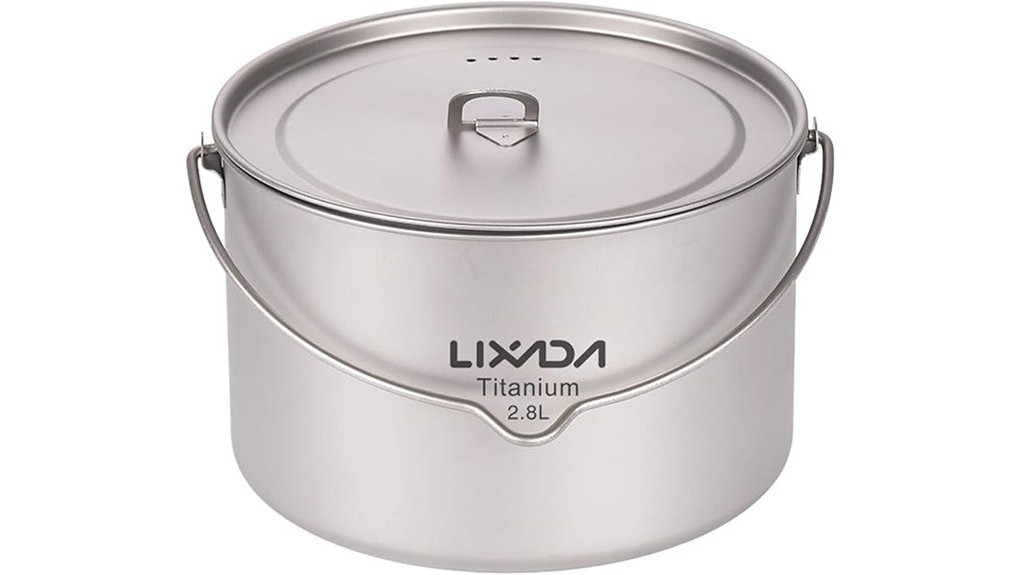
You’ll like the Lixada titanium pots if you want ultralight, corrosion‑resistant cookware that won’t taint flavors. The 1100 ml gets water boiling fast and saves pack weight for solo trips, while the 2800 ml handles group meals, stews, or melting snow but takes longer to heat and packs bulk. Rounded bottoms speed cooking and clean‑up, foldable handles and a bail add versatility, and a mesh sack keeps everything tidy—keep going to see practical tips and comparisons.
Some Key Takeaways
- Titanium construction makes the pot ultralight, strong, and corrosion‑resistant for wet or salty conditions.
- 1100 ml suits solo hikers and quick boils; 2800 ml fits two‑three people, stews, or melting snow.
- Rounded bottom and curved profile concentrate flame contact for faster, more even heating.
- Foldable side handle and titanium bail enable safe pouring, hanging over fire, and compact storage.
- Smooth rounded edges clean easily; avoid abrasive scrubs to preserve the titanium finish.
Build Quality and Materials: Why Titanium Matters for Weight, Strength, and Taste
Because the Lixada pot uses titanium, you get a truly lightweight tool without sacrificing strength. You’ll notice its toughness on rough trails and when you hang it over a fire. The metal’s corrosion resistance means you won’t worry about rust after wet trips or salty conditions. Cleaning’s easy thanks to smooth, rounded edges that shed grime. Titanium’s metallic neutrality prevents off-flavors, so soups and coffee taste right even after storage. Handles and foldable bail add practicality for cooking and packing. Overall, you get a durable, ultralight cook pot that performs reliably and preserves flavor. Titanium cookware is ideal for campers because it combines durability with minimal weight, making it a favorite among camping cookware enthusiasts.
Size Options and Real‑World Capacity: Comparing the 1100 Ml Vs 2800 Ml for Trips
When you’re picking between the 1100 ml and 2800 ml Lixada pots, think about who you’re feeding and how you cook: the 1100 ml suits solo hikers or quick boil-and-eat meals, heats faster and saves weight, while the 2800 ml handles two to three people, stews, or water for melting snow but takes longer to heat and adds bulk. Choose 1100 ml for minimalist daysacks, single-serve dehydrated meals, and tight pack space. Opt for 2800 ml when you need group meal planning, more versatile cooking, or larger water reserves. Use simple liquid measurement comparison to match recipes and avoid overpacking. For reliable trips, pair the pot with essential backpacking gear like a lightweight stove and proper water storage camping backpacks.
Heating, Cooking Speed, and Cleaning: Round‑Bottom Performance and Usability
If you chose the 2800 ml for group cooking, you’ll notice the pot’s rounded-bottom edges speed up heat transfer compared with flat-sided cookware: the curved profile concentrates flame contact and encourages even convection, so water and stews come to a boil faster and with fewer hot spots. You’ll get rapid boiling without constantly moving the pot; spot heating is reduced, so sauces and grains cook more uniformly. After cooking, titanium’s smooth curve aids easy cleanup—scrape gently and hot water loosens stuck food. Residue release is better than in corners, but avoid abrasive scrubs to preserve the finish. For reliable fire starts when cooking outdoors, pair this pot with fire starter cubes to ensure consistent ignition and easier meal preparation.
Handles, Portability, and Accessories: Hanging Bail, Foldable Handle, and Mesh Sack
Although compact in pack size, the Lixada pot gives you versatile handling: a sturdy bail handle lets you hang it over a fire or carry hot contents without touching the body, while the foldable side handle locks out for safe pouring and tucks flat for storage. You’ll appreciate bail durability — titanium resists bending and heat so the loop stays true. Handle ergonomics matter: the side grip stays cool enough to use with a cloth and provides a secure thumb rest for controlled pouring. The included mesh sack saves space, protects the pot, and keeps tiny parts together during transport. This cookware is one of the top choices for camping cookware thanks to its lightweight, durable titanium construction and thoughtful accessories.
Who Should Buy Which Size: Recommended Use Cases and Buying Decision Guide
Now that you know how the bail and foldable handle make the pot easy to use and pack, pick the right size based on how you travel and cook. If you’re solo or ultralight backpacking, choose 1100ml for quick boils, single meal type servings, and tight gear compatibility; it’s lighter for short activity duration trips. For two to four people or longer outings, use 2800ml to cover larger group size, stews, and multi-course meals. Match capacity to meal type and activity duration, consider nesting with other cookware, and prioritize the size that fits your typical group size and gear compatibility needs. For those using lightweight tents and minimal setups, consider how the pot’s weight and packed volume affect overall gear compatibility on multi-day trips.
Some Questions Answered
Does the Pot Come With a Lid That Seals for Boiling and Storage?
No — the lid fits but it doesn’t provide an airtight seal for storage use. You’ll be able to boil safe with the lid on to speed heating and reduce splatter, but it’s not designed to lock in liquids or keep food fully sealed long-term. Treat it as a functional cover for cooking and short-term transport; for true airtight storage you’ll want dedicated containers or a separate sealing system.
Can I Use It on a Gas Stove or Only Open Flames?
Yes — you can use it on a gas stove as well as open flames. Titanium handles high heat, so practice flame adjustment techniques: keep a medium-low flame to avoid scorching and concentrate heat under the pot’s round-bottom area for efficient heating. Use the foldable handle or pot gripper, and don’t leave it unattended on high flame. Its lightweight design makes it great for both stove-top and campfire cooking.
Is the Pot Compatible With Stove Windshields or Heat Exchangers?
Yes—you can use it with stove windshields and most compact heat exchangers. Its round-bottom and titanium construction give good stove compatibility and fast heat transfer, though thin walls mean lower heat retention than thicker pots. Use a windshield to concentrate flame and protect wind; avoid clamping incompatible heat exchangers that don’t match the pot’s shape. Pack the mesh sack and test setup at home before heading out.
What Is the Weight of Each Size Including the Mesh Sack?
1100ml weight with mesh sack is about 95–105 grams, and 2800ml weight with mesh sack is about 170–190 grams. You’ll notice the 1100ml is ultralight for minimalist hikes, while the 2800ml gives more capacity with modest extra weight. Pack the mesh sack inside to keep things compact and protect the titanium. These weights assume typical production variance; weigh your unit for precise planning.
Are There Any Care Instructions to Prevent Discoloration or Scratches?
Yes — you can prevent discoloration and scratches by rinsing promptly, avoiding abrasive scrubbers, and using soft sponges. Don’t soak in harsh chemicals and limit detergents to mild dish soap; heavy soaps can dull the finish. Dry immediately to prevent water spots, and store in the mesh sack or wrapped in cloth to prevent contact with other metal gear. Don’t use steel wool or harsh scouring pads.