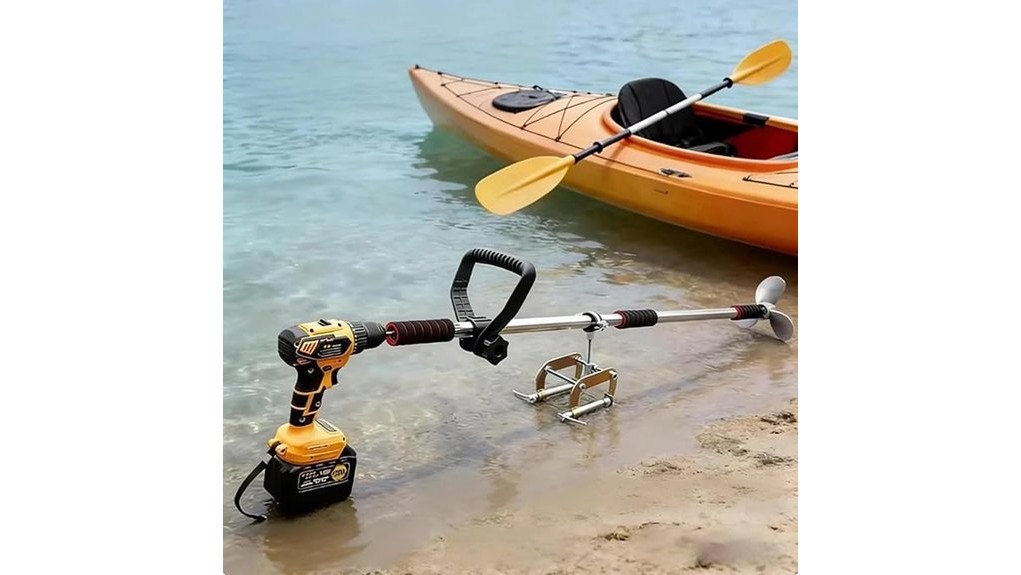
You’ll get a practical, low-cost way to propel small boats that clamps on in seconds and runs off a cordless drill, giving a few knots of controllable thrust for kayaks, canoes, inflatables and dinghies. It’s ultralight and portable, great as an emergency backup or for short fishing trips, but it won’t match full-sized outboards for speed or endurance. Expect moderate noise, simple one-handed steering, and basic saltwater care — keep going to learn specifics and alternatives.
Some Key Takeaways
- Ultralight aluminum drill-powered motor offers quick, tool-free clamp-on setup for kayaks, canoes, inflatables, and dinghies.
- Performance depends on cordless drill: expect a few knots cruising, lower speed under heavy load, and variable thrust.
- Runtime and top speed are limited by drill battery and RPM; lower settings extend range but reduce speed.
- One-handed ergonomic handle provides immediate thrust control and easy maneuvering, ideal for fishing and emergency use.
- Durable but maintenance-needed: rinse after saltwater use, inspect clamp/welds, and monitor propeller for nicks.
Quick Verdict: Is the Lightweight Drill Powered Boat Motor Worth Buying?
While it won’t replace a full-sized outboard, this drill-powered propeller gives you a practical, low-cost boost for small boats and makes good sense if you need a lightweight, portable backup or occasional motorized assist. You’ll appreciate the quick 3-second fit, ultralight aluminum build, and tool-free clamp that suits kayaks, canoes, inflatables and dinghies. In a clear cost comparison, it undercuts traditional outboards and solo electric units, though you trade top speed and long-run endurance. User testimonials highlight easy installation and emergency utility more than sustained cruising. Buy it if you want affordable, compact thrust for short trips. Consider pairing it with stable kayak anchoring when stopping or fishing to ensure secure positioning.
Real-World Performance: Speed, Thrust, Battery/Runtime, and Handling on Kayak/Canoe
Because this unit relies on whatever cordless drill you attach, your real-world speed and thrust vary a lot, but you can expect modest, practical propulsion suited to low-speed fishing runs and short commutes rather than open-water cruising. You’ll typically cruise at a few knots depending on drill torque and blade size; heavier loads slow you more. Battery efficiency hinges on drill power settings—run lower RPMs for longer range. Thrust is immediate and controllable via the ergonomic handle, aiding precise positioning. Expect moderate noise levels from drill+prop and limited runtime compared with dedicated outboards; plan trips accordingly. For paddlers looking to pair propulsion with navigation, consider combining this setup with GPS backup batteries to keep electronics powered on longer.
Setup and Use: Tool-Free Installation, Mounting Options, Steering, and Safety Tips
Get the clamp in place first, then slide the aluminum shaft into the bracket and secure it—installation is tool-free and typically takes only a few seconds. You’ll use mounting templates to position the bracket within the clamp range; the adjustable bracket fits most transom profiles and can be swapped to either side. Check drill compatibility before heading out—most cordless drills fit the chuck adapter, but confirm shaft alignment and torque limits. Steer one-handed via the ergonomic handle; tilt for angle control and swing for directional changes. Learn emergency procedures for drill removal and prop clearance, and adopt compact storage solutions for transport. Explore Power Pole basics to choose compatible mounting and accessories.
Durability and Corrosion: Materials, Saltwater Use, Wear Points, and Maintenance
When you rely on this drill-powered motor in both fresh and saltwater, its aluminum-alloy shaft and blades give you a strong, lightweight core that resists rust and deformation but still needs targeted care to stay reliable. You’ll monitor aluminum fatigue at welds and the clamp interface, inspecting for hairline cracks after heavy use. Rinse with fresh water immediately after saltwater outings and apply saltwater sealing measures to the drill interface and fasteners. Watch for propeller erosion—nicks accelerate wear—and file burrs smooth. Regular lubrication, checking anodizing benefits for surface protection, and replacing worn parts extend service life. Consider using biodegradable cleaners and eco-friendly maintenance products to protect both your motor and the waterways, especially when rinsing and degreasing near shorelines with biodegradable cleaners.
Who Should Buy This: Ideal Users, Alternatives, and Final Buying Recommendations
If you want a lightweight, low-cost propulsion option for short trips on calm waters, this drill-powered motor fits well for anglers, weekend paddlers, and anyone needing an emergency backup to a conventional outboard. You’ll appreciate fishing compatibility—one-handed steering and quick detach let you cast and reposition without extra gear. Ideal users: kayak/canoe owners, inflatable-boat anglers, and campers prioritizing ultralight transport. Alternatives include small electric trolling motors for sustained power or gas outboards for heavier loads. Buy this if you value portability, low price, and emergency preparedness; choose a drill with sufficient torque and treat it as a supplement, not a primary drive. Gear up with motor-ready kayak accessories for better fit and performance, like motor-ready kayaks and mounting hardware.
Some Questions Answered
Is a Specific Drill Size or Torque Recommended for Optimal Performance?
You’ll want a high torque compact drill for best results; it gives steady, low-RPM power without bogging. Check battery compatibility—use a high-capacity lithium pack (18–20V common) for longer run time. Confirm the drill’s chuck accepts the shaft adapter included or use a matching adapter to secure the propeller. Avoid tiny hobby drills; mid-size brushless compact models balance torque, weight, and runtime for efficient, reliable propulsion. Handheld electric drill reviews can provide valuable insights into the performance and durability of various models. User feedback often highlights key features such as battery life and ergonomics, which can significantly influence your decision. Exploring these reviews will help you assess which drill meets your specific needs for both home improvement projects and professional tasks.
Can I Legally Use This on Waterways With Motor Restrictions?
You probably can’t assume it’s legal everywhere; check local legal considerations first. Many waterways exempt small, low-speed electric or manually assisted devices, but registration requirements vary by state/country and sometimes by horsepower or thrust. Contact local boating authorities or marine patrol to confirm classification, permit needs, and safety equipment rules. If rules ban motors, use it only where allowed to avoid fines and guarantee insurance compliance.
Are Replacement Propeller Blades Available Separately?
Yes — you can get replacement props, though the manufacturer doesn’t always list spare blades separately. You’ll want to contact HAVUREL or aftermarket suppliers for compatible prop alternatives sized to the 16 cm blade and aluminum shaft. When sourcing, confirm hub fit, pitch and balance to avoid vibration. Keep a spare set for emergencies, and choose corrosion‑resistant options for saltwater use to maintain performance and longevity.
How Loud Is the Motor When Operated at Full Speed?
You’ll hear noticeable noise at full throttle; the noise level depends on the drill you attach and propeller load. Expect a decibel rating roughly comparable to a cordless drill under heavy load—about 80–95 dB at close range. You’ll want hearing protection for prolonged exposure and should avoid full speed near others. Vibration and blade cavitation can raise perceived loudness, so moderate speeds often give better comfort and control.
Does the Clamp Damage Painted or Wooden Gunwales?
No, the clamp shouldn’t damage painted or wooden gunwales if you use it correctly. You’ll rely on rubber padding to cushion contact and prevent surface scratches; make sure padding is intact and clean before clamping. Tighten only until secure—don’t overtighten—and avoid clamping on weakened or flaking paint. For extra protection, add a thin protective layer (tape or felt) under the clamp and check periodically during use.