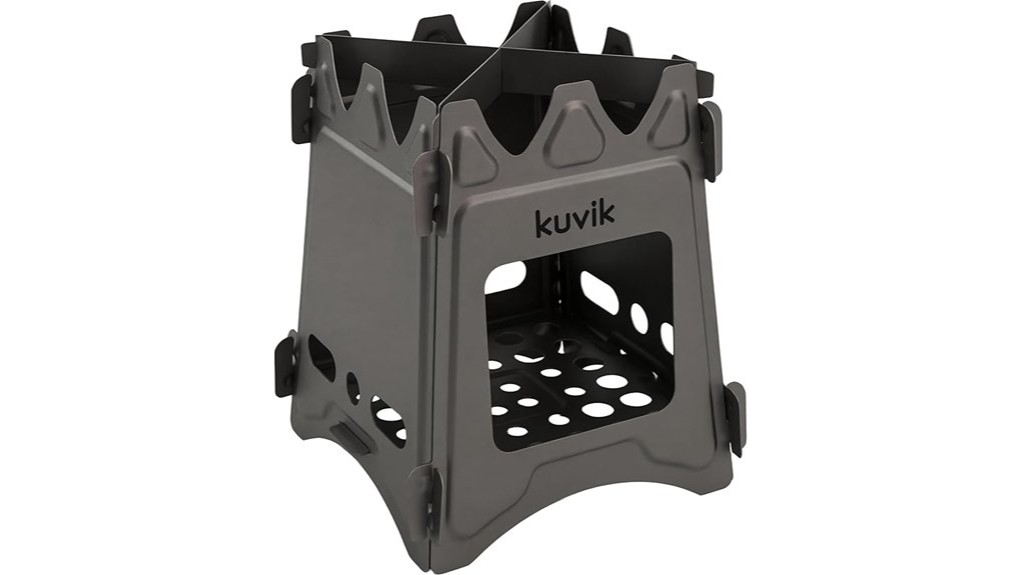
You get a snap‑together, flat titanium wood stove that assembles in under a minute and weighs just 6.8 oz, collapsing to a near‑pocket 6.25″ x 5″ x 0.2″ for ultra‑light kits. It burns twigs and small branches, boils ~4–8 min per liter with solid airflow, and supports small pots on a titanium rack. Grade‑1 titanium resists corrosion but discolors with heat; frequent stoking and legal checks are needed. Keep going to see detailed pros, cons, and care tips.
Some Key Takeaways
- Ultracompact titanium ring stove snaps together in seconds, forming a freestanding, low‑profile fire pit for ultralight backpacking.
- Collapses to 6.25″ x 5″ x 0.2″ and weighs 6.8 oz, fitting inside pots or sleep systems for excellent packability.
- Uses found fuels (twigs, bark) with boil times around 4–8 minutes per liter given good fuel and airflow.
- Grade‑1 titanium construction resists corrosion, stays lightweight, and will show only cosmetic heat discoloration.
- Tradeoffs: minimal heat control and learning curve but great for ounce‑counting hikers; legal/fire restrictions may limit use.
How the Kuvik Titanium Wood Stove Sets Up and Performs in the Field
When you unpack the Kuvik Titanium Wood Stove, you’ll find a flat, collapsible ring that snaps together in seconds—just slide the tabs into their matching slots and the stove forms a freestanding, low-profile fire pit. You’ll appreciate setup speed: assembly takes under a minute and requires no tools. The titanium ring resists corrosion and keeps weight minimal. In-field use is efficient with small twigs and bark; the open design eases stoking and supports various pots. Wind performance is solid for its size—the low profile and solid walls reduce draft sensitivity, though extreme gusts still demand a windbreak. Titanium’s corrosion resistance and light weight make it ideal for backpacking cookware in minimalist camping setups.
How It Packs: Size, Weight, and Carrying Options for Ultralight Kits
After a few quick test fires you’ll notice the stove’s real advantage is how little space and weight it demands in your pack. You get a 6.8 oz titanium unit that collapses to 6.25″ x 5″ x 0.2″, shaving grams from pack weight while retaining strength. The flat, folded profile creates a near-pocket footprint for minimalist setups; you can stow it inside a pot, sleep system, or external pocket sleeve. The included carrying case keeps soot contained and eases handling. Assembly hardware and thin profile make placement predictable, so you can plan load distribution precisely. This makes it an ideal choice for ultralight backpackers seeking to minimize base weight while retaining essential cooking capability for minimalist campers.
What Fuels It Uses and Real‑World Cook Times/Efficiency
Because the Kuvik runs on found fuels, you won’t need canisters or liquid fuel, and that simplicity shapes its real-world performance: you feed it dry twigs, sticks, bark, and small branches as wood fuel, controlling heat by fuel size and airflow. You’ll build a compact, high-flame bed; the titanium rack supports small pots for direct heat transfer. Expect boil times around 4–8 minutes for one liter with well-prepared fuel and stable flame; windy or damp conditions extend that. Efficiency hinges on fuel quality and tending—frequent stoking beats large logs. Pack a lighter and a small tinder bundle for consistent starts. This setup pairs well with other camping stove gear designed for ultralight backpacking.
Durability, Cleaning, and Care for Grade‑1 Titanium Construction
Although titanium’s strength-to-weight ratio gives the Kuvik exceptional resilience in field use, you should still treat it deliberately to preserve performance. Handle folded panels to minimize dents; Grade‑1 titanium resists corrosion but is softer than alloys, so monitor scratch resistance and avoid abrasive contact. After use, brush soot and ash, then wipe with a damp cloth; do not use steel wool. Expect heat discoloration—blue, gold tones are cosmetic and don’t weaken structure. For storage tips, dry fully, pack in the provided case, and keep away from prolonged moisture and salt exposure. Inspect joints periodically for deformation. For extended trips, carry only essential repair tools and spare fasteners to keep your pack light and protect tent components, especially when choosing ultralight gear.
Is It Right for You? Use Cases, Pros/Cons, and Alternatives to Consider
If you prioritize minimal weight and compactness for backcountry travel, the Kuvik Titanium is a strong choice: it collapses to about 6.25” x 5” x 0.2”, weighs 6.8 oz, and gives you a freestanding, fuel-canister-free cook system that fits ultralight packs, bug-out bags, and winter kits. You’ll want it if you value pack space, use twig fuel, and need corrosion-resistant strength. Pros: ultralight, compact, durable, simple fuel logistics for emergency preparedness and long term storage. Cons: limited heat control, learning curve, legal/fire restrictions. Alternatives: canister stoves for speed, multi-fuel for versatility, titanium alcohol stoves for similar weight. This stove is especially relevant for hikers focused on ultralight tents and minimizing every ounce in their gear.
Some Questions Answered
Does It Fit Inside Common Titanium Nesting Pots?
Yes — it fits inside many common titanium nesting pots, though you’ll want to verify stacking compatibility for your specific set. You’ll collapse the stove to its 6.25” x 5” x 0.2” profile and test fit; most 6.75” or larger pots accept it. Pot stability remains good when assembled on flat ground, but stacking the stove inside a pot can shift balance; use the included case to preserve fit and prevent soot.
Is Assembly Possible While Wearing Gloves or Mittens?
Yes — you can perform a Gloved setup; mitten usability is limited but workable. You’ll insert tabs into slots using broader, deliberate motions rather than fine fingerwork. Thin insulated gloves work best for dexterity; bulky mittens may force you to partially remove one hand or use a tool (stick, carabiner) to align tabs. Practice at home to learn the motions and avoid fumbling around hot components in the field.
Can It Double as an Emergency Signaling Reflector?
Yes — you can use it as a makeshift signaling reflector, but with limits. Its titanium surface gives decent reflective performance for short-range light or sunlight flashes. You’ll want to angle panels precisely and keep them clean for best return. Signal durability is good against corrosion and heat, but panels can dent or soot up; maintenance and cautious handling will preserve reflectivity and long-term usefulness.
Are Spare Parts or Replacement Panels Available?
No official replacement panels or spare screws are sold directly by Kuvik for this model, but you can source generic replacement panels from titanium fabricators and M3–M4 stainless steel screws to match originals. You’ll need to verify panel thickness and slot dimensions before ordering. Keep original panels as templates, carry a small screw kit, and tighten fasteners regularly. If warranty applies, contact Kuvik for authorized parts or repair guidance.
Is the Included Carrying Case Waterproof?
No — the included carrying case isn’t fully waterproof. You’ll get weatherproof storage and basic moisture protection from the case’s fabric, but it won’t keep the stove dry in heavy rain or if submerged. You should use a dedicated waterproof dry bag or sealed pack for long trips or wet conditions. For short hikes and light exposure the case will suffice, but don’t rely on it for prolonged water exposure.