You’ll get a lightweight, affordable 25x travel superzoom that gives useful, well‑exposed daylight photos and steady 1080p/30 video, but you’ll trade off low‑light detail, fast AF, and RAW flexibility due to the small 1/2.3″ sensor and modest f/3.0–6.3 aperture. Stabilization and reach are strong for sightseeing and telephoto framing, though handling feels plasticky and precision is limited. If you want practical travel reach over high fidelity, this is a pragmatic pick—keep going to see specifics.
Some Key Takeaways
- 25x 24–600mm equivalent zoom with effective optical stabilization makes it excellent for travel reach and framing in daylight.
- 16 MP 1/2.3″ sensor gives usable daytime images but detail and sharpness drop toward 400–600mm.
- Small sensor and f/3.0–f/6.3 aperture limit low‑light performance; usable up to about ISO 800 only.
- Simple controls, lightweight body, and modest battery life suit casual travelers, though grip feels plasticky.
- Good value for reach-focused users; skip if you need RAW, high‑ISO fidelity, fast AF, or weather sealing.
What the Kodak PIXPRO AZ255 Is and Who It’s For
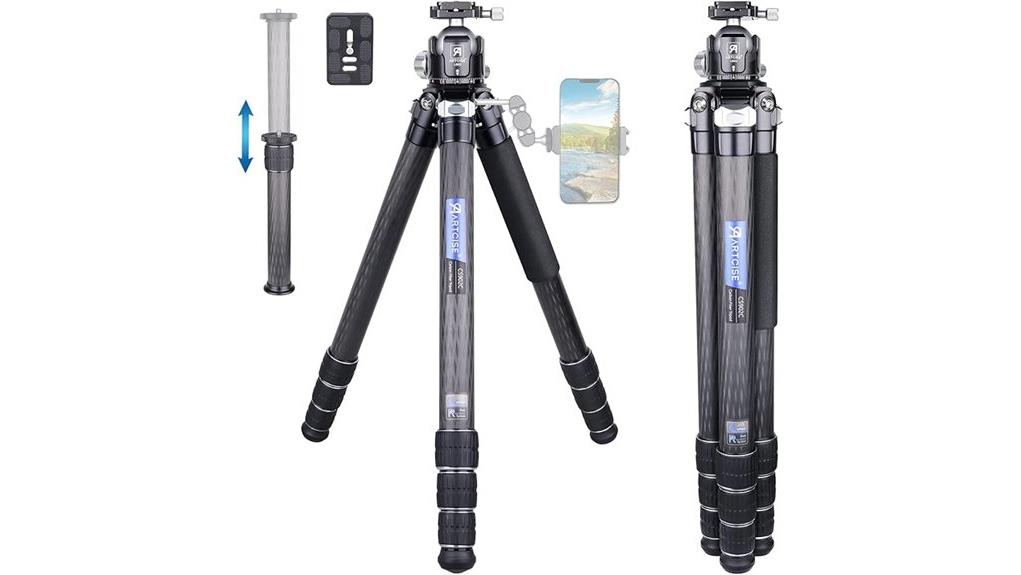
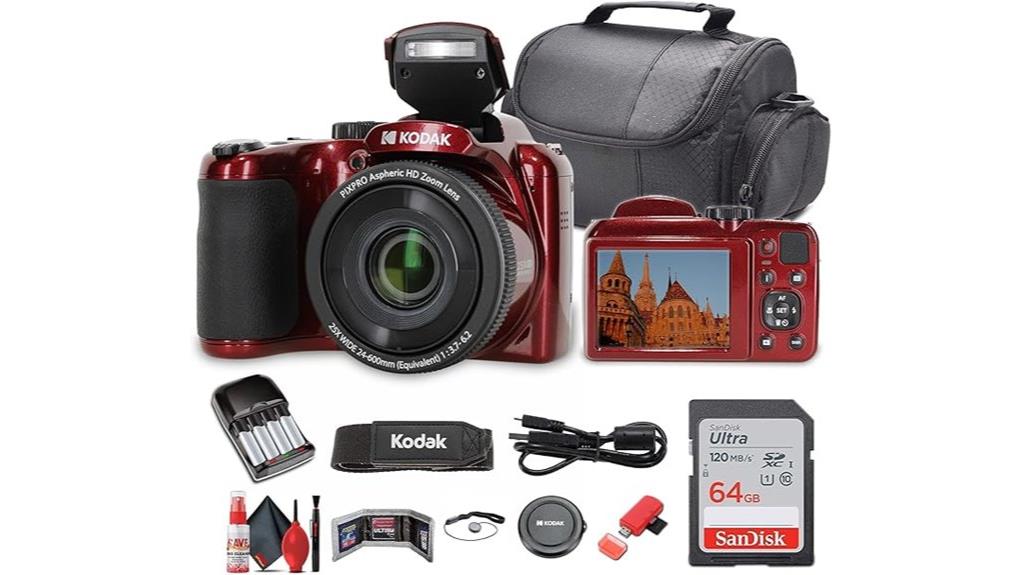
Consider the Kodak PIXPRO AZ255 your budget travel superzoom: a compact, plastic-bodied point-and-shoot that pairs a 16 MP 1/2.3″ BSI CMOS sensor with a 25x optical zoom (24–600mm equiv.) and optical image stabilization to cover wide-angle to long-telephoto shots without swapping lenses. In this compact overview, you’ll see a low-cost package aimed at casual travelers. Target travelers user profiles include sightseers, family holiday shooters, and cruise passengers who want reach over raw image quality. Usage scenarios favor daylight sightseeing and telephoto framing. Ergonomic notes: lightweight but plasticky grip, simple controls, single AF point limits precision for demanding shooters. Lightweight tripods are a great accessory for travelers who prioritize portability and stability when using superzoom cameras like this one, especially for telephoto shots with compact travel setups.
Real-World Image and Video Performance (Day, Low Light, Zoom)
When you shoot in daylight the AZ255 delivers usable, well‑exposed images with good reach thanks to the 25x optical zoom and effective optical image stabilization. You’ll get respectable daytime sharpness at wide and short telephoto focal lengths; detail falls off by 400–600mm equivalent. Video in bright conditions is stable and properly exposed at 1080p/30. In low light you’ll notice increased low light_noise and aggressive noise reduction that blurs fine detail; usable only to ISO 800. Zoom_reach is practical for travel shots but digital extension degrades quality quickly. Stabilization_performance helps handheld framing but can’t recover lost resolution. For travel photographers looking to keep gear compact and versatile, choosing the right support like a compact tripod can make a noticeable difference.
Key Hardware and Handling: Lens, Stabilization, Battery, and Controls
The AZ255’s hardware mixes useful reach with noticeable compromises: its 24–600mm (25x) lens and optical image stabilization give you practical framing for travel, but the modest f/3.0–f/6.3 aperture and small 1/2.3″ BSI sensor limit low‑light headroom and fine detail, especially at long focal lengths. You’ll appreciate stabilization for handheld tele shots, though contrast‑detect AF lags tracking fast subjects. Lens maintenance is straightforward with included caps and cleaning kit, but the plastic barrel feels fragile. Strap ergonomics are acceptable for brief walks; prolonged use highlights lightweight balance issues. Button layout is dense; battery life is modest. The right camera grip can improve handling comfort and stability for travel photography.
How It Compares to Similar Travel Cameras at the Price
Having covered handling and optics, let’s compare the AZ255 to other travel compacts in its price bracket. You’ll find the 25x zoom and optical stabilization competitive, but image quality lags due to the small 1/2.3″ sensor and limited aperture, producing noise above ISO 800. Battery life is adequate for a day of casual shooting thanks to the bundled rechargeable cells, yet heavier users will need spares. Controls and connectivity are basic compared with rivals offering larger sensors or RAW support. In short, the AZ255 trades peak image fidelity for extended reach and value-oriented feature set. If you plan to shoot extensively while traveling, consider cameras that use higher-capacity memory for better workflow and storage options.
Verdict: Buy, Skip, or Consider – Recommendations by User Type
Although it won’t satisfy enthusiasts chasing low-light performance or RAW flexibility, you should consider the AZ255 if you need long reach, straightforward controls, and a value-packed kit for travel. You should buy it if you’re a budget traveler who prioritizes 25x optical zoom, optical stabilization, and simple point-and-shoot reliability. Skip it if you demand high-ISO detail, fast autofocus, or durable weather sealing. Consider it if you’re a casual vlogger needing 1080p/30fps, decent zoom, and bundled extras but can tolerate limited mic/audio features and a plastic build. Overall: pragmatic choice, not specialist gear. The camera is a good match for photographers who prefer compact travel gear and uncomplicated operation.
Some Questions Answered
Does the Camera Include a Physical Viewfinder or EVF?
No, it doesn’t include a physical viewfinder or EVF. You’ll rely on the 3.0″ rear LCD as the optical finder substitute, which functions as an electronic simulation of framing rather than a separate optical finder or true EVF. That means you won’t get the clarity, latency or direct optical perspective of a dedicated viewfinder; shooting in bright sunlight can be compromised. For precision composition or fast tracking, consider a camera with an actual EVF or optical finder.
Can It Shoot RAW or Only JPEG?
It’s JPEG only — there’s no RAW capability. You’ll get 16 MP JPEGs at fine quality with 12‑bit processing, but you can’t record uncompressed RAW files for heavy post‑processing. That limits dynamic range recovery and color grading flexibility, so you’ll need to expose carefully and rely on in‑camera processing. For travel snapshots and quick sharing it’s fine, but if you want extensive editing latitude, this camera won’t meet that need.
Is There a Touchscreen Interface on the Rear LCD?
No — the rear LCD isn’t a touchscreen. You’ll rely on physical buttons and dials for menu navigation, which feels basic and slightly dated. That means you won’t get direct touchscreen responsiveness for focus, shutter or quick settings. Controls are serviceable for travel use, but if you want fast, tap-driven operation or intuitive on-screen adjustments, this camera’s interface will likely frustrate you. The menu system is functional but limited.
Are Firmware Updates User-Installable via USB or Wi‑Fi?
No — you can’t install firmware updates over wi‑fi; firmware update via USB is the only user-installable route. You’ll need to download the firmware file from Kodak, connect the camera to your computer with the USB cable, and follow the manufacturer’s update instructions. This process is manual, technical, and risks bricking if interrupted, so back up settings and guarantee reliable power. There’s no OTA or wi‑fi install option available.
Does It Support External Microphones for Better Audio?
No — you can’t use an external microphone with this camera. The AZ255 lacks a mic input, so you won’t plug in external microphone hardware directly. You could record audio separately and sync in post, but relying on audio adapters won’t help because there’s no jack or digital audio input to accept them. If improved onboard capture is critical, you’ll need a camera with dedicated mic input or integrated higher-quality mics.