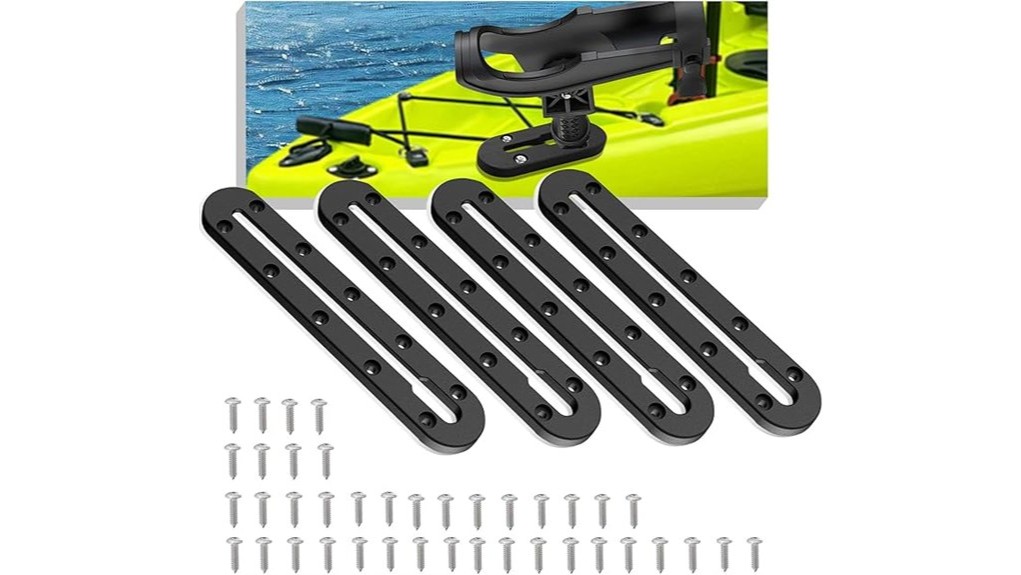
You’ll get a simple 9‑inch nylon low‑profile track that you’ll install in minutes with the supplied stainless screws and basic tools. It adds paddle, rod, fish‑finder, cleat and cup mounting points without cutting your hull, and the low profile cuts snag risk. Nylon resists corrosion but can fatigue under heavy flex; check screws and sealant periodically. It’s great for rental fleets, solo anglers, and modular setups—keep reading if you want installation tips, compatibility notes and durability tests.
Some Key Takeaways
- Low-profile nylon rail provides multiple accessory mounting points without cutting the hull, ideal for paddlers seeking flexibility.
- Includes stainless screws and installs quickly with basic tools, pilot holes, sealant, and even torque distribution.
- Best for paddle/rod holders, fish-finder plates, cleats, and cup holders, but plan spacing on the 9″ rail to avoid interference.
- Nylon offers low snag risk and affordability but is less stiff than aluminum and can fatigue under heavy cyclic loads.
- Regular inspection, screw torque checks, and cleaning of grit/UV-exposed areas are required to maintain durability and safety.
What the Kayak Low Profile Track Is and Who It’s Best For
If you need to add mounting points without cutting into your hull, the Kayak Low Profile Track is a simple, sturdy nylon rail that lets you attach paddle holders, rod holders, fish finders, anchor cleats and other accessories quickly. You’ll get mounting flexibility on boats that lack built-in tracks or need relocated anchors. Installation is quick with included stainless screws, and the low profile reduces snagging. It’s ideal if you want compact storage options, modular gear setups, or to outfit rental fleets and solo anglers who value adaptability. You’ll appreciate durable construction and straightforward utility for practical, no-nonsense outfitting. This track is a great option for paddlers who want a reliable way to secure gear for water adventures.
Which Accessories Work With This 9‑Inch Kayak Rail (Paddle Holders, Rod Holders, Fish Finders)
Mount a wide range of accessories on this 9-inch Kayak Rail—paddle holders, rod holders, fish finder mounts, anchor cleats, cup holders and small trays all clamp or bolt to standard low-profile tracks. You’ll find paddle compatibility with most paddle holder tracks; measure shaft diameter and clamp type before buying. Rod holders, both flush and vertical styles, fit the Kayak Gear Track for Fishing Rod Holder with room to angle. Fish finder mounts attach via flat-base adaptors or dedicated Fish Finder Mount Track plates. Plan accessory spacing carefully on the 9-inch rail to avoid interference and preserve reach and balance while paddling. Many kayak anglers prefer low-profile rails because they keep accessories secure without obstructing casting or paddling gear choices.
How to Install the Nylon Kayak Track Quickly and Securely (Screws, Tools, Tips)
When you’re ready to add the 9-inch nylon kayak track, gather a cordless drill, a 3/16″ drill bit (for pilot holes), the supplied stainless steel screws, a tape measure, masking tape, and a pencil—then mark and test-fit the rail before drilling. Position the low-profile rail, use masking tape to prevent slipping, and mark screw centers. Verify drill alignment so screws enter squarely; drill shallow pilot holes through the tape. Apply a thin bead of marine sealant (sealant selection: silicone or polyurethane) into holes and under the rail. Fasten screws hand-tight, check fit, then torque evenly for a flush, secure mount. Essential gear for safer installations includes replacement deck lines and spare cord for emergency repairs, especially when paddling on multi-day trips with replacement deck lines.
Real-World Durability and Snag Safety: Testing the Low‑Profile Design
Because the low‑profile kayak track sits close to the hull, you’ll notice fewer catches on lines, clothing, or mesh than with bulkier rails, but real-world durability depends on material and mounting. You’ll test for material fatigue by loading accessories, flexing the hull, and running repeated casts; nylon holds up but will show wear under heavy cyclic loads. Check screw torque and backing to prevent pull‑through. Edge abrasion is minimal with the rounded low profile, yet sand, grit, and UV accelerate wear where gear rubs. Inspect mounts regularly, replace worn screws, and re-seat hardware when you detect looseness or cracking. Also consider stocking essential bungee cord replacements as part of routine maintenance to ensure quick field repairs.
Should You Buy This Track? Key Pros, Cons, and Alternative Mounting Options
If you want a simple, low‑profile way to add multiple accessory points to a kayak, this 9‑inch nylon track delivers—it’s easy to install, accepts most paddle holders, rod mounts, fish finders and cleats, and sits close to the hull to reduce snagging. You should buy it if you need quick, affordable mounting that preserves weight distribution and stays unobtrusive. Cons: nylon isn’t as stiff as aluminum, screws can loosen over heavy use, and aesthetics are basic. Alternatives include factory aluminum rails, adhesive-backed gear tracks, or rail adapters for t‑track systems. Consider resale value and intended use before deciding. For kayak enthusiasts who enjoy paddling and fishing, adding the right mount can enhance safety and convenience by allowing secure placement of gear like anchors and rod holders, especially when outfitting kayaks and anchors for extended trips.
Some Questions Answered
Does the Track Include Mounting Hardware for Non‑Standard Hull Materials?
No — the track includes ten stainless steel screws for standard installs, but it doesn’t provide specialized hardware for non‑standard hull materials. You’ll need to check adhesive compatibility for plastics, composites, or foam hulls and plan for custom brackets or mounting pads as required. You can use marine‑grade adhesives or fabricate brackets to distribute load; when in doubt, consult a boatyard or hull manufacturer for recommended fastening methods and materials.
Can Two Tracks Be Mounted Close Together Without Interference?
Yes — you can mount two tracks close together without interference if you respect the spacing tolerance and perform basic interference testing. You’ll position tracks so accessories don’t collide, allowing sufficient lateral clearance for mount bases and hardware. Install temporarily, move accessories through full range, then tighten screws. If any binding appears, increase spacing slightly. This quick testing guarantees reliable, snag-free operation and long-term durability.
Is the Nylon Uv‑Resistant for Prolonged Sun Exposure?
Yes — the nylon is formulated for UV stability, so you won’t see rapid breakdown from sun exposure. You’ll still get some color fading over long seasons, but the low profile track maintains strength and resists brittleness. Install it knowing it’s made to handle prolonged sun, and expect gradual cosmetic fading rather than functional failure. Routine checks and simple care will preserve performance and appearance.
Will the Track Interfere With Kayak Warranty or Deck Fittings?
Generally, you won’t void manufacturer coverage simply by adding aftermarket tracks, but warranty concerns depend on your kayak maker’s policy. You should check with them before drilling. Inspect deck compatibility first: avoid mounting over structural ribs, molded fittings, or sealed hatches. Use supplied stainless screws, sealant, and correct placement to minimize risk. If in doubt, contact the manufacturer or a pro installer to preserve warranty and assure proper deck compatibility.
Are Replacement Screws or End Caps Available Separately?
Yes — you can get replacement screws and end caps separately. You’ll find replacement screws sold as stainless steel sets matching the track’s mounting holes, and end caps available to restore the low profile finish. Check the manufacturer or retailer for part number XT-GD-10k-1, or ask customer service to supply screws and end caps compatible with the 9-inch nylon track. They’re inexpensive and easy to swap yourself.