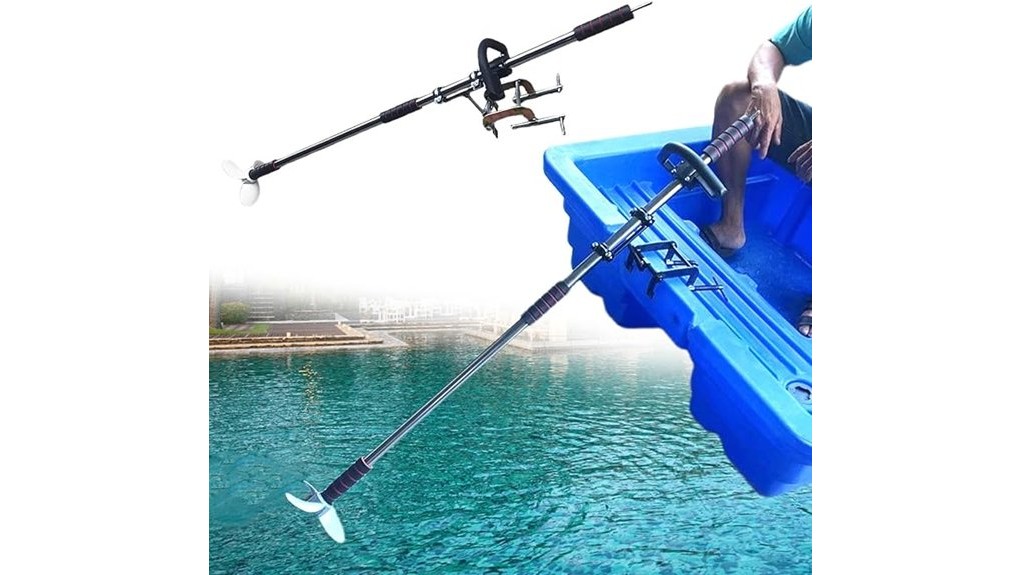
You’ll get a lightweight, clamp-on drill-powered thruster that converts a cordless drill into a reliable backup outboard for kayaks, canoes, and small boats. It uses an aluminum-alloy shaft and 16 cm prop blades, comes in 100 or 125 cm lengths, and fits hulls up to 7.5 cm thick with about 30 cm of bracket adjustment. Expect better short-burst speed than paddling, limited drill runtime, and simple pivot control; keep it for calm-water docking and emergencies, and more specifics follow.
Some Key Takeaways
- Lightweight drill-powered outboards convert cordless drills into portable handheld thrusters ideal for kayaks, canoes, and inflatables on calm waters.
- Aluminum-alloy shaft and clamp provide corrosion resistance and stiffness, with 100 cm or 125 cm lengths for hull clearance.
- 16 cm prop blades deliver useful short-burst thrust and better speed than paddling, but drill battery limits continuous runtime.
- Clamp fits hulls up to 7.5 cm thick; verify drill chuck compatibility, torque, and secure alignment before use to reduce vibration.
- Best for short trips, docking, and emergency backup; avoid heavy chop, vegetation, and open-water reliance—consider dedicated motors for long-range use.
Quick Verdict: Who This Drill-Powered Thruster Is Best For
If you want a lightweight, portable way to turn a cordless drill into a backup trolling motor, this Kayak Drill Outboard Propeller Handheld Thruster is a solid choice—especially for paddlers of kayaks, canoes, inflatables, and small wooden or row boats who need short-range propulsion, docking assistance, or an emergency spare paddle. You’ll appreciate its simple clamp mounting, single-handed pivot control, and rapid deployment for short trips. It suits novice paddlers who want an inexpensive, low-tech boost without permanent installation. Verify drill compatibility and practice brief runs; performance’s best on calm inland waters where thrust and battery endurance match your route. Check mounting options for kayaks and accessories to ensure secure installation and compatibility.
Build and Specs That Matter: Materials, Sizes, Clamp Limits, and Drill Fit
Examine the thruster’s construction and dimensions to confirm it matches your boat and drill: the main shaft and mount are aluminum alloy for corrosion resistance and stiffness, the 16 cm prop blades deliver the thrust profile, and you can choose overall lengths of 100 cm or 125 cm to suit hull depth and leverage. Check clamp capacity: it grips up to 7.5 cm hull thickness and bracket adjustment spans roughly 30 cm for height and angle. Verify drill chuck fit and assess required drill torque for sustained load. Prioritize aluminum corrosion-resistant finish, rigid joints, and clear tolerances to guarantee reliable, safe installation. For paddlers outfitting kayaks and other small boats, consider compatible deck-mount pumps and related gear to ensure a complete on-water setup.
On-Water Performance: Thrust, Speed vs Paddling, Handling, and Ideal Conditions
When you mount the drill-powered thruster, expect noticeably higher sustained speed than paddling for short bursts and low-resistance cruising. You’ll feel immediate thrust from the propeller’s torque curve; low-rpm torque gives push at launch, higher rpm increases top speed but raises cavitation noise. Compared to paddling, you cover distance with less exertion, though battery life of your cordless drill limits continuous runs. Handling stays intuitive—pivoting control yields responsive yaw corrections—but watch wake pattern from the propeller on tandem or shallow boats. Ideal conditions are calm inland waters with light wind; avoid vegetation and heavy chop to preserve efficiency and motor load. For safer installations and longevity, consider using appropriate deck line replacement tools and gear for secure mounting and quick disconnects deck line replacements.
Mounting and Operation: Clamp Setup, Side Placement, Drill Control, and Troubleshooting
Start by clamping the thruster securely to a straight section of hull where you can reach the drill and control pivoting without obstructing paddling or gear. Tighten the aluminum alloy clamp to max 7.5 cm hull thickness, inspect for clamp corrosion periodically, and use anti-seize on fasteners. Choose side placement that preserves balance; mount low for thrust, aft for steering. Insert a compatible cordless drill, verify battery compatibility (voltage and torque), and test low speed before full throttle. If vibration, recheck alignment, bracket adjustment range, and propeller seating. For stalling, clear debris and retest under low load. Consider keeping essential launch and trail gear like a kayak cart handy to reduce strain when transporting the kayak to and from the water.
Should You Buy It? Pros, Cons, Alternatives, and Compatibility Checklist
Now that you’ve checked clamp fit, side placement, and drill compatibility, consider whether this drill-powered thruster fits your boating needs. You’ll get a lightweight, metal prop that converts common cordless drills into effective short-range propulsion—good for docking, backups, and calm inland waters. Pros: portable, affordable, simple mounting, fast deployment. Cons: depends on drill battery compatibility and runtime, limited thrust for open water, exposed prop, and variable noise levels. Alternatives: dedicated trolling motor, hand paddle, or backpack electric outboard. Compatibility checklist: hull thickness ≤7.5 cm, drill chuck/torque match, bracket clearance, and intended water conditions. This option pairs well with sellers focused on all-terrain kayak carts and other kayak gear for easy transport and launch.
Some Questions Answered
Can This Propeller Handle Saltwater Use With Rinsing After Each Trip?
Yes — you can use it in saltwater if you rinse thoroughly after each trip. Its aluminum alloy offers some corrosion resistance but isn’t stainless marine-grade, so salt accelerates wear. You’ll maintain freshwater performance longer by flushing salt, drying, and applying light corrosion inhibitor to fasteners and the clamp. Inspect for pitting regularly and avoid prolonged exposure; replace components if corrosion compromises grip or prop integrity to guarantee safe operation.
How Noisy Is the Thruster Compared to Electric Trolling Motors?
It’s noticeably louder than quiet electric trolling motors because noise depends on your cordless drill’s motor and RPMs; you’ll hear mechanical whine, prop wash and drill vibration. Expect a harsher sound profile and intermittent spikes under load. You won’t worry about battery life from the thruster itself, but drill battery drain is significant—use a high-capacity battery and lower RPMs to reduce noise and extend run time.
Are Replacement Propeller Blades Available Separately?
Yes — you can source spare blades, though the manufacturer doesn’t list separate OEM blades widely. You’ll likely find aftermarket options compatible with the 16 cm propeller profile and standard drill-shaft coupling. Verify blade pitch, hub bore, and material (aluminum vs. composite) before buying. Keep clamp and bracket dimensions handy to guarantee fit. If unsure, contact the seller for part numbers or request measured photos to match aftermarket replacements.
Will the Clamp Damage Painted or Thin Fiberglass Hulls?
It can, if you clamp directly on painted or thin fiberglass hulls without protection. You should add soft padding between the clamp and hull to distribute pressure and reduce local stress; that lowers risk of scratching, paint compression, or puncture. Also avoid overtightening to prevent hull flex that could crack resin layers. Check clamp alignment often, use wide contact areas, and inspect the hull regularly for paint lift or stress lines.
Can It Be Stored Long-Term Attached to the Drill or Mount?
You can, but don’t leave it attached long-term. Continuous attachment stresses the drill’s gearbox and battery life, and exposure to variable storage temperature can degrade seals and electronics. If you’ll store it weeks to months, remove the drill, wipe components, lightly lubricate clamp pivots, and store both in a dry, temperature-stable place (ideally 10–20°C). Re-check fasteners and battery charge before reuse.