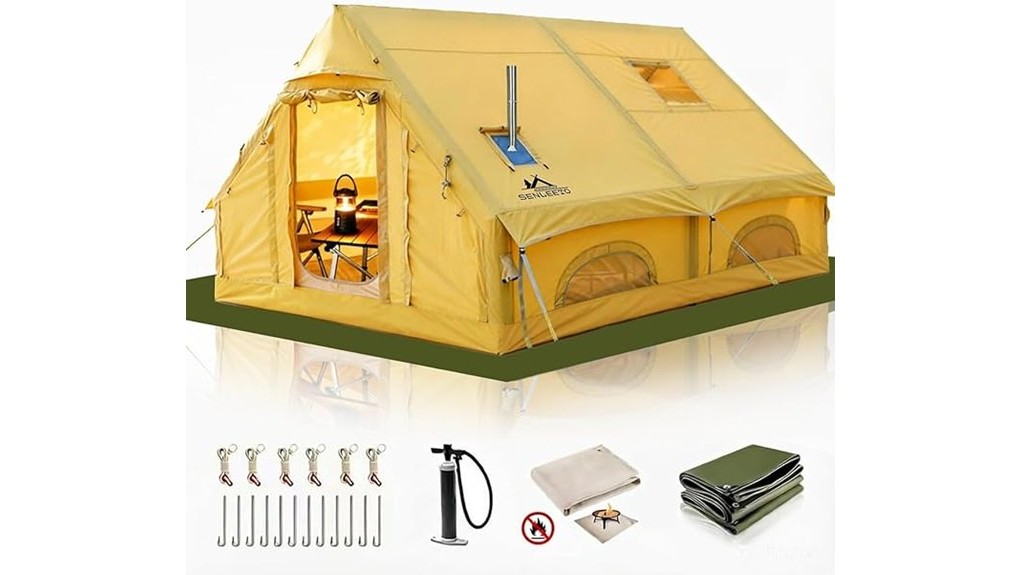
You’ll get a roomy, car-camp–focused 8‑person inflatable tent that inflates in about eight minutes with a hand pump and packs to roughly 60–64 lbs, so split the load or use wheels. Reinforced TPU air beams, taped seams, and a welded PVC floor shed heavy rain and handle gusts when guylined, and a reinforced stove jack lets you hot‑tent safely. Venting, windows, and skylights control condensation — keep going to see full setup, durability, and use tips.
Some Key Takeaways
- Inflatable 8-person tent inflates in about eight minutes with the included hand pump for fast, tool-free setup.
- Packed weight ~60–64 lbs suits car-camping or two-person carry, not backpacking.
- Spacious 129 sq ft floor area with standing height comfortably fits families or groups for leisure use.
- Durable materials (reinforced TPU beams, PU3000-coated 420D fabric, welded PVC floor) resist wind, rain, and ground seepage.
- Hot-tent ready with reinforced stove jack and vents, but requires proper anchoring, guylines, and stove safety practices.
What This 8-Person Inflatable Tent Includes and Who It’s Best For
If you need a roomy, weather-ready shelter that sets up fast, this 8-person inflatable tent includes everything to sleep and live comfortably: the tent body with reinforced 6-inch TPU air beams, a puncture-resistant 14 oz PVC floor, a hand pump, stove jack, two doors, two windows plus two skylights, an AC port, eight guylines, metal poles and steel stakes, and two interior pockets. You’ll get 129 sq ft of usable space, standing height, and simple inflation for quick camp setup. It’s ideal if you’re organizing family outings, need organized camping storage, or want a durable, hot-tent–ready base camp. Make the most of your tent’s covered area with a well-planned vestibule setup to keep gear dry and organized.
How the Tent Performs in Wind, Rain, Cold, and Hot-Tent Use?
Because the tent uses reinforced 6-inch TPU air beams and eight guylines, it stays particularly stable in gusty conditions and resists deformation better than standard inflatable designs—so you can expect reliable wind performance on exposed sites when properly anchored. In wind testing the structure held shape to sustained breezes; stake and guy placement matters. Waterproof PU3000 fabric and taped seams shed heavy rain; the welded PVC floor prevents seepage. In cold use the insulated fabric and stove jack let you run a small wood or gas stove safely; condensation management relies on dual-layer windows and vents to reduce moisture buildup. For added safety and stability, consider using properly tensioned guy lines and following guy line best practices when pitching on exposed ground.
Setup, Packed Weight, and Daily Use: Real-World Handling and Ventilation
After testing the tent in wind, rain, and cold, you’ll notice setup and day-to-day handling matter more than raw specs. You can inflate the freestanding shell in about eight minutes with the included pump; stake and guyline only if windy. At ~60–64 lbs packed, split load between two people or use a wheeled cart—packing tips: compress the air beams, wrap the pump and stove jack separately to protect seams. Daily use is straightforward: roll vents and mesh for airflow, close the airtight layer for warmth. Small ventilation tweaks—angle windows and open skylights—cut condensation without losing heat. For easier trips, consider pop-up tent gear that complements inflatable shelters and simplifies setup.
Materials, Durability, and Safety Features (Air Beams, Floor, Stove Jack)
When you inspect the tent’s materials, you’ll see durability and safety built into every major component: thickened high‑density TPU air beams (6 in / 15 cm) replace traditional poles for wind-resistant, self-supporting structure; a 14 oz (400 g) industrial‑grade PVC floor resists punctures and abrasion at ground contact; and a reinforced stove jack allows safe hot‑tent use while keeping seams and fabric protected from heat. You’ll appreciate air beam longevity from 48‑hour leak testing and thicker TPU. Fabric puncture resistance comes from 420D Oxford plus PVC. Note floor repairability via patch kits and clear jack sealing standards for stove integration. Camping gear retailers often offer compatible accessories and replacement parts for inflatable tents, including camping tripods and repair kits to extend functionality and lifespan.
Value Judgment: Pros, Cons, and Who Should Buy This Tent
Having covered materials, durability, and safety, it’s time to weigh what that build quality actually means for you in real use. You get robust 420D fabric, thick TPU beams, a puncture-resistant PVC floor and hot-tent capability—pros: quick ~8‑minute setup, spacious 129 sq ft, family compatibility for 8–10 in leisure use, and good weather resistance. Cons: 60 lb bulk limits backpacking, 30-day warranty is short, and pump/air reliance adds repair risk. For you: buy if you car-camp, need roomy hot-tent performance, and value durability in a price comparison versus sewn-pole alternatives. Many shoppers also consider comparing cabin tent models for roomy layouts before deciding.
Some Questions Answered
Can I Leave the Tent Inflated Unattended for Several Days?
Yes — you can leave it inflated for several days, but monitor it. For long term inflation outdoors, expect gradual pressure changes with temperature; check and top up air beams daily. Protect against UV degradation by using a rainfly or shade and avoid direct sun when possible. Watch for moisture accumulation inside; ventilate and use mesh layers. Inspect seams and guylines regularly and store dry if prolonged exposure or severe weather threatens.
Is the Stove Jack Compatible With All Wood Stoves?
No — the stove jack isn’t universally stove compatible. You’ll need to match stove compatibility and flue sizing to the jack opening and material specs; many wood stoves fit, but check stovepipe diameter, heat shield needs, and clearances. Use a properly rated stove jack or adapter if dimensions differ, and follow manufacturer instructions for heat-resistant materials, stove placement, and ventilation to prevent heat damage and maintain safety.
Are Replacement Air Beams or Repair Kits Available?
Yes — you can get replacement beams and patch kits. You’ll want to contact the manufacturer or seller for OEM replacement beams that match the thickened high-density TPU air columns. Keep a patch kit on hand for small punctures; the included pump and 48-hour leak-tested beams make repairs straightforward. For larger damage order full replacement beams or request warranty service within the 30-day window and follow care instructions for best results.
Does the Tent Have Interior Lighting or Power Accessory Hooks?
Yes — the tent offers internal lighting options and power hooks. You’ll find integrated mesh pockets and ceiling loops where you can hang battery-powered lamps or LED strips; manufacturers often recommend using battery or low-voltage LED lights via the AC port to run small devices. The tent includes reinforced ceiling loops for hanging gear and a dedicated AC port; it doesn’t include hardwired interior lights, so plan for portable power or lamps.
What Is the Recommended Storage Method Between Trips?
Store it rolled up and bagged for best results. Once dry, deflate fully, fold or roll the air beams neatly, then place the tent in breathable bags rather than sealed plastic to prevent mildew. Keep the bagged storage in a cool, dry location away from direct sunlight and pests. Don’t cram heavy items on top; check periodically and re-air briefly before your next trip to maintain seals and fabric integrity.