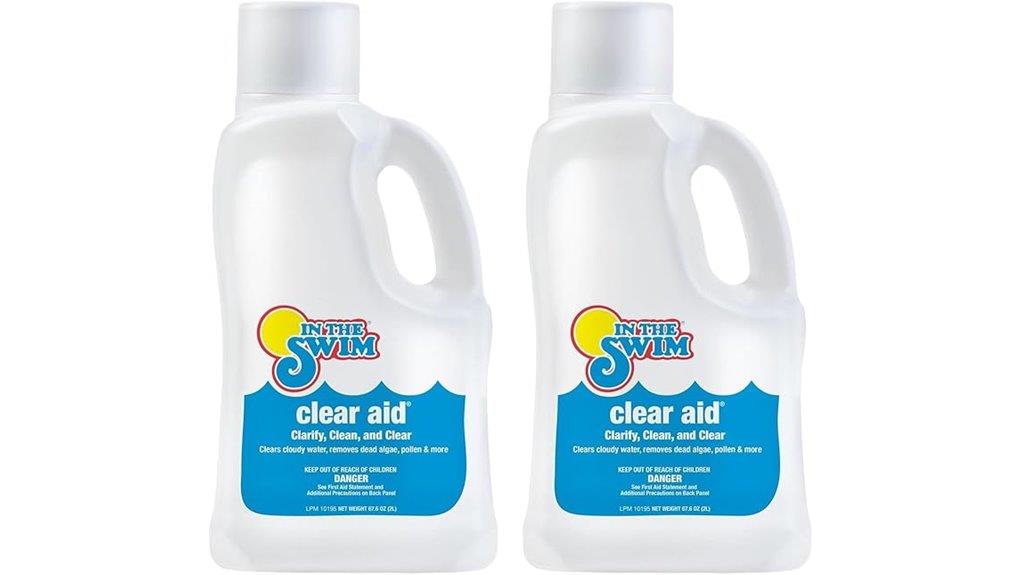
You’ll see noticeably clearer water within 48 hours when you dose In The Swim Clear Aid correctly; it coagulates tiny non-living particles so your filter can trap them, reducing turbidity, surface film, and backwashing. It works without major chemical rebalancing, is non-corrosive to cartridges, and usually cuts maintenance time for routine cloudiness. Apply after skimming with the pump on, run filtration 24–48 hours, and monitor the filter; keep reading for exact dosing, timing, and troubleshooting.
Some Key Takeaways
- Clears mild to moderate cloudiness reliably, with visible improvement often within 24–48 hours.
- Coagulates fine non-living particles so filters trap them more easily, improving flow and reducing cartridge/sand load.
- Best used after skimming, with pump running continuously for 24–48 hours and dosage per manufacturer instructions.
- Non-corrosive, cartridge-compatible formula reduces maintenance time and backwashing frequency for routine cloudiness.
- Sold in a 2-pack option (62014_2) for backup and ongoing maintenance, though it has storage and shelf-life considerations.
Quick Verdict: Does In The Swim Clear Aid Actually Clear Cloudy Pool Water?
Although results can vary with the pool’s condition, In The Swim Clear Aid does clear cloudy water reliably for most users. You’ll get quick clarity—often visible improvement within 48 hours—so you’ll feel immediate reassurance about treatment effectiveness. Apply per instructions, run the filter, and monitor turbidity; you’ll notice finer particles captured and reduced waterline buildup. It’s non-irritating and won’t force major chemical rebalancing, which boosts user satisfaction. For routine cloudiness and pollen loads, this clarifier reduces maintenance time and backwashing frequency. Expect predictable, measurable outcomes when you follow dosage and filtration guidelines carefully.
How Clear Aid Works and Why It Improves Filter Performance
Clear Aid works by coagulating tiny, non-living particles—like pollen, oils, and fine organics—into larger clumps your filter can trap, so you don’t have to rely on chemical rebalancing or endless skimming. You’ll see particle aggregation accelerate sediment capture, letting your pump and medium focus on larger flocs instead of submicron debris. That improves flow, reduces load on cartridges and sand beds, and can cut backwashing frequency. The formula is non-corrosive and designed for cartridge compatibility, so you won’t compromise pleats or seals. Use according to label rates; proper dosing guarantees predictable clarity gains and optimal filter longevity.
Real-World Results: Timeline, Typical Outcomes, and What to Expect in 48 Hours
When you dose In The Swim Clear Aid correctly, you’ll usually see visible improvement within 24–48 hours as suspended particles coagulate and the filter starts trapping larger flocs; by the 48-hour mark most mild to moderate cloudiness is gone and the water looks noticeably clearer. Your visual timeline: 0–6 hours—no dramatic change but flocculation begins; 6–24 hours—small particles clump, turbidity drops; 24–48 hours—clarity becomes evident, filter loads with debris. Typical outcomes include reduced waterline film and easier skimming. Maintenance expectations: less scrubbing, improved filter efficiency, and fewer backwashes over the following week.
How to Use Clear Aid Safely and Get the Fastest Results
If you want the fastest, safest results, dose Clear Aid after skimming and running the filter so you’re treating water that’s already free of large debris and circulating. For pool safety, wear gloves and avoid direct contact; keep kids and pets away until product disperses. Follow manufacturer instructions for dosage accuracy—measure by volume and adjust for pool size and turbidity. Add evenly around the deep end with the pump on, then run the filter continuously 24–48 hours. Monitor filter maintenance; clean or backwash as needed to remove captured particles. Recheck clarity and only retest chemicals after water clears.
Pros, Cons, and Who Should Buy the 2‑Pack (62014_2)
Although you’re getting two liters per bottle and a backup for ongoing maintenance, the 2‑pack (62014_2) makes sense for pool owners who want reliable, fast clearing and fewer trips to the store. You’ll get clear pros: rapid results, improved filter efficiency, less scrubbing, reduced chemical juggling, and tangible cost savings over single buys. Cons: extra upfront expense, storage needs, and limited shelf life if unused. Buy if you manage family pools, run regular maintenance, or value fewer shopping trips. Consider environmental impact and plan seasonal storage to preserve effectiveness between swim seasons.
Some Questions Answered
Is Clear Aid Safe for Kids and Pets Who Swim Immediately After Dosing?
Yes — you can let kids and pets swim shortly after dosing, since Clear Aid is non-toxic and formulated for skin safety and minimal respiratory irritation. You should follow label dosing and wait the recommended circulation time (usually minutes to a couple hours) to let the product disperse and filters trap particles. If anyone has sensitive skin or breathing issues, rinse off after swimming and avoid immediate exposure until water looks clear.
Can Clear Aid Be Used in Saltwater Chlorinated Pools?
Yes — you can use Clear Aid in saltwater chlorinated pools. It’s formulated to be saltwater compatible and won’t harm chlorine generators when dosed per instructions. You should still avoid overuse, monitor filter performance, and rinse equipment as recommended to minimize brine corrosion risks on metal components. Follow manufacturer dosing and warranty guidance, and check pool chemistry after treatment to make certain balanced, safe swimming conditions.
Does Clear Aid Affect Pool pH, Alkalinity, or Chlorine Levels?
No — Clear Aid has minimal pH interaction and won’t markedly change your pH, alkalinity, or free chlorine levels. You’ll avoid Chlorine binding because the clarifier aggregates non-living particles rather than consuming chlorine. Still, you should test water after use: you may see slight, temporary shifts as particles are removed and filters catch debris. Adjust pH or alkalinity only if test results indicate a real deviation from target ranges.
How Long Is the Product Shelf Life After Opening the Bottle?
You can expect an effective expiration timeframe of about 2 years after opening if you store the bottle properly. Keep it tightly sealed, out of direct sunlight, and at stable, moderate temperatures (ideally 50–77°F). Avoid freezing and heat extremes; those storage conditions preserve clarity and performance. If the solution changes color, smells odd, or forms sediment, discard it—don’t risk reduced effectiveness or filter issues.
Are There Any Compatible or Incompatible Filter Types or Medias?
Yes — you can use it with most filters; it’s cartridge compatible and works well with sand and DE systems. You shouldn’t have Diatomaceous concerns if you follow dosing directions, but avoid overdosing with diatomaceous-earth filters to prevent clogging. You’ll boost cartridge efficiency and trap finer particles, reducing backwashing. If you’re unsure about your media, check manufacturer guidance or test a small dose to confirm compatibility before full treatment.