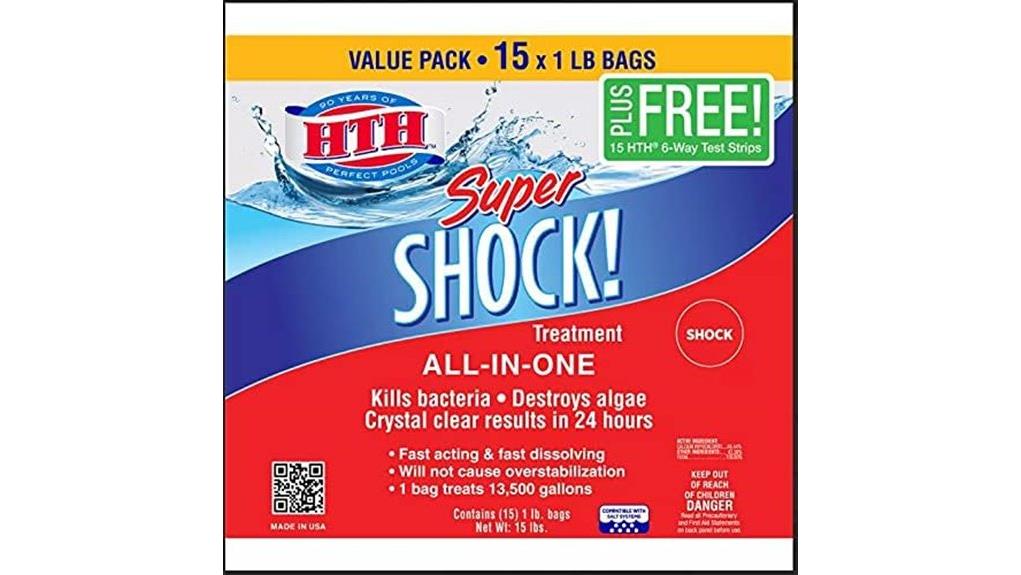
You’ll find HTH 52123 Super Shock Treatment a budget-friendly, reliable chlorine shock that quickly clears routine cloudiness and knocks back light algae without harming vinyl liners. It’s powdered, raises free chlorine predictably, and oxidizes contaminants fast, so you’ll often see improvement within 24 hours and full recovery in 24–48 hours for typical issues. Dose by pool size, wear protection, and avoid skimmers. Keep expectations modest for stubborn algae, and keep reading to learn detailed use and alternatives.
Some Key Takeaways
- Economical 1-lb powdered chlorine shock reliably boosts free chlorine for routine pool oxidation and algae control.
- Typically clears cloudy water within 24–48 hours with proper dosing, circulation, and possible repeat treatment for stubborn algae.
- Safe for vinyl-lined and saltwater pools when used per directions; predictable chlorine boost without liner fading.
- Standard dose: one 1-lb bag per 13,500 gallons weekly; test water and adjust for heavy use or visible contamination.
- Budget-friendly alternative to dichlor or non-chlorine oxidizers, with consistent brand quality from HTH/Sigura.
Quick Verdict: Is HTH 52123 Super Shock Treatment Worth Buying?
Wondering if the HTH 52123 Super Shock Treatment is worth buying? You’ll find a clear value proposition: economical packaging and reliable performance for routine shock needs. You can expect solid consumer satisfaction when it restores clarity and controls algae quickly. Assess cost effectiveness by gallons treated per bag and compare to alternatives; the 1-lb units treat large volumes, so price-per-gallon is competitive. Brand trust in HTH and parent Sigura supports consistent quality and safety standards. If you need straightforward, budget-friendly shock treatment with proven results, this product merits consideration without extravagant claims.
What HTH 52123 Contains and How It Works in Your Pool
Having established its value as a cost-effective shock option, let’s look at what’s actually in HTH 52123 and how it works in your pool. HTH 52123 is a powdered chlorine shock formulated to rapidly raise free chlorine and release active oxygen for fast oxidation of contaminants. You’ll use it to destroy organic matter, bacteria, and algae precursors while helping clear combined chlorine. It also supports bromine conversion when used in bromine-treated pools, aiding sanitizer regeneration. Overall, the composition targets quick sanitizing and oxidation; you’ll get predictable chlorine boost without harsh impacts on vinyl liners or pool surfaces.
Real-World Performance: Clarity, Algae Control, and Time to Effect
While you’ll sometimes see immediate brightening, HTH 52123 most reliably clears cloudy water within 24 hours when doses follow the label and circulation is adequate. You’ll notice a predictable clarity timeline: most users report visible improvement by day one and full recovery within 24–48 hours for typical cloudiness. For light algae, the shock reduces blooms quickly; stubborn algae persistence can require repeated treatment and brushed surfaces. You’ll get consistent bacterial control when chlorine rebounds are maintained. Expect steady, economical performance on various pool types, but don’t assume instant eradication of entrenched algae without follow-up actions.
How to Use and Dose HTH 52123 Safely (Including Weekly Shock Guide)
Because proper dosing and safe handling make the difference between effective shock treatment and pool chemistry problems, you should follow clear steps when using HTH 52123. You test water, consult a dosage chart, then broadcast one 1-lb bag per 13,500 gallons for standard weekly shock. Adjust dose for heavy use, storms, or visible algae. Apply powder directly to pool with pump running; avoid pouring on steps or near skimmers. Maintain free chlorine 1–4 ppm afterward. Wear gloves and eye protection, store unopened bags in cool, dry safe storage away from children and combustibles. Rinse hands after handling.
Who Should Buy It, Alternatives, and Where to Get the Best Deal
If you want a cost-effective, no-frills pool shock that reliably raises chlorine and clears cloudy water within a day, HTH 52123 is a solid choice—especially for owners of vinyl-lined or saltwater pools who need a straightforward weekly shock. You should buy it if you’re a budget conscious buyer, a convenience seeker, a saltwater owner, or a spa user wanting predictable results without liner fading. Alternatives include dichlor or non-chlorine oxidizers for lower odor or specialized algae formulas for tough blooms. For the best deal, compare prices at big-box retailers, pool supply stores, and online marketplaces, buying bulk packs.
Some Questions Answered
Is HTH 52123 Safe for Use With Pool Automatic Chlorinators?
Yes — you can use HTH 52123 with automatic chlorinators, but you shouldn’t feed shock directly into the chlorinator. You’ll preserve chlorinator compatibility by applying shock manually or using a separate feeder. Place dispensers so they don’t receive undissolved powder; dispenser placement away from direct shock addition prevents equipment damage and chlorine spikes. Test levels after treatment and avoid running the chlorinator while shocking to protect system components.
Can HTH 52123 Be Used in Heated Pools or Hot Tubs?
Yes — you can use HTH 52123 in heated spas and warm pools, but you’ll want to be cautious. It’s effective at raising chlorine quickly in warm water, yet higher temperatures accelerate chlorine loss and reactions. Test levels often, follow dosage, and avoid adding near bathers. For hot tubs, consider smaller, measured doses and wait until chlorine stabilizes before use. This keeps sanitation effective without over-chlorinating.
Does This Shock Treatment Affect Pool Water pH or Alkalinity?
It won’t markedly change pH stability when used as directed, but strong doses can cause temporary shifts. You’ll mainly see oxidation of contaminants rather than acidifying the water. Alkalinity buffering determines how much any pH swing is resisted, so keep total alkalinity in range to protect stability. Test before and after shocking, and adjust alkalinity or pH if you notice sustained deviations after treatment.
Is HTH 52123 Safe for Pets if They Access Treated Water?
No — you shouldn’t let pets drink recently treated water. Pet safety requires keeping animals away until chlorine levels return to normal (1–4 ppm) and residuals dissipate; strong shocks can irritate skin, eyes, and mucous membranes. Prevent wildlife exposure by restricting access and following label wait times. You’ll reduce risk by testing before allowing contact and by storing product securely to avoid accidental pet or wildlife ingestion.
How Should I Store Unopened and Opened 1-Lb Bags?
Store unopened bags in a cool storage area, away from heat, direct sunlight and moisture; make certain proper ventilation and keep them dry and sealed. Once opened, reseal the bag tightly or transfer contents to an airtight, labeled container, place in cool storage, and maintain proper ventilation to avoid chlorine gas buildup. Keep both unopened and opened packages away from combustibles, acids, children and pets, and follow local disposal rules.