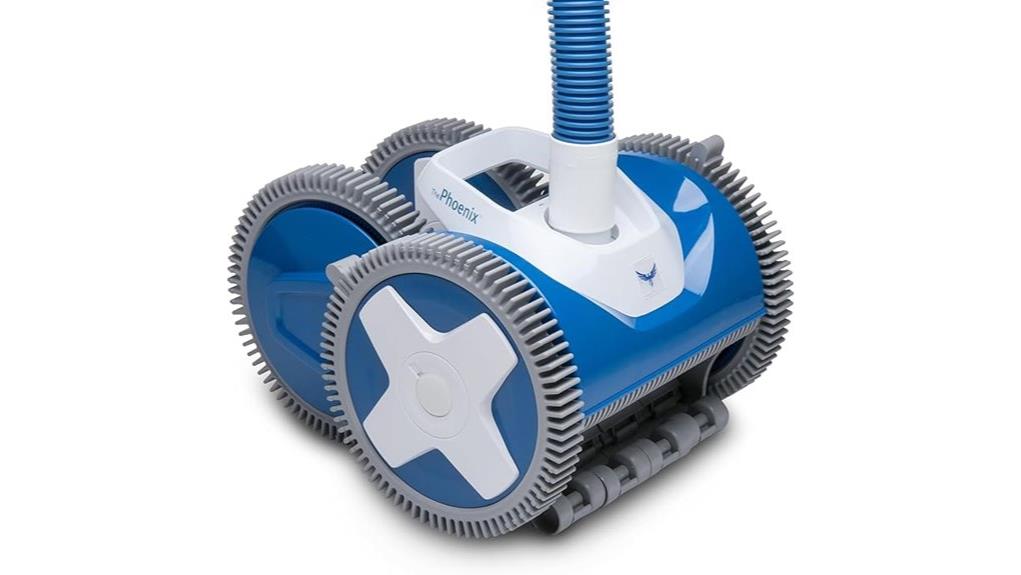
You’ll get a durable four-wheel suction cleaner that gives predictable mechanical steering, strong traction on vinyl, concrete, and tile, and consistent corner and stair coverage. It uses interchangeable throats and a hydraulic drive to balance suction and debris intake, with raised front treads to clear drains and obstacles. Maintenance is limited to tire checks, throat swaps, and inlet clearing. It struggles with very large debris and heavy wall piles, and the next section explains setup, limits, and alternatives.
Some Key Takeaways
- Four rubber-tread wheels and mechanical steering deliver consistent traction and predictable coverage across pool floors and walls.
- Raised front treads and climbing capability handle vinyl, concrete, and tile, clearing drains and small obstacles.
- Interchangeable throats and hydraulic drive balance suction and debris intake, optimizing performance for various debris types.
- Best on a dedicated suction line with correct hose length, adapters, and pump flow to avoid reduced performance or cavitation.
- Durable chassis and tire wear markers minimize maintenance, though heavy accumulations and very large debris may need manual removal.
Real-World Performance: How the Hayward Phoenix 4X Cleans Pools, Traction, and Coverage
When you run the Hayward Phoenix 4X, its four rubber-tread wheels and mechanical steering sequences work together to deliver consistent traction and systematic coverage across the pool floor and up walls. You’ll notice reliable climbing on vinyl, concrete, and tile; raised front treads clear drains and obstacles to maintain path continuity. The unit’s interchangeable throats and hydraulic drive enable flow optimization, balancing suction with debris intake. Surface agitation is moderate, aiding skimming without excessive turbulence. Coverage follows predictable, non-electronic patterns, minimizing missed zones. You’ll get efficient, low-maintenance cleaning with measurable traction and systematic area completion.
Suction-Side Setup and Compatibility: Which Pool Systems and Fittings Work Best
Which suction plumbing and fittings will give you the Phoenix 4X the right flow and reliability? You’ll want a dedicated suction line delivering steady negative pressure without excessive restriction. Use compatible hose adapters sized to the cleaner’s cuff and your skimmer or dedicated suction port; avoid multiple narrow couplings. Check valve compatibility with two-way and multiport valves—ensure settings provide continuous suction and don’t intermittently cycle flow. Keep hose length moderate and free of sharp bends to maintain hydraulic power. Confirm your pump’s flow rate matches manufacturer recommendations; undersized pumps reduce performance, oversized returns risk cavitation or loss of traction.
Durability and Maintenance: Tires, Tread Wear Markers, Interchangeable Throats, and Upkeep
Although compact, the Phoenix 4X’s chassis and rubber tires are engineered for prolonged service life and predictable wear, so you can rely on consistent traction and climbing ability across vinyl, fiberglass, and concrete surfaces. You’ll monitor tread wear markers that indicate when replacement is needed, supporting predictable tire longevity and minimizing downtime. Throat customization via interchangeable throats lets you match suction aperture to debris types and pump strength, preserving internal components. Routine maintenance is limited: inspect tires and markers, swap throats as conditions change, clear debris from the inlet, and follow manufacturer guidance to maintain peak hydraulic performance.
Features That Matter: Steering, Raised Front Treads, Debris Handling, and When It Struggles
Because the Phoenix 4X combines mechanical steering sequences with raised front treads, you’ll get predictable navigation and fewer stalls over drains and small obstacles. You benefit from steering reliability via non-electronic cycles that distribute coverage without user intervention. Raised front treads improve obstacle negotiation, letting the unit climb drains, corners, and low steps while maintaining suction. Debris handling is effective for leaves, fine sand, and typical pool detritus through interchangeable throats and strong traction. It struggles with heavy accumulations against walls or very large debris that require manual removal or pre-raking. Expect consistent, low-maintenance operation within those limits.
Who Should Buy It and Alternatives: Best Use Cases, Value Verdict, and Comparable Models
If you need a low-maintenance suction-side cleaner that reliably navigates corners, stairs, and minor obstacles, the Phoenix 4X is a solid choice. You should buy it if you want durable traction, mechanical steering, and minimal user intervention for medium to large in-ground pools. Its hydraulic drive delivers strong cleaning efficiency with reasonable energy efficiency versus booster-pump robots; expect moderate noise levels given suction-side operation. For quieter, more energy-frugal options consider cordless robotic cleaners (e.g., Polaris F9550 or Dolphin Nautilus) that cost more but reduce runtime and noise. Value verdict: excellent durability and coverage for the price. Zodiac MX6 features and specifications include advanced suction technology and a lightweight design that enhances maneuverability. Users will appreciate its ability to clean pools of various shapes and sizes efficiently. Additionally, the easy-to-install design allows for quick setup, making it a convenient option for pool owners.
Some Questions Answered
Is the Phoenix 4X Compatible With Variable-Speed Pool Pumps?
Yes — the Phoenix 4X works with variable-speed pumps, but you’ll need to verify flow rates. Variable speed compatibility depends on maintaining adequate suction; running very low speeds can reduce performance. Monitor pump efficiency impact: lower speeds improve energy use but may prevent the cleaner from climbing or picking debris. Aim for manufacturer-recommended flow ranges or adjust speeds to balance cleaning effectiveness and pump efficiency impact for reliable operation.
Can It Clean Vinyl Liners Without Causing Damage?
Yes — you can use it on vinyl liners without damage. You’ll get gentle suction and liner safe materials in contact points, plus raised front treads and durable rubber tires that distribute pressure and prevent gouging. Mechanical steering and interchangeable throats maintain consistent suction so it won’t drag or grip aggressively. Still, inspect for loose debris and monitor tread wear markers; replace tires when worn to preserve liner integrity and performance.
Are Replacement Tires and Throats Sold Separately?
Yes — replacement parts like tires and throats are sold separately. You can order individual components or accessory kits to restore traction and suction performance. Check part numbers (PES42CSTX components) and tread wear markers to confirm which tires you need. Buy genuine Hayward parts or compatible aftermarket kits; follow the user guide for proper installation and warranty considerations. Keep spare throats and tires on hand for minimal downtime.
How Loud Is the Cleaner During Operation?
You’ll find the cleaner produces low noise operation and is effectively whisper quiet compared with many suction-side models. Its hydraulic drive and mechanical steering minimize vibration and audible motor hum, so you’ll hear only mild water movement and occasional clacks when traversing obstacles. Measured sound levels vary with pump speed and plumbing; running at lower flow reduces noise further. Overall, expect discreet, functional performance rather than loud operation.
Does It Require Seasonal Winterization or Storage Steps?
Yes — you should perform winter storage steps. You’ll disconnect, drain and store the unit indoors to prevent freeze damage and rubber tire degradation. Inspect and replace worn tires using tread wear markers before storage. Also perform filter maintenance on your pool system after removing the cleaner: clean or backwash the filter and check seals to prevent clogs. Store the cleaner dry, away from sunlight and extreme temperatures for peak longevity.