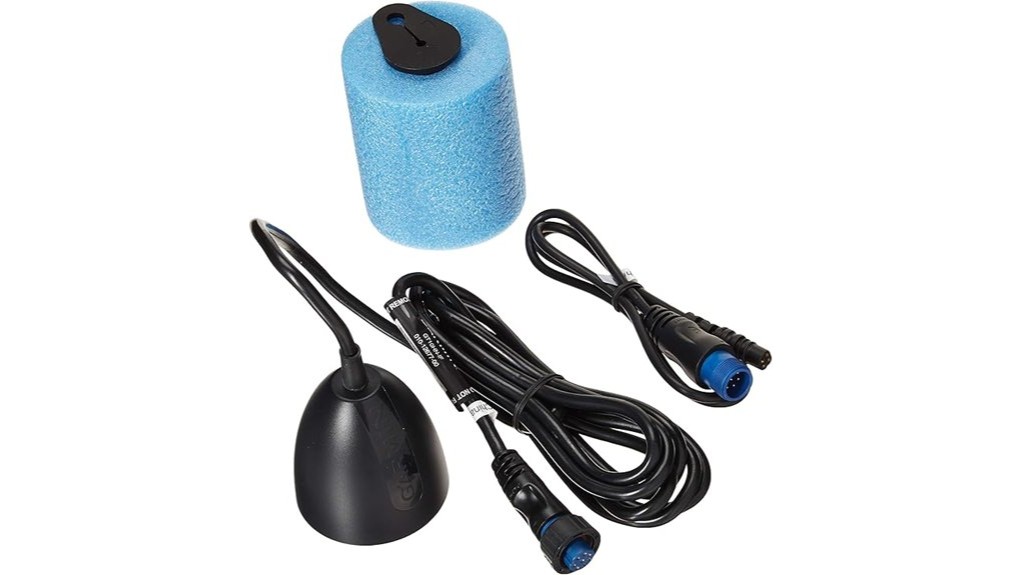
You’ll get a compact ice‑ready kit centered on the GT10HN‑IF high‑narrow CHIRP transducer, plus adapter, foam float, grommet and docs; it’s built for kayak or portable setups and stays flexible in cold. The 8–16° beam and 500 W CHIRP give tight target separation, clear bottoms and strong jig sensitivity for confident strikes in deep holes. Setup is simple with surface mounting, but expect limited on‑device display detail. Keep reading for setup, comparisons and buying tips.
Some Key Takeaways
- Includes GT10HN‑IF high‑narrow CHIRP transducer, 8‑pin to 4‑pin adapter, foam float, grommet, silicone cable, and docs.
- 8–16° CHIRP beam and 500 W deliver tight target separation and clean bottom returns to several hundred feet.
- Excellent jig sensitivity detects small targets and slow jigging, improving strike confidence under ice.
- Surface‑mount, 1″ LCD design is simple and portable but offers less on‑device detail than larger combos.
- Best for ice and kayak anglers prioritizing precise deep‑water jig detection; check battery, warranty, and seasonal pricing.
What the Garmin 010-12677-00 Bundle Includes and Who It’s For
Unpack the Garmin 010-12677-00 Fishing Bundle and you get a compact, ice‑fishing–focused kit: the GT10HN‑IF high‑narrow CHIRP transducer, an 8‑pin to 4‑pin adapter cable, foam float, grommet, and documentation. You’ll appreciate the silicone‑coated cable that stays flexible in cold and the surface‑mount design that simplifies setup through a clear user interface. This bundle suits anglers who want a straightforward, portable sonar solution without extra frills. Consider your power plan: modest battery life expectations match the 500 W transducer and small display. If you value simplicity, portability, and targeted ice performance, this fits the bill. It’s a good match for kayak anglers who need portable fish finder options for on‑the‑water adventures.
How the GT10HN-IF Transducer Performs on Ice : Beam, Depth, and Jig Detection
When you drop the GT10HN‑IF through a hole, its high‑narrow CHIRP beam immediately shows why it’s built for ice: the 8–16° cone concentrates energy for tight target separation, letting you distinguish individual fish and follow a jig’s movement with clarity rather than seeing a blended mass. You’ll notice narrow beam performance translates to precise depth returns; 500 W power and CHIRP processing give clean bottom definition to several hundred feet in tests. Jig sensitivity metrics are strong — small targets and slow jig action register reliably. For buyers, that means confident strike decisions and less time guessing under the ice. This makes it an excellent choice for anglers who combine electronics with measuring fish and kayak adventures.
Real-World Setup and Installation Tips for Ice Fishing
Before you drill, plan the transducer placement so the GT10HN‑IF sits in clear water and the cable runs without kinks; that positioning is the single biggest factor that determines signal quality and jig visibility. You’ll center mounting placement over open water, avoid slushy pockets, and test beam orientation with a simple float before committing. Use the grommet and foam float per instructions, route the silicon-coated cable to prevent pinches, and secure connections with the adapter. Prioritize battery maintenance: carry a charged spare, monitor voltage during use, and insulate terminals to prevent cold-induced voltage drops. Also pack essential safety gear like a bilge pump and personal flotation device appropriate for kayak and ice fishing adventures.
Pros, Cons, and How It Compares to Other Ice-Specific Transducers
Although the GT10HN‑IF is built specifically for ice fishing, you’ll notice strengths and trade‑offs that matter for real‑world use: its narrow 8–16° CHIRP beam and 500 W power give you sharp target separation and excellent jig visibility in deep holes, the silicon‑coated cable stays flexible in cold, and the optimized housing simplifies float or grommet mounting—but its 1″ LCD and surface‑mount design limit on‑device display detail and may not suit anglers who want wider coverage or combined side/clearance views found on some multi‑element transducers. You’ll appreciate precise signal processing and tuned ice acoustics; material durability looks solid. Battery life depends on your head unit, and compared to combo transducers you trade versatility for focused performance. For quick field fixes while ice fishing, keeping essential patch materials like repair patches and solvent on hand can save a trip back to shore.
Should You Buy It? Pricing, Warranty, and Best Use Cases
Decide based on where and how you fish: the Garmin 010-12677-00 is a focused, ice‑specific transducer that gives you precise jig detection and deep‑water target separation, but you’ll be trading off on‑device display detail and wide‑coverage imaging found in more versatile combos. If you mostly ice fish in deep holes, buy it for its narrow beam, flexible cable, and compact kit. Watch price trends—seasonal discounts appear late winter. Check Garmin’s warranty details and ask about warranty transferability if buying used. Best use cases: dedicated ice anglers who prioritize target clarity over multifunction displays. Consider pairing it with kayak fish finder mounts designed for stability on small watercraft to keep your setup secure during adventurous outings.
Some Questions Answered
Does the Bundle Include Batteries or a Power Source?
No, the bundle doesn’t include batteries or a power source. You’ll want to evaluate battery inclusion and power options before buying: the kit provides the GT10HN‑IF transducer, adapter cable, float and grommet, but not a battery pack or charger. As a buyer, plan for an external 12V supply or compatible chartplotter/sonar unit to power the transducer, and confirm connector compatibility and cable routing for your setup.
Is the Transducer Compatible With Non-Garmin Fishfinders?
Yes — you can use the transducer with some non‑Garmin fishfinders, but you’ll need to verify connector and protocol compatibility first. As a buyer, you’ll test third party compatibility by matching the 8‑pin/4‑pin wiring or using the included adapter, and checking frequency/CHIRP support. Be mindful of signal interference risks and grounding; you’ll reduce issues by securing connections and testing on calm water before relying on readings during critical trips.
Can I Use This Transducer for Open-Water Fishing?
Yes — you can use this transducer for open-water fishing, but you’ll get best results in ice fishing scenarios. You’ll benefit from its narrow beam and 500 W CHIRP for precise jig detection and lake mapping in deeper spots, yet its optimized ice shape limits side-mount versatility. If you plan frequent open-water use, confirm compatibility with your unit and expect focused vertical returns rather than wide-area coverage; choose accordingly.
What Accessories Are Available Separately for This Model?
You can buy spare mounting hardware and a protective cover separately to secure and shield the transducer. You’ll also find replacement float assemblies, silicone‑coated extension cables, 8‑pin to 4‑pin adapters, and foam grommets. Choose parts rated for cold use and matching connectors. Inspect beam orientation and cable length before purchasing so you’re sure the spare mounting fits and the protective cover won’t interfere with sonar performance.
Is There a Firmware Update Process for the Transducer?
Yes — you can manage transducer firmware through your Garmin unit or Garmin Express; firmware management lets you apply fixes and feature updates. You’ll check and install updates via the device’s settings or by connecting to a computer. Update frequency is infrequent — only when Garmin releases revisions — so you’ll monitor notifications and update before a season. As a buyer, prioritize keeping firmware current for best sonar accuracy and reliability.