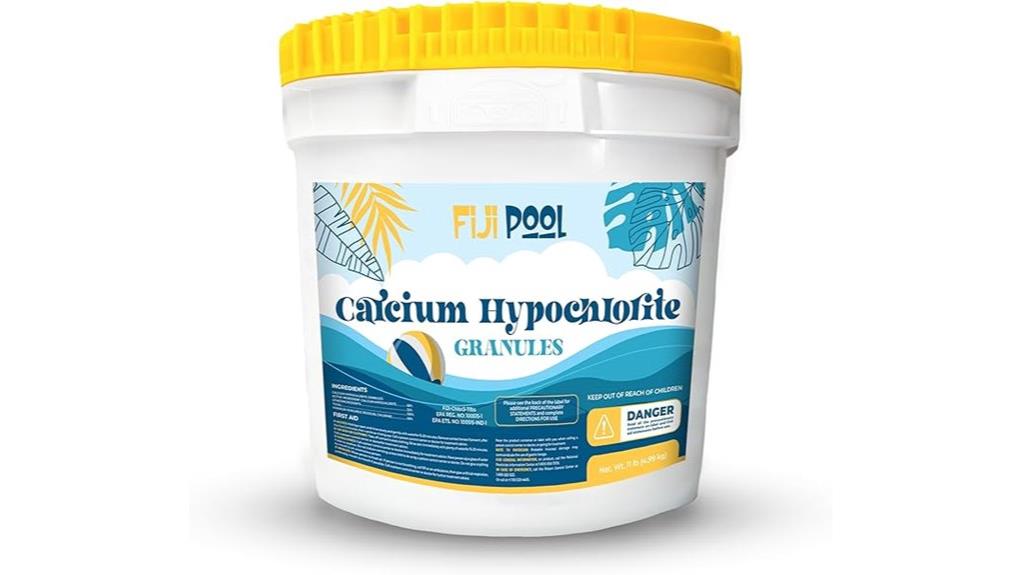
You’ll get a fast‑dissolving 68% calcium hypochlorite shock that quickly raises free chlorine to defeat algae and bacteria, but you must test and dose precisely. Follow label rates, add granules slowly with the pump running, brush if they settle, and avoid feeders or trapped skimmer pockets to prevent concentrated corrosion or off‑gassing. Use PPE, verify pH 7.2–7.6 and hardness >200 ppm, and retest before swimmers return — more practical guidance follows.
Some Key Takeaways
- Fiji Pool Calcium Hypochlorite Granules (68%) provide fast-dissolving, high-strength chlorine for rapid shock and biofilm control.
- Typical weekly shock dose: 10–20 oz per 10,000 gallons to raise free chlorine to ~5–10 ppm for effective sanitation.
- Use with pump running, add granules slowly, brush settled areas, and avoid dumping into skimmer or trapped cavities.
- Requires PPE, good ventilation, and strict separation from other chemicals to prevent hazardous reactions.
- Verify pH 7.2–7.6, calcium hardness >200 ppm, retest chlorine before swimming, and watch equipment for early corrosion signs.
What Fiji Pool Calcium Hypochlorite Granules 68% Deliver for Pool Owners
Protect your pool’s clarity and safety with Fiji Pool Calcium Hypochlorite Granules 68%, a fast-dissolving granular sanitizer that delivers powerful algae and bacteria control while helping prevent stains. You’ll apply a high‑strength oxidizer that rapidly raises free chlorine to neutralize contaminants, reducing biofilm development and surface staining risks. By maintaining consistent sanitization and monitoring water balance, you’ll extend pool longevity and limit corrosive or precipitative damage. The product’s concentration yields measurable cost efficiency per treatment versus lower‑strength alternatives, provided you test and dose accurately. Use precise testing, protective handling, and adherence to equipment guidelines for predictable results.
How to Dose and Use It Safely for Routine Chlorination and Shock Treatments
Having established what Fiji Pool Calcium Hypochlorite Granules deliver, you’ll next learn how to dose and handle them safely for routine chlorination and shock treatments. Measure 10–20 oz per 10,000 gallons for weekly shock (target 5–10 ppm); for routine dosing follow label rates and test before and after. Add granules with pump running, brush areas if granules settle. Store sealed in cool, dry pool storage away from organics. Always use PPE handling—gloves, eye protection, dust mask—and avoid mixing with other chemicals. Verify pH 7.2–7.6 and calcium hardness before shock; retest chlorine before swimming. Pool maintenance tips for homeowners can greatly enhance the longevity and cleanliness of your pool. Regularly check and adjust the water chemistry to keep it balanced, which helps in preventing algae growth. Additionally, ensure that you clean the filter and pump weekly to maintain optimal water circulation.
Skimmer and Equipment Best Practices to Avoid Damage and Toxic Gas
Keep the pump running and clear the skimmer basket before adding Fiji Pool Calcium Hypochlorite granules to prevent accumulation of undissolved product and reduce the risk of concentrated pockets that can off‑gas or corrode components. When you pour granules, do so slowly and avoid dumping into a clogged skimmer; check skimmer placement to make certain flow directs diluted solution to the return, not trapped cavities. Isolate or bypass automatic feeders; they’re incompatible. Maintain good ventilation practices in enclosed equipment rooms and near suction lines to disperse any released gases. Inspect seals, O‑rings, and plastic parts after treatment for early corrosion signs.
Water Balance Targets and How to Test Before and After Treatment
Why check your water before and after adding Fiji Pool Calcium Hypochlorite granules? You must confirm baseline pH, total alkalinity, and calcium hardness to prevent scale or corrosion. Aim pH optimization at 7.2–7.6 and calcium hardness above 200 ppm. Use a reliable test kit and maintain sensible test frequency: measure before dosing, two hours after circulation, and again 24 hours later. For chlorine and alkalinity accuracy, employ a titration method rather than strip tests. Record values, adjust alkalinity or pH slowly if out of range, and avoid swimmer access until residual chlorine and balance are within safe targets. Understanding the hth pool care chlorine advantages can further enhance your water quality management. Proper use of chlorine not only helps in disinfecting the pool but also plays a vital role in balancing other chemical levels. Regular monitoring of chlorine levels, combined with maintaining proper pH and alkalinity, will ensure a safe swimming environment.
Concise Hands-On Review and Dosing Guide
When you need a fast, reliable sanitizer, Fiji Pool Calcium Hypochlorite granules dissolve quickly and let you dose precisely; you’ll add them with the filter running, test water before and after, and restrict swimmer access until chlorine and balance are safe. You’ll dose 10–20 oz per 10,000 gallons for weekly shock (5–10 ppm), target pH 7.2–7.6, and brush areas to disperse settled granules. Pour slowly into skimmer or directly with pump on; avoid automatic dispensers. Observe storage considerations: cool, dry, ventilated, away from organics. Note environmental impact: avoid runoff, neutralize spills, and follow local disposal rules.
Some Questions Answered
Is This Product Safe for Saltwater/Chlorine Generator Pools?
No, it’s not ideal for saltwater systems; you’ll have saltwater compatibility concerns and increased generator corrosion risk. Using high‑strength calcium hypochlorite in pools with chlorine generators can spike free chlorine and calcium, promoting scale and accelerating anodic corrosion of cell plates. If you must use it, dose cautiously, monitor chlorine and calcium hardness closely, run filtration, and avoid direct addition to or through the generator to reduce damage risk.
Can Granules Damage Pool Liners or Colored Finishes?
Yes — if misused, granules can cause liner abrasion and chemical bleaching. You should dissolve granules with pump circulation and avoid pouring concentrated amounts onto vinyl or colored finishes. Brush any settled material and run filtration until dispersed. Maintain proper water balance and follow dosing guidelines to minimize localized high chlorine. Inspect surfaces after shock treatments and rinse areas showing streaks to prevent permanent discoloration or surface damage.
How Long Does One 11 Lb Container Typically Last?
About 4–12 weeks, depending on pool size and dosing. You’ll calculate usage duration by dividing required weekly shock (10–20 oz per 10,000 gallons) plus routine maintenance doses into the 176 oz container. For smaller pools or light maintenance you’ll see longer life; heavy bather load, algae control or frequent shocks shorten it. Track pool maintenance, perform dosage calculation precisely, and evaluate cost effectiveness based on how often you must replenish supply.
Are There Special Storage Temperature or Humidity Limits?
Yes — you should follow specific storage requirements because the product is moisture sensitive. Store in a cool, dry, well-ventilated area away from direct heat or sunlight, maintaining stable temperatures (ideally moderate room temperature) and low humidity. Keep container tightly sealed, off the floor, and away from combustible materials and incompatible chemicals. Use desiccants if needed, and inspect regularly for caking or discoloration to prevent degradation or hazardous reactions.
Is This Compatible With Algaecides or Cyanuric Acid Additions?
Yes — you can use it with algaecides and cyanuric acid, but proceed cautiously. Algaecide interactions can vary; add algaecides separately and follow manufacturer timing to avoid neutralization. For stabilizer compatibility, add cyanuric acid according to dosing charts and avoid overdosing; maintain recommended CYA levels before heavy chlorination. Always test water chemistry after additions, keep pump running for circulation, and wait appropriate intervals before swimming.