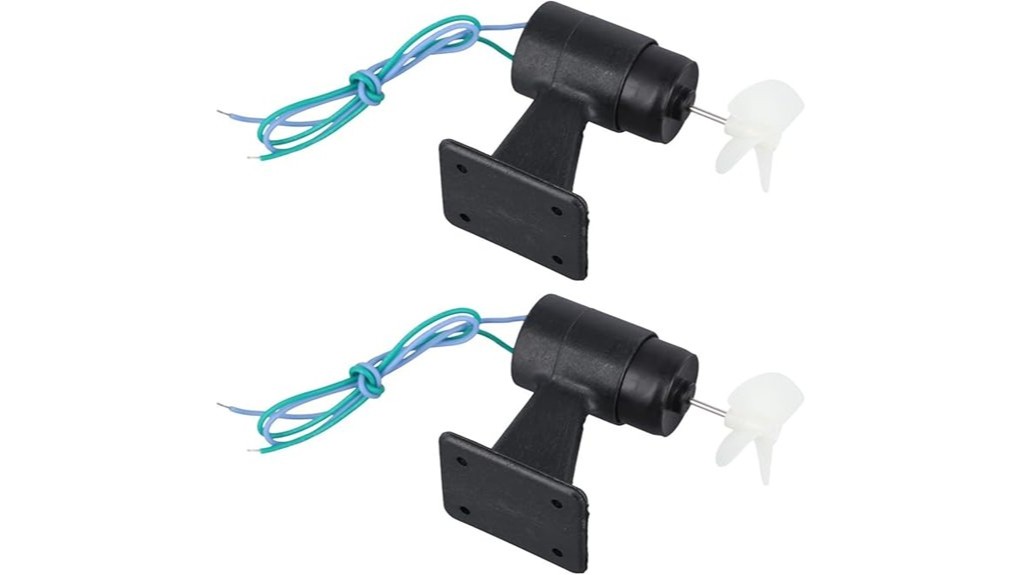
You’ll get an 80 W, 10–20 V DC brushed underwater thruster that’s compact and budget-friendly for toy-grade loads. It delivers predictable, near-linear thrust at low voltage up to roughly 15 kg before cavitation or thermal limits kick in. Expect ~3 A under moderate load with spikes near stall and battery sag that reduces thrust. Seal integrity and sleeve-bearing wear need close attention. Continue for installation, wiring variants, and long-term durability guidance. The electric fin thruster performance review highlights the importance of assessing efficiency in various conditions. It’s crucial to compare its specifications against competing models to ensure optimal functionality. Additionally, user feedback can provide insights into real-world durability and operational challenges.
Some Key Takeaways
- 80 W brushed DC thruster best for small hobby craft and bait boats, rated 10–20 V (do not exceed 20 V).
- Delivers predictable thrust with linear increase at low voltage and up to ~15 kg peak thrust near max voltage.
- Typical current ~3 A under moderate load, with spikes near stall and battery-sag reducing thrust.
- ABS housing, copper windings, and sleeve bearing suit short runs, but heat and bearing wear limit prolonged heavy use.
- Confirm CW/CCW rotation, seal cable entry, and use strain relief and symmetric mounts to avoid torque and water ingress.
Quick Specs and What This Thruster Is Best For
While compact and rugged, the Violiica DC Brushed Underwater Thruster Motor delivers a focused set of specs: 80 W power, 10–20 V operation (do not exceed 20 V), 3 A rated current, 1000 KV, a 3.6 cm nylon propeller, 15 cm cable, and up to 15 kg thrust for toy-grade loads, all in an 80 g ABS-housed unit with copper windings and sleeve bearing. You’ll use it for small hobby craft and bait boats where size, weight, and clear marine compatibility guidelines matter. Expect a defined noise profile typical of brushed motors; vibration damping and secure mounting reduce audible and structural transmission. It’s also well suited for lightweight water adventures when paired with kayaks and crate organizers and proper mounting.
Real-World Performance : Thrust, Current Draw, and Battery Behavior
Having covered specs and intended uses, let’s examine how the thruster behaves under load: thrust, current draw, and battery effects. You’ll see predictable thrust curves: low voltage yields linear thrust increase until propeller cavitation limits performance, higher voltage approaches the 15 kg peak on test rigs. Current draw tracks thrust closely; expect ~3 A rated current at moderate loads, spiking near stall. Battery voltage sag reduces thrust and increases heat. Prolonged high-load runs induce thermal throttling through internal heating of windings and sleeve bearing friction, so manage duty cycles. Monitor pack voltage and temperature to prevent performance collapse. For safe anchoring and handling during tests, consider basic anchor rope best practices to keep gear and people secure.
Installation Tips and Wiring (CW vs. CCW, Cable, and Propeller Notes)
Because the thruster’s rotation direction determines boat yaw and mounting orientation, confirm CW (left-hand push) or CCW (right-hand push) before wiring and fitting the propeller; you’ll need to order the correct variant and label the unit if you keep spares. Mount so thrust vector aligns with hull centerline; install symmetric pairs mirrored for counteracting torque. Observe Wiring polarity strictly — reversing leads reverses rotation. Maintain Cable sealing at entry with marine-grade epoxy or heat-shrinked glands to prevent water ingress. Check Propeller balancing and hub seating to minimize vibration. Use strain relief on the 15 cm lead and secure the ABS housing to reduce axis misalignment. For additional safety during installation and maintenance, always have essential deck line and replacement gear on hand to secure the kayak and components deck line replacements.
Safety, Limitations, and Long-Term Durability Concerns
If you plan to run this thruster long-term, pay close attention to voltage limits, sealing integrity, and wear paths that most affect lifespan. You must never exceed 20 V; overvoltage accelerates insulation breakdown in windings and raises internal temperatures. Validate seals with corrosion testing before deployment and avoid corrosive fluids per manufacturer guidance. Monitor bearing wear—copper sleeve bearings show progressive clearance growth under load and contaminant ingress. Expect performance drift after repeated thermal cycling; log temperature cycles and current draw. Maintain short cable runs, secure strain relief, and schedule inspections to detect early failure modes and preserve operational safety. For water-based activities, always use appropriate safety gear designed for kayaking and dynamic rope rescue scenarios.
Who Should Buy It and How to Choose Between Variants
When you need a compact, low-cost thruster for hobby ROVs, bait boats, or short-duration underwater experiments, this Violiica DC brushed model is appropriate because it balances 80 W power and a 10–20 V operating window with a lightweight 80 g ABS housing and nylon propeller. You should buy it if you’re a hobbyist seeking a hobbyists choice that’s simple to wire, inexpensive, and adequate for toy-grade thrusts up to 15 kg. Choose left-hand push (CW) or right-hand push (CCW) based on required thrust direction and vehicle torque compensation. Order single or dual units per mounting symmetry. It’s also a practical option for kayak anglers and other portable-water enthusiasts who need compact, affordable gear for on-water experiments and accessories like portable fish finders portable fish finders.
Some Questions Answered
Can I Use This Thruster in Saltwater Without Additional Corrosion Protection?
No, you shouldn’t use it in saltwater without additional corrosion protection. Saltwater accelerates galvanic corrosion and promotes marine biofouling on exposed metals, bearings, and connectors. You’ll need sealed housings, sacrificial anodes, corrosion-resistant coatings, and waterproof cable glands; periodic cleaning and anti-fouling treatments are essential. Follow the 20 V limit and manufacturer guidance, and plan maintenance intervals to inspect for electrical leakage, bearing wear, and propeller degradation. regular maintenance is particularly important for the review of d260 underwater thruster to ensure optimal performance over time. Additionally, consider consulting the manufacturer’s specifications for any additional recommendations tailored to the operating environment. Being proactive with care and inspections can greatly extend the lifespan of your thruster system.
Is a Speed Controller (ESC) Required or Recommended for Smoother Control?
Yes — you should use an ESC for smoother control. You’ll get precise motor control, speed regulation, and protection against voltage spikes. Choose a brushed-compatible controller with good PWM filtering to reduce noise, torque ripple, and heating. Match the ESC to the motor’s voltage/current limits, and make sure it won’t exceed 20 V. Proper filtering and a rated ESC will extend motor life and give predictable thrust for hobby applications.
What Maintenance Schedule Is Recommended for the Copper Sleeve Bearing?
You should inspect the copper sleeve bearing with a monthly inspection and perform seasonal lubrication. Every month you’ll check for scoring, play, overheating signs, and corrosion; record torque and vibration anomalies. Every 3–6 months (seasonal lubrication) apply a small quantity of marine-grade grease compatible with nylon/ABS, avoiding excess that traps debris. Replace the bearing if wear exceeds 10% diameter loss or if noise/vibration persists after maintenance.
Are Replacement Propellers or Spare Cables Available Separately?
Yes — replacement propellers and spare cabling are commonly available separately. You should order the correct propeller pitch/diameter and specify left-hand or right-hand rotation when purchasing replacement propellers. For spare cabling, get the specified 15 cm length and compatible gauge, connectors, and insulation rated for wet environments. Always confirm vendor compatibility with your Violiica thruster model and respect the 20 V maximum and non-corrosive liquid restrictions. When selecting components, refer to the underwater thruster specifications and features to ensure optimal performance. Pay close attention to the operational ratings and thrust output to ensure they align with your project’s requirements. Additionally, it’s crucial to understand the mounting options available to facilitate proper installation and maintenance.
Does the Warranty Cover Water Ingress or User-Installed Modifications?
No — the warranty excludes coverage for water ingress and user-installed modifications. You’ll find explicit warranty limitations stating damage from improper sealing, corrosion, or third-party alterations isn’t covered. If you open or modify the unit, installation voidance applies and you forfeit warranty claims. For repairs or replacement, contact the manufacturer or authorized service; follow their approved procedures to maintain warranty validity and avoid denied claims.Violiica DC Brushed Underwater Thruster Motor delivers a focused set of specs: 80 W power, 10–20 V operation (do not exceed 20 V), 3 A rated current, 1000 KV, a 3.6 cm nylon propeller, 15 cm cable, and up to 15 kg thrust for toy-grade loads, all in an 80 g ABS-housed unit with copper windings and sleeve bearing.-bearing wear need close attention. Continue for installation, wiring variants, and long-term durability guidance. The electric fin thruster performance review highlights the importance of assessing efficiency in various conditions. It’s crucial to compare its specifications against competing models to ensure optimal functionality. Additionally, user feedback can provide insights into real-world durability and operational challenges.
Some Key Takeaways
- 80 W brushed DC thruster best for small hobby craft and bait boats, rated 10–20 V (do not exceed 20 V).
- Delivers predictable thrust with linear increase at low voltage and up to ~15 kg peak thrust near max voltage.
- Typical current ~3 A under moderate load, with spikes near stall and battery-sag reducing thrust.
- ABS housing, copper windings, and sleeve bearing suit short runs, but heat and bearing wear limit prolonged heavy use.
- Confirm CW/CCW rotation, seal cable entry, and use strain relief and symmetric mounts to avoid torque and water ingress.
Quick Specs and What This Thruster Is Best For
While compact and rugged, the Violiica DC Brushed Underwater Thruster Motor delivers a focused set of specs: 80 W power, 10–20 V operation (do not exceed 20 V), 3 A rated current, 1000 KV, a 3.6 cm nylon propeller, 15 cm cable, and up to 15 kg thrust for toy-grade loads, all in an 80 g ABS-housed unit with copper windings and sleeve bearing. You’ll use it for small hobby craft and bait boats where size, weight, and clear marine compatibility guidelines matter. Expect a defined noise profile typical of brushed motors; vibration damping and secure mounting reduce audible and structural transmission. It’s also well suited for lightweight water adventures when paired with kayaks and crate organizers and proper mounting.
Real-World Performance : Thrust, Current Draw, and Battery Behavior
Having covered specs and intended uses, let’s examine how the thruster behaves under load: thrust, current draw, and battery effects. You’ll see predictable thrust curves: low voltage yields linear thrust increase until propeller cavitation limits performance, higher voltage approaches the 15 kg peak on test rigs. Current draw tracks thrust closely; expect ~3 A rated current at moderate loads, spiking near stall. Battery voltage sag reduces thrust and increases heat. Prolonged high-load runs induce thermal throttling through internal heating of windings and sleeve bearing friction, so manage duty cycles. Monitor pack voltage and temperature to prevent performance collapse. For safe anchoring and handling during tests, consider basic anchor rope best practices to keep gear and people secure.
Installation Tips and Wiring (CW vs. CCW, Cable, and Propeller Notes)
Because the thruster’s rotation direction determines boat yaw and mounting orientation, confirm CW (left-hand push) or CCW (right-hand push) before wiring and fitting the propeller; you’ll need to order the correct variant and label the unit if you keep spares. Mount so thrust vector aligns with hull centerline; install symmetric pairs mirrored for counteracting torque. Observe Wiring polarity strictly — reversing leads reverses rotation. Maintain Cable sealing at entry with marine-grade epoxy or heat-shrinked glands to prevent water ingress. Check Propeller balancing and hub seating to minimize vibration. Use strain relief on the 15 cm lead and secure the ABS housing to reduce axis misalignment. For additional safety during installation and maintenance, always have essential deck line and replacement gear on hand to secure the kayak and components deck line replacements.
Safety, Limitations, and Long-Term Durability Concerns
If you plan to run this thruster long-term, pay close attention to voltage limits, sealing integrity, and wear paths that most affect lifespan. You must never exceed 20 V; overvoltage accelerates insulation breakdown in windings and raises internal temperatures. Validate seals with corrosion testing before deployment and avoid corrosive fluids per manufacturer guidance. Monitor bearing wear—copper sleeve bearings show progressive clearance growth under load and contaminant ingress. Expect performance drift after repeated thermal cycling; log temperature cycles and current draw. Maintain short cable runs, secure strain relief, and schedule inspections to detect early failure modes and preserve operational safety. For water-based activities, always use appropriate safety gear designed for kayaking and dynamic rope rescue scenarios.
Who Should Buy It and How to Choose Between Variants
When you need a compact, low-cost thruster for hobby ROVs, bait boats, or short-duration underwater experiments, this Violiica DC brushed model is appropriate because it balances 80 W power and a 10–20 V operating window with a lightweight 80 g ABS housing and nylon propeller. You should buy it if you’re a hobbyist seeking a hobbyists choice that’s simple to wire, inexpensive, and adequate for toy-grade thrusts up to 15 kg. Choose left-hand push (CW) or right-hand push (CCW) based on required thrust direction and vehicle torque compensation. Order single or dual units per mounting symmetry. It’s also a practical option for kayak anglers and other portable-water enthusiasts who need compact, affordable gear for on-water experiments and accessories like portable fish finders portable fish finders.
Some Questions Answered
Can I Use This Thruster in Saltwater Without Additional Corrosion Protection?
No, you shouldn’t use it in saltwater without additional corrosion protection. Saltwater accelerates galvanic corrosion and promotes marine biofouling on exposed metals, bearings, and connectors. You’ll need sealed housings, sacrificial anodes, corrosion-resistant coatings, and waterproof cable glands; periodic cleaning and anti-fouling treatments are essential. Follow the 20 V limit and manufacturer guidance, and plan maintenance intervals to inspect for electrical leakage, bearing wear, and propeller degradation. regular maintenance is particularly important for the review of d260 underwater thruster to ensure optimal performance over time. Additionally, consider consulting the manufacturer’s specifications for any additional recommendations tailored to the operating environment. Being proactive with care and inspections can greatly extend the lifespan of your thruster system.
Is a Speed Controller (ESC) Required or Recommended for Smoother Control?
Yes — you should use an ESC for smoother control. You’ll get precise motor control, speed regulation, and protection against voltage spikes. Choose a brushed-compatible controller with good PWM filtering to reduce noise, torque ripple, and heating. Match the ESC to the motor’s voltage/current limits, and make sure it won’t exceed 20 V. Proper filtering and a rated ESC will extend motor life and give predictable thrust for hobby applications.
What Maintenance Schedule Is Recommended for the Copper Sleeve Bearing?
You should inspect the copper sleeve bearing with a monthly inspection and perform seasonal lubrication. Every month you’ll check for scoring, play, overheating signs, and corrosion; record torque and vibration anomalies. Every 3–6 months (seasonal lubrication) apply a small quantity of marine-grade grease compatible with nylon/ABS, avoiding excess that traps debris. Replace the bearing if wear exceeds 10% diameter loss or if noise/vibration persists after maintenance.
Are Replacement Propellers or Spare Cables Available Separately?
Yes — replacement propellers and spare cabling are commonly available separately. You should order the correct propeller pitch/diameter and specify left-hand or right-hand rotation when purchasing replacement propellers. For spare cabling, get the specified 15 cm length and compatible gauge, connectors, and insulation rated for wet environments. Always confirm vendor compatibility with your Violiica thruster model and respect the 20 V maximum and non-corrosive liquid restrictions. When selecting components, refer to the underwater thruster specifications and features to ensure optimal performance. Pay close attention to the operational depth ratings and thrust output to match your project’s requirements. Additionally, it’s crucial to understand the mounting options available to facilitate proper installation and maintenance.
Does the Warranty Cover Water Ingress or User-Installed Modifications?
No — the warranty excludes coverage for water ingress and user-installed modifications. You’ll find explicit warranty limitations stating damage from improper sealing, corrosion, or third-party alterations isn’t covered. If you open or modify the unit, installation voidance applies and you forfeit warranty claims. For repairs or replacement, contact the manufacturer or authorized service; follow their approved procedures to maintain warranty validity and avoid denied claims.