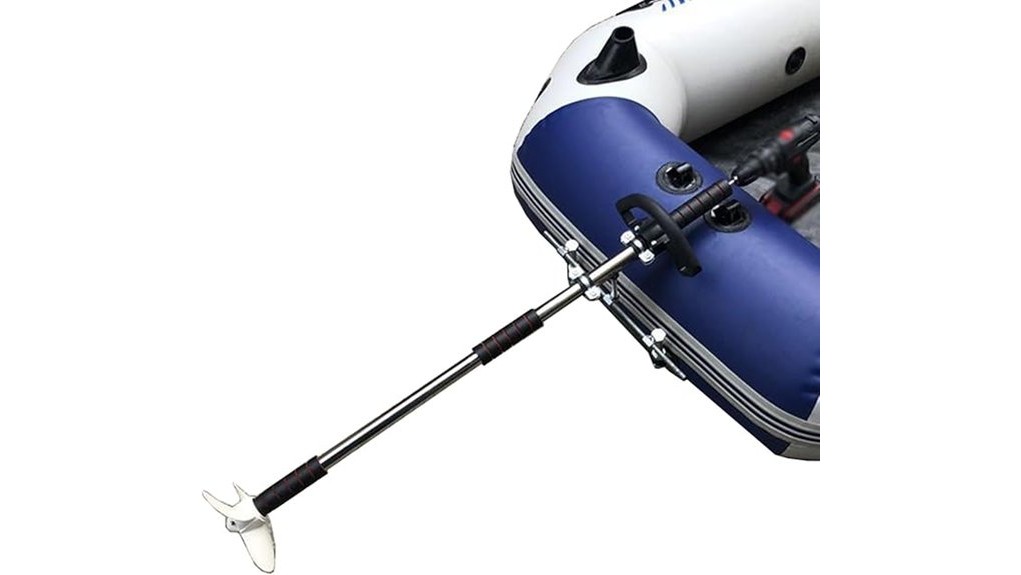
You’ll find the CMYUN drill propeller a compact, affordable emergency thruster that’s easy to mount and won’t rust thanks to aluminum-alloy blades and rod. It clamps securely to kayaks, canoes, inflatables and small pontoons, and steering’s intuitive via tilt and handle swing. Speed depends on your drill’s torque, so pick a high-capacity lithium pack rather than high RPM. It’s great for calm-water backup use but not primary propulsion in heavy conditions—keep reading for full setup and safety tips.
Some Key Takeaways
- Lightweight aluminum-alloy drill propeller offers rust-resistant, quick-deploy emergency thrust for kayaks, canoes, inflatables, and small pontoons.
- Mounting is fast and secure with included clamp/bracket; ready for water in minutes without assembly.
- Performance depends on your cordless drill’s torque and battery; high-torque batteries improve speed but drain faster.
- Steering via adjustable handle tilt/swing is responsive, but sustained full-throttle can cause cavitation and noise.
- Best used as backup or short-range propulsion on calm water; not a substitute for dedicated motors in rough conditions.
Quick Verdict: Is the CMYUN Drill Propeller Worth It?
Bottom line: if you need a compact, affordable emergency thruster or drill-powered trolling motor for small crafts, the CMYUN Drill Propeller delivers reliable, rust-proof performance and easy mounting—but it’s not a substitute for a dedicated electric motor on larger boats. You get straightforward installation, adjustable steering and lightweight aluminum construction that resists corrosion. Your affordability assessment will favor this as a backup or occasional-use tool; it’s economical versus full motors. User testimonials highlight ease of use and effective low-speed thrust on lakes and ponds. Expect limited power and run-time tied to your drill’s battery and torque. It’s particularly well-suited for kayaks and canoes used by water enthusiasts seeking compact tackle solutions.
What’s in the Box and Key Specs (Materials, Weight, Compatibility)
If you decide the CMYUN Drill Propeller fits your backup-thruster needs, here’s what you’ll find in the box and the key specs that determine whether it matches your craft. You get one drill-powered propeller (drill not included) with clamp and bracket for mounting or handheld use. Construction uses aluminum alloy for blades and rod, offering aluminum durability—light, strong, rust-resistant. Item weight is 2.2 pounds, single-piece delivery, no assembly required. Compatibility covers most cordless drills and boats 1–3 m (canoes, kayaks, inflatables, rafts, pontoons). Check the listed package dimensions and model number before ordering. Designed with kayak anglers in mind to integrate easily with common kayak fish finder mounts.
Real-World Performance: Mounting, Steering, and Speed on Small Boats
When you clip the CMYUN drill propeller to a transom or secure it with the included bracket, you’ll find mounting quick and straightforward—no tools or assembly needed—so you can go from box to water in minutes. You’ll notice mounting durability from its aluminum-alloy build; the clamp holds steady under thrust and rough wakes. Steering is responsive—tilt and swing the adjustable handle to trim direction without fiddling. Speed depends on your drill’s torque: high-torque drills push small boats briskly but increase battery drain. Expect modest water noise and occasional propeller cavitation at top rpm; avoid sustained full-throttle for efficiency. This setup pairs well with essential kayak supplies like hand pumps for safety and convenience on the water.
Pros, Cons, and When to Use It as an Emergency Thruster
Although compact and simple, the CMYUN drill propeller gives you several clear advantages as an emergency thruster: it’s lightweight and rust-proof aluminum alloy makes it easy to store and reliable in wet conditions, the clamp/bracket lets you switch quickly between handheld and mounted use, and the adjustable handle provides direct, intuitive steering control. You’ll appreciate lightweight portability, quick deployment, and enough thrust for calm lakes or ponds. Downsides: power depends on your drill and torque requirements may exceed small drills in currents or heavy loads. Use it as a backup or short-range maneuvering tool, not primary propulsion in rough water. It’s a handy addition to your kit for spare paddles and other essential gear for paddling adventures.
How to Choose, Install, and Safely Operate With a Cordless Drill
Because your drill becomes the motor, pick a cordless that delivers sufficient torque and runtime for safe, controllable thrust rather than relying on RPM alone. Choose batteries matched to load: high-capacity lithium packs for longer runs and quick swaps; battery selection matters for weight and balance. Mount the CMYUN propeller securely using the included clamp or bracket, align shaft, then tighten. Use low gear and gradual trigger squeeze for torque control and steering. Rinse salt off after use, check fasteners, and follow cordless maintenance schedules. Apply waterproofing tips to connections and store dry to extend life and safety. For safer outings, always carry essential gear like throw ropes and a personal flotation device.
Some Questions Answered
Is a Cordless Drill Torque Sufficient for Extended Continuous Use?
Not usually — most cordless drill torque and duty cycles aren’t designed for extended continuous use as a trolling motor. You’ll risk battery overheating and accelerated motor wear if you run a drill for long periods under load. For occasional short trips or emergencies it’s fine, but for sustained propulsion you should use a purpose-built trolling motor with continuous-duty specs, proper cooling, and battery capacity to avoid damage and safety issues.
Can It Be Used in Saltwater Without Corrosion Issues?
Yes — you can use it in saltwater, but you’ll need extra care for saltwater resistance and corrosion protection. The aluminum alloy is lightweight and rust-proof, yet salt accelerates corrosion. Rinse thoroughly with fresh water after each use, dry and lubricate moving parts, and store indoors. Inspect regularly for pitting or damage and apply marine-grade anti-corrosion spray or sacrificial anodes for longer-term protection.
Are Replacement Blades or Parts Available Separately?
Yes — replacement availability exists but depends on seller stock; you’ll need to check the retailer or manufacturer for spare parts. You can request spare blades or brackets, and confirm spare compatibility with the aluminum alloy model number (66666) and clamp/bracket style. Contact CMYUN or your vendor with product details to verify parts, shipping, and warranty coverage. Keep measurements and photos ready to speed up matching and approval.
How Loud Is the Propeller at Typical Operating Speeds?
You’ll hear moderate noise at typical operating speeds, not deafening but noticeable over calm water. The aluminum alloy blades produce low volume compared with gasoline motors, yet the drill’s RPM and load raise sound level. In practice you’ll get a steady hum and occasional cavitation at higher thrust. For quieter operation, you’ll want a lower-RPM drill, smooth prop alignment, and firm mounting to minimize vibration and noise transfer.
Does It Affect Drill Battery Life or Void Drill Warranty?
Yes — using a drill to power the propeller will increase battery wear and could pose a warranty risk for the drill. You’ll draw high continuous current, which shortens runtime and battery lifespan. Manufacturers typically don’t cover third‑party attachments, so check your drill’s warranty terms. To minimize wear and risk, use a drill with sufficient torque, avoid prolonged full-load runs, and consider dedicated power solutions such as a dedicated marine battery or cordless motor designed for trolling.