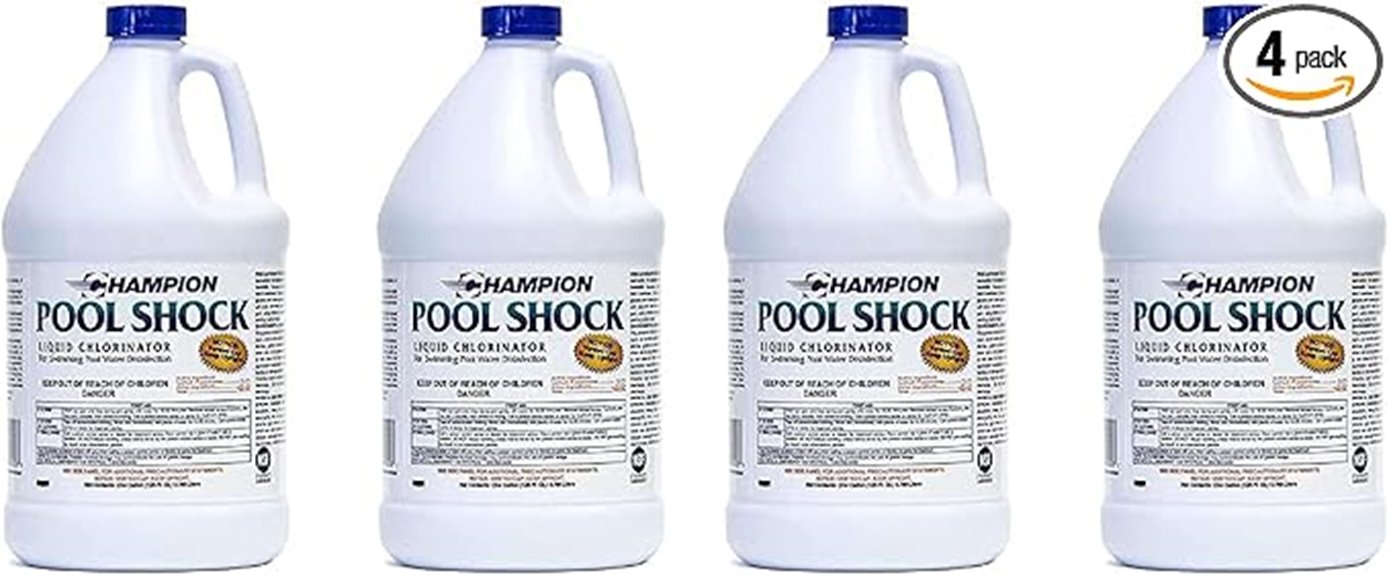
You’ll get a commercial-strength 12.5% sodium hypochlorite shock that’s NSF/ANSI 60 certified and ready to pour or feed via a metering pump, so you can quickly sanitize pools or spas for start-ups, reopenings, or routine shock. Use 11 oz per 10,000 gallons (double for stubborn algae), test and adjust pH to 7.2–7.6, wear PPE, and store upright away from heat. Keep stock rotated and check compatibility—more practical tips and comparisons follow.
Some Key Takeaways
- Commercial-grade 12.5% sodium hypochlorite provides fast, predictable shock treatment for pools and spas.
- NSF/ANSI 60 certification assures potable-water safety and verified product quality.
- Recommended dosing is 11 oz per 10,000 gallons; one gallon treats ~116,000 gallons.
- Use gloves, eye protection, ventilated area, and never mix with acids or other chemicals.
- Pour at multiple points or use a peristaltic pump; adjust pH to 7.2–7.6 for best efficacy.
What Champion Pool Shock Liquid Chlorinator Is and Who It’s For
Champion Pool Shock Liquid Chlorinator is a ready-to-use, commercial-grade sodium hypochlorite solution (12.5%) designed to quickly sanitize and “shock” pools and spas; you can pour it directly into the water or dose it through a peristaltic metering pump. You’ll find it in 1-gallon jugs sold four per case, NSF/ANSI 60 certified and formulated to deliver fast-acting disinfection without adding cyanuric acid or encouraging scale. It’s aimed at pool owners and commercial operators who need reliable, high-strength chlorine for start-ups, seasonal reopenings, or routine shock. You’ll appreciate predictable concentration and straightforward logistics for inventory control. Chlorinefree pool maintenance tips are essential for keeping your swimming environment safe and enjoyable. Regularly testing and balancing water chemistry ensures that you maintain a clean pool without relying on harsh chemicals. Utilizing natural alternatives can help reduce the need for chlorine while still providing effective sanitation.
How to Use the 12.5% Sodium Hypochlorite Formula Safely and Effectively
You’ve seen what the product is and where it’s used; now let’s cover how to handle and apply the 12.5% sodium hypochlorite safely and effectively. Always wear protection—chemical-resistant gloves and eye protection—and work in a ventilated area. Store jugs upright, sealed, away from heat and organics. Before treatment, perform water testing to confirm free chlorine, pH, and alkalinity; adjust pH to 7.2–7.6 for best efficacy. Pour product at multiple points around the pool or feed via a metering pump with manufacturer-recommended fittings. Never mix with acids or other chemicals. Rinse spills immediately and follow disposal guidance. Hth pool care product features advanced formulations designed for optimal performance. These products help maintain clear and balanced water, ensuring a safe swimming environment. Additionally, they are easy to use and compatible with various pool systems, making pool maintenance effortless.
Real-World Performance: Shock Results, Dosage, and Application Methods
When you need fast, reliable chlorine boost for a cloudy or freshly filled pool, this 12.5% sodium hypochlorite formula delivers measurable results: expect free chlorine to rise predictably with the guideline dose (11 oz per 10,000 gallons), clearing contaminants within hours under proper pH (7.2–7.6) and circulation. You’ll pour directly or use a peristaltic metering pump; both yield consistent residuals. Shock longevity depends on sunlight, bather load, and stabilization—plan follow-up doses if levels drop. For stubborn algae control, double dose initially and brush surfaces. Tests before and after dosing confirm efficacy and safe reopening timelines. Regular salt water pool maintenance tips can help prolong the lifespan of your system and keep your pool sparkling. It is crucial to monitor salt levels and clean the cell regularly to ensure optimal performance. Additionally, balancing the water chemistry will enhance comfort and reduce wear on pool equipment.
Storage, Compatibility, and NSF/ANSI 60 Certification Explained
After shock treatment and confirming free chlorine levels, pay careful attention to how you store and handle the 12.5% sodium hypochlorite to maintain strength and safety. You should keep jugs sealed, upright, and out of sunlight at cool, ventilated temperatures to slow degradation; Shelf life typically shortens with heat and light. Check labels for storage limits and rotate stock. For Container compatibility, use original high-density polyethylene jugs or approved chemical-resistant equipment—metal or incompatible plastics can corrode or leach. NSF/ANSI 60 certification means the product meets potable-water chemical safety standards, giving you verified quality for pool treatment.
Buying Considerations: Pack Size, Price, Alternatives, and Return Policy
Choose the right pack size and price by matching your pool’s volume and treatment frequency to the 4×1‑gallon case: at the recommended 11 oz per 10,000 gallons, a single gallon treats roughly 116,000 gallons, so most residential users will find a case lasts multiple shocks, but high‑use or commercial facilities should buy in bulk. You’ll appreciate ready‑to‑use jugs and NSF/ANSI 60 certification for predictable dosing. Compare per‑gallon cost versus alternatives like stabilized granular chlorine or calcium hypochlorite; consider long‑term costs and system compatibility. Check shipping options, bulk discounts, and the voluntary 30‑day return guarantee before buying.
Some Questions Answered
Is This Product Safe for Vinyl and Fiberglass Liners?
Yes — you can use it on vinyl and fiberglass liners when dosed properly. Its 12.5% sodium hypochlorite formulation is NSF/ANSI 60 certified and avoids stabilizer buildup, reducing risk of liner discoloration if you follow the 11 oz per 10,000 gal guideline and avoid over-concentration. Pour evenly or feed via metering pump, keep proper pH, and don’t let undiluted product contact the liner to minimize chemical bleaching or surface damage.
Can It Be Used in Saltwater Chlorinated Pools?
Yes—you can use it in saltwater compatibility situations, but be cautious. You’ll add sodium hypochlorite safely to salt-chlorinated pools for shock dosing, yet electrolysis concerns remain since salt systems generate chlorine via saline electrolysis. You’ll avoid cyanuric acid buildup, but monitor free chlorine, pH, and salt cell condition. Follow dosage guidelines, pause automatic chlorinator during shock if recommended, and inspect the cell for accelerated wear. Poolife rapid shock benefits for pool owners include quick algae removal and improved water clarity. Additionally, it enhances the overall sanitation of the pool, making maintenance easier for busy homeowners. Regular use can lead to a healthier swimming environment, ensuring that families enjoy safe and clean water all season long.
How Long After Shocking Can Pets Access the Pool?
Wait at least 24 hours and confirm free chlorine is back to normal before allowing pet exposure; you’ll avoid skin irritation, matted pet fur, and potential respiratory effects from high chlorine fumes. Test water with a reliable kit, aiming for 1–3 ppm free chlorine and stable pH. If levels are elevated, keep pets away longer and rinse them thoroughly if they contact treated water. Follow product instructions and safety labels.
Will It Affect Pool Heater or Solar Systems?
Yes — you won’t harm heater compatibility or cause significant solar impact when you use this liquid shock as directed. You should maintain proper chlorine levels, avoid overdosing, and allow circulation to mix thoroughly before running heater or solar panels. For salt systems or sensitive heat exchangers, follow manufacturer flushing recommendations. Always wait recommended stabilization time and test water chemistry to protect equipment and make certain peak performance.
Are Refill Jugs or Larger Sizes Available?
Yes — refill availability is limited to the 1-gallon ready-to-use jugs sold in 4-per-case packs; Champion lists that pack (item 8068779-2) as the primary size. Bulk options beyond those single-gallon jugs aren’t specified in the product listing, so you’ll need to contact Champion or authorized distributors for larger commercial drums or refill programs. Check supplier catalogs or ask customer service for custom bulk orders and pricing before buying.