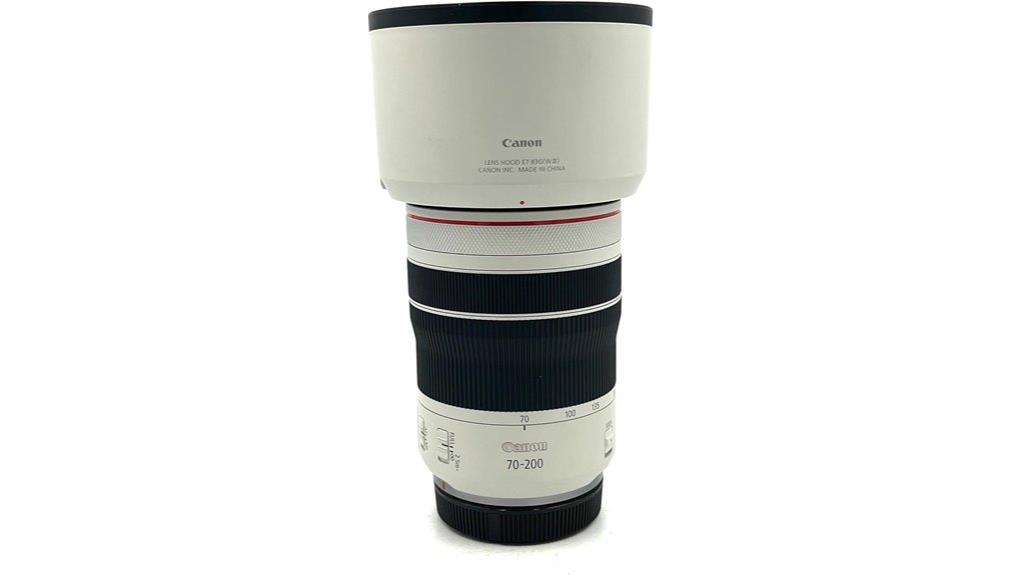
You’ll find the Canon RF 70–200mm F4 L IS USM delivers pro-level sharpness and consistent f/4 performance throughout the zoom range, with creamy bokeh, well‑controlled chromatic aberration from UD elements, and effective ASC/fluorine coatings. Dual Nano USM gives fast, quiet AF for stills and 4K video, while OIS provides about five stops (roughly 7.5 with IBIS) for steady shots. It’s lightweight, weather‑sealed, and travel‑friendly—keep going and you’ll get specs, comparisons, and real‑world verdicts.
Some Key Takeaways
- Versatile, lightweight L-series 70–200mm f/4 offering consistent f/4 performance and strong center sharpness throughout the zoom range.
- Four UD elements, ASC, and advanced coatings minimize chromatic aberration, flare, and preserve microcontrast.
- Dual Nano USM AF is fast, quiet, and smooth for stills and 4K video, with reliable tracking and cinematic focus shifts.
- In-body and optical stabilization combine for up to ~7.5 stops on compatible RF bodies, with OIS alone rated at five stops.
- Weather-sealed, balanced build and fluorine-coated front element make it ideal for travel, weddings, landscapes, and run-and-gun shooting.
How the RF70-200mm F4 L IS USM Performs at a Glance
Expect sharp, reliable results across the 70–200mm range: the RF70-200mm F4 L IS USM delivers consistent f/4 exposure, crisp optics with four UD elements and ASC to control chromatic aberration and flare, and dual Nano USM autofocus that’s fast, smooth, and quiet for both stills and 4K video. You’ll appreciate its compact reach and light weight—this is Canon’s shortest, lightest 70–200mm f/4—making carry and setup easier. IS provides up to five stops (seven‑and‑a‑half with IBIS), and focus responsiveness supports quick subject acquisition. Weather sealing and L-series build guarantee durability, while controls offer intuitive, fast handling. It’s an excellent match for mirrorless camera enthusiasts seeking high-quality telephoto performance in a portable package.
Image Quality: Sharpness, Bokeh, Chromatic Aberration, and Coatings
Although compact, the RF70-200mm F4 L IS USM delivers consistently high sharpness across the frame, with center resolution remaining strong from 70mm through 200mm and only modest corner falloff at the longest focal lengths. You’ll notice excellent corner to corner performance at most apertures, with microcontrast preserving detail without harshness. Background rendition produces creamy bokeh with smooth highlights and controlled onion-ring artifacts. Chromatic aberration is well managed thanks to UD elements and the lens’s design, so lateral fringe is minimal. Coating effectiveness—Air Sphere and front fluorine layers—reduces flare and eases cleaning, improving overall image fidelity. For photographers seeking accurate color and tonal rendering, proper monitor calibration with true-to-life displays helps ensure the images you see match the prints and final edits.
Autofocus, Stabilization, and Video Usability (Dual Nano USM + OIS/IBIS)
Building on its strong optics, the RF70-200mm F4 L IS USM matches image quality with a very capable autofocus and stabilization package that benefits both stills and video. You’ll notice dual nano motors deliver fast, silent subject acquisition and smooth movie focus shifts, making tracking in 4K reliable. OIS alone gives up to five stops; combined with ibis synergy on compatible bodies you reach around 7.5 stops, markedly improving handheld shooting and low light performance. For run-and-gun video or portraits at telephoto lengths, the lens balances speed and stability without hunting, letting you concentrate on composition and timing. It’s also a great match for photographers who prefer using compact, lightweight support like ball heads to maintain mobility and quick setup.
Handling, Build, and Weather Sealing for Travel and Field Use
When you shoulder the RF70-200mm F4 L IS USM, its compact, lightweight design and balanced weight distribution make extended handheld use noticeably less fatiguing than older 70–200 f/4 designs. You’ll notice a secure comfort grip on the tripod collar and textured focus ring that reduces slippage during long hikes. The short, light construction trims your travel footprint, fitting easily in carry-ons and smaller camera bags. L-series metal and composite construction feels robust, and dust- and weather-resistant seals give confidence in damp or dusty conditions. Fluorine coating keeps the front element cleaner, simplifying maintenance in the field. Many photographers pair this lens with protective Pelican cases to safeguard gear during travel and outdoor shoots.
Who Should Buy It and How It Compares to Other 70–200mm Options
Those handling benefits and weather resistance make the RF70-200mm F4 L IS USM a strong choice for traveling shooters who need a full-range telephoto without bulk; if you shoot landscapes, travel, weddings, or run-and-gun events where mobility and reliability matter, this lens gives you L-series durability and effective stabilization in a compact package. You should buy it if you prioritize weight, weather sealing, and up to 7.5-stop stabilization on RF bodies. Travel photographers will like its balance of quality and portability. Compared to heavier f/2.8 pro models it sacrifices low-light reach but outperforms many budget shooters’ alternatives in build and AF. Its combination of rugged construction and compatibility with sturdy support gear makes it a natural fit for photographers using heavy-duty tripods in challenging outdoor conditions.
Some Questions Answered
Is This Lens Compatible With Canon APS-C RF Cameras?
Yes — you can use it on Canon APS-C RF cameras. APS C compatibility is supported via the RF mount; the lens will work and autofocus, IS, and coatings function normally. Remember crop factor considerations: the 1.6× crop turns 70–200mm into an effective ~112–320mm field of view, increasing reach but reducing wide-angle coverage. You’ll keep L-series build, OIS benefits, and compact handling, with slightly tighter framing on APS-C bodies.
Can I Use 77MM Filters With Lens Hoods Attached?
Yes — you can use 77mm filters with the hood attached, but check hood clearance. The RF70-200mm F4 L accepts 77mm front filters and the supplied hood is designed to clear standard screw-on filters without vignetting. For thicker filters, stacked filters, or certain polarizers you’ll need to confirm physical clearance and possible vignetting at wider focal lengths. Carry slim filters or remove the hood if clearance becomes an issue.
How Long Is the Manufacturer Warranty and Service Coverage?
The warranty length is one year from the manufacturer, and you’ll get standard coverage for defects in materials and workmanship. For service details, Canon USA provides repair or replacement under that warranty; parts and labor are covered per Canon’s policy. You’ll still need proof of purchase, and cosmetic damage or misuse may be excluded. For extended service options or EU spare-part availability, contact Canon support for region-specific terms and timelines.
Does the Lens Support In-Camera Subject Detection AF Modes?
Yes — you can use in-camera subject detection AF modes like eye tracking and face detection with this lens when it’s mounted on compatible EOS R bodies. The lens’s Dual Nano USM and fast communication support smooth, responsive AF handing to the camera’s subject-detection algorithms, helping maintain precise focus for stills and video. You’ll still rely on the camera body’s AF firmware and settings for full detection performance.
Is the Lens Balance Suitable for Gimbal Handheld Tracking?
Yes — the lens balances well for gimbal handheld tracking thanks to its short, lightweight design and compact RF construction. You’ll notice improved handheld ergonomics versus heavier 70–200mm options, aiding smoother pans and less arm fatigue. You’ll still need careful gimbal tuning for peak motor load and axis balance, especially when pairing with larger bodies or accessories. Fine-tune balance and follow manufacturer calibration for best results.