You’ll find the Canon RF 16mm f/2.8 STM is a compact, affordable ultra‑wide that favors portability and quiet AF over flagship sharpness. You’ll get usable f/2.8 low‑light performance, close‑focus capability, and a tactile control ring for fast exposure tweaks. STM autofocus is smooth and silent for run‑and‑gun video and stills, while corners tighten by f/5.6. If you want travel‑ready primes with reliable AF and modest compromises, keep going to see detailed tests and comparisons.
Some Key Takeaways
- Compact, lightweight RF 16mm f/2.8 offers excellent ultra-wide portability for travel, landscapes, interiors, and environmental portraits.
- f/2.8 delivers usable low-light performance and keeps shutter speeds/ISO manageable on modern RF bodies.
- Sharp center wide open; corner sharpness improves noticeably by f/5.6 for landscape-critical detail.
- STM autofocus is quiet, smooth, and reliable for run-and-gun video and stills.
- Best value for size, close-focus capability, and video-ready AF; not for those needing ultimate sharpness or f/1.8 bokeh.
Quick Verdict and Who Should Buy the RF 16mm F/2.8 STM
Although it’s small and affordable, the RF 16mm f/2.8 STM delivers genuinely useful ultra-wide performance for modern RF bodies. You’ll appreciate its compact travel footprint and f/2.8 aperture when framing landscapes, architecture, interiors, or environmental portraits. Autofocus is quiet and reliable for run-and-gun video and stills; the control ring gives tactile exposure control. Close-focus capability and modest 0.26x magnification expand creative perspectives without swapping lenses. Choose this lens if you prioritize portability, low-light flexibility, and a true ultra-wide angle on full-frame RF cameras. It’s not for ultimate sharpness seekers, but it’s a practical, versatile tool. Its small size and focal range make it especially well-suited for travel photography where weight and versatility matter.
What You Get in the Box and Key Specs at a Glance
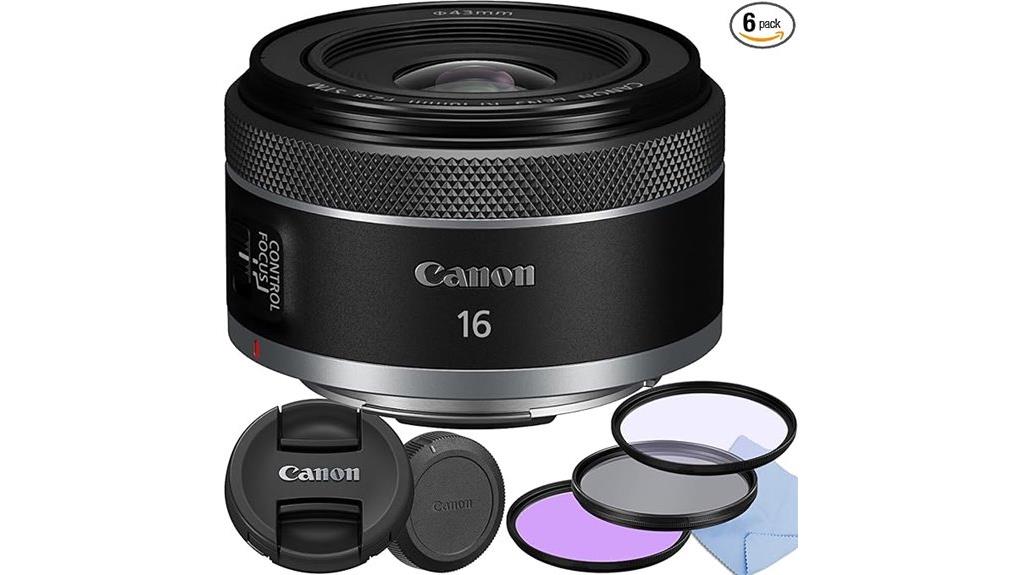
Inside the box you’ll find the Canon RF 16mm f/2.8 STM prime (renewed) plus the essential caps and filters: a Canon E-43 front lens cap, Canon RF rear dust cap, a UV filter, a polarizing (PL) filter, and an FLD filter, backed by a 1-year seller-supplied warranty. You won’t get a dedicated lens case; plan for third-party protection. Key specs at a glance: 16mm focal length, f/2.8 maximum aperture, STM autofocus, 0.26x max magnification, 5.1 minimum focus distance, RF mount for full-frame, compact form factor, configurable control ring. See warranty details for coverage limits and procedures. This kit is ideal for mirrorless photographers seeking essential gear that balances portability and performance.
Real-World Image and Autofocus Performance (Landscape, Video, Low Light)
Having covered what’s in the box and the basic specs, let’s examine how the RF 16mm f/2.8 STM performs in the field for landscapes, video, and low-light work. You’ll get sharp central detail wide open with predictable corner improvement stopped to f/5.6—ideal for landscapes where close-to-infinite focus and 0.26x magnification help foreground interest. The STM delivers silent, smooth AF suitable for run-and-gun video; autofocus consistency is strong on modern RF bodies. In low light the f/2.8 aperture preserves usable shutter speeds and ISO; noise is managed by camera, while dynamic rangehandling remains respectable for recovery in highlights and shadows. This lens is a great choice for photographers focused on wide-angle photography thanks to its versatile focal length and optical performance.
Handling, Controls, and Compatibility With Canon and Cinema Cameras
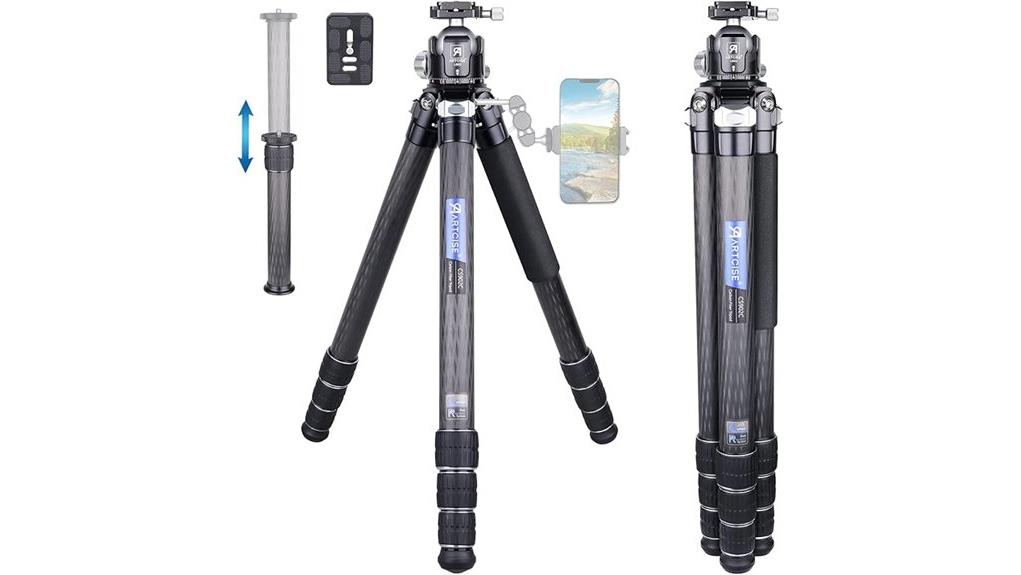
Many shooters will appreciate how the RF 16mm f/2.8 STM balances compact handling with straightforward controls that suit both stills and cinema workflows. You’ll find button placement minimal — no clutter — so toggles and camera-assigned controls remain primary. The configurable control ring is tactile and precise for aperture or ISO adjustments during takes. STM focus is quiet and smooth for live recording; focus breathing is modest. Mount durability meets pro use, fitting RF bodies and supported cinema cameras like the C70 and Komodo series without play. Its light weight aids handheld rigs and gimbals while preserving reliable mechanical fit. For users pairing lenses and cameras, choosing the right tripod head can improve stability and framing when using lightweight setups like this lens with fluid heads.
Alternatives, Value Comparison, and Final Buying Recommendation
After covering handling and control fidelity, let’s compare the RF 16mm f/2.8 STM against alternative ultra-wides and evaluate value so you can decide if it fits your kit. You’ll find price alternatives like used RF 15-35mm zooms or third-party primes (Sigma, Tamron) that trade compactness for wider aperture or sharpness. Competitor comparisons show the RF 16mm excels in portability, close-focus and quiet STM AF, but lags versus faster f/1.8 rivals in low-light and bokeh. For shooters prioritizing size, budget and video-ready AF, it’s a strong value; if ultimate image quality or aperture matters, consider higher-end alternatives. It’s especially well suited to photographers focused on prime lenses and portability.
Some Questions Answered
Does This Lens Accept Third-Party Lens Filters or Step-Up Rings?
Yes — you can use third-party lens filters and step-up rings with this RF 16mm f/2.8 STM, provided the filter thread and physical profile match. Check the lens’s front thread diameter; filter compatibility depends on that size. If threads differ, you can use adapter options like step-up rings or dedicated filter adapters to mount larger filters or square-filter holders. Make sure no vignetting with wide-angle coverage when choosing adapters and thick filters.
Is the Lens Weather-Sealed or Resistant to Dust and Moisture?
No — the lens doesn’t offer weather resistance or full sealing details. You shouldn’t rely on it for heavy rain or dusty environments without additional protection. Mechanically it’s compact and robust for general use, but manufacturers don’t list gasketed mount or explicit dust/moisture seals. If you’ll shoot in harsh conditions, you should add a rain cover, protective housing, or use a weather-sealed body and cautious handling to reduce exposure risks.
Can It Be Used Effectively for Astrophotography and Starfields?
Yes — you can use it effectively for astrophotography and starfields. You’ll benefit from its strong low light performance thanks to f/2.8 and a fast, quiet STM AF useful for framing. Expect decent coma control for a budget ultra‑wide, though edges may show slight star elongation on full‑frame. Use short exposures, wide aperture, high ISO, and careful focus; consider stacking and edge correction in post for best results.
Does the Lens Support In-Camera Lens Corrections for Distortion/Vignetting?
Yes — you’ll get in camera corrections for distortion and vignetting on most Canon RF bodies that support lens correction profiles. Make certain firmware compatibility by updating your camera to the latest Canon release so it recognizes the RF 16mm f/2.8 STM (renewed) profile. Corrections apply automatically in JPEG/HEIF and in-camera RAW processing; RAW files retain metadata for external software to apply identical corrections during post.
Is There Any Front or Rear Element Rotation During Focusing?
No — the front and rear elements don’t noticeably rotate during focusing, so you won’t have to compensate when using polarizers or variable ND filters. You can switch to manual focusing and the STM mechanism still delivers smooth, low-impact adjustment with minimal focus breathing for video. Expect slight framing shift typical of wide primes, but mechanical rotation is suppressed, keeping filter orientation stable and manual focus operation predictable and precise.